

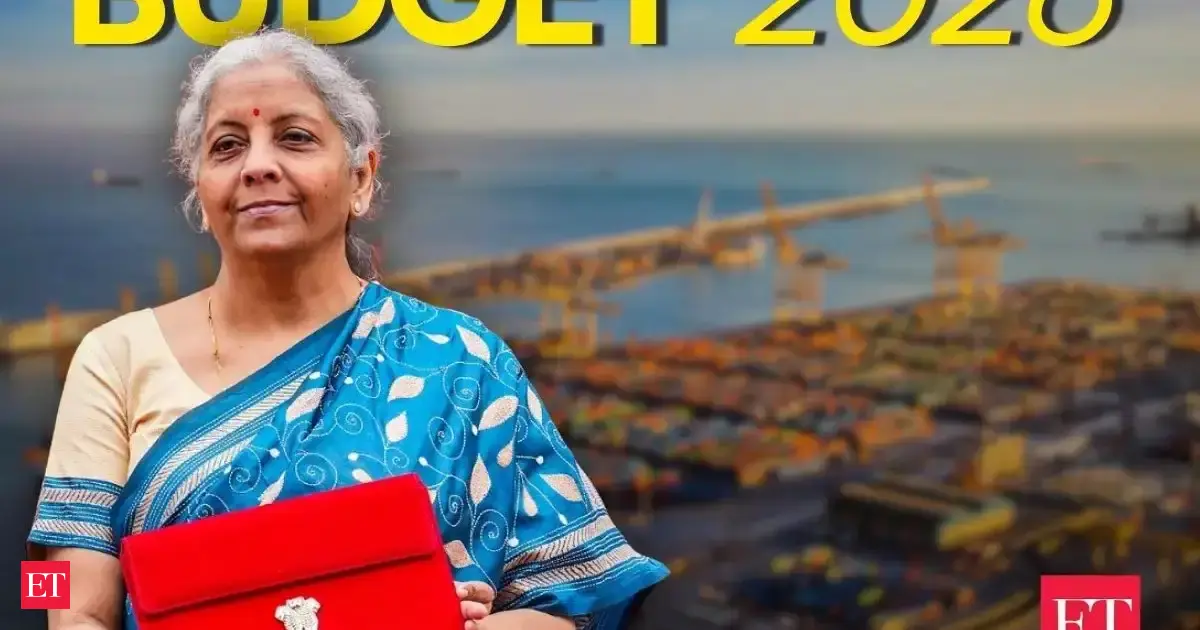
Finance Minister Nirmala Sitharaman presented the Union Budget 2026.
GK and monthly revision
Budget 2026: Nirmala Sitharaman announces Rs 10,000 crore MSME growth fund to tariff-proof sector
Finance Minister Nirmala Sitharaman unveiled a significant Rs 10,000 crore MSME growth fund in Budget 2026, aimed at bolstering the sector's growth, generating employment, and making it 'tariff-proof'. This crucial announcement addresses global economic uncertainties and India's reliance on MSMEs for economic stability and job creation. Additionally, the budget introduced measures to stabilize rising gold prices, which is vital given India's strong dependence on gold imports. This policy is highly relevant for competitive exams focusing on economic policies and government initiatives.
Revision structure
Monthly events and exam calendar context
Static GK and one-liner notes
Quiz and mock-test revision path
Key points
Exam-ready takeaways
A dedicated MSME growth fund of Rs 10,000 crore was announced in Budget 2026.
The fund's primary objectives are to bolster MSME growth, generate employment, and 'tariff-proof' the sector.
The budget also introduced specific measures aimed at addressing and stabilizing rising gold prices.
These economic announcements were made amidst a backdrop of global economic uncertainties and India's significant reliance on gold imports.
Detailed analysis
Full exam-oriented breakdown
The Union Budget 2026, presented by Finance Minister Nirmala Sitharaman, introduced significant policy interventions aimed at strengthening India's economic resilience and fostering inclusive growth. Among the most notable announcements was the allocation of a dedicated Rs 10,000 crore MSME (Micro, Small, and Medium Enterprises) Growth Fund, alongside measures to stabilize rising gold prices. These initiatives are not isolated but are deeply rooted in India's economic landscape and global challenges. **Background Context:** India's economy is characterized by a vast MSME sector, which forms the backbone of its industrial output, employment generation, and exports. Accounting for approximately 30% of the GDP and over 45% of manufacturing output, MSMEs are crucial for achieving the vision of an 'Atmanirbhar Bharat' (Self-Reliant India). However, this sector often grapples with challenges such as limited access to credit, technological obsolescence, infrastructure deficits, and vulnerability to global economic fluctuations and trade barriers. Previous governments have introduced schemes like the MUDRA Yojana (2015), Emergency Credit Line Guarantee Scheme (ECLGS) during the pandemic, and the Credit Guarantee Fund Trust for Micro and Small Enterprises (CGTMSE) to address these issues. Simultaneously, India's relationship with gold is multifaceted; it's a cultural staple, a traditional investment, and a significant component of household savings. This deep-rooted demand makes India one of the largest gold importers globally, leading to a substantial impact on its current account deficit (CAD) and vulnerability to international gold price volatility. **What Happened:** In Budget 2026, the Finance Minister announced a substantial Rs 10,000 crore MSME Growth Fund. The primary objective is to 'tariff-proof' the sector, meaning to enhance its ability to withstand external economic shocks, global trade policy changes, and international competition, including import duties imposed by other nations or domestic tariff reforms. This fund aims to facilitate technology upgradation, skill development, market access, and potentially provide financial support for compliance with international standards, thereby boosting competitiveness and export potential. Concurrently, the budget addressed the concern of rising gold prices, which can fuel inflation and widen the CAD. While the specific measures weren't detailed in the immediate announcement, such interventions typically include adjustments in import duties, promotion of domestic gold recycling, or exploring avenues to rationalize demand through financial instruments. **Key Stakeholders Involved:** The **Government of India**, particularly the **Ministry of Finance** and the **Finance Minister**, are the primary drivers, responsible for policy formulation and budgetary allocation. **MSMEs** themselves are the direct beneficiaries, expected to leverage the fund for growth, innovation, and enhanced resilience. **Banks and Financial Institutions** will play a crucial role as intermediaries for disbursing credit and implementing schemes under the fund. **Consumers and Households** are stakeholders in both aspects – benefiting from employment generated by MSMEs and being affected by gold price stability. **Exporters and Importers** will experience the impact of enhanced MSME competitiveness and any changes in gold import/export policies. The **Reserve Bank of India (RBI)**, while not directly involved in fiscal allocation, monitors macroeconomic stability, inflation, and the current account, making it an indirect but significant stakeholder. **Why This Matters for India:** The Rs 10,000 crore MSME Growth Fund is pivotal for India's economic trajectory. By 'tariff-proofing' the sector, it aims to make Indian MSMEs globally competitive, reducing their vulnerability to trade wars and protectionist policies. This will boost exports, contribute to a healthier balance of payments, and create millions of jobs, addressing the critical challenge of unemployment. Furthermore, a robust MSME sector is key to achieving inclusive growth, ensuring that economic benefits reach smaller towns and rural areas. Measures to stabilize gold prices are equally significant. Given India's high import dependency, volatile gold prices can exacerbate the current account deficit, weaken the rupee, and contribute to inflationary pressures. Stabilizing these prices helps in managing macroeconomic indicators, protecting consumer purchasing power, and promoting financial stability. These policies collectively reinforce the 'Make in India' and 'Atmanirbhar Bharat' initiatives, fostering domestic manufacturing and reducing reliance on imports. **Historical Context and Future Implications:** Historically, India has recognized the potential of its small industries, with various policies and reservations in place since independence. The MSMED Act, 2006, formally defined and categorized MSMEs, providing a legal framework for their development. The current fund builds upon this legacy, aiming for a more strategic and global-facing approach. Looking ahead, the effective implementation of the MSME Growth Fund will be critical. Challenges include ensuring equitable access to the fund, preventing leakages, and measuring its true impact on competitiveness and employment. The success of 'tariff-proofing' will depend on how MSMEs adopt new technologies, improve quality, and integrate into global value chains. For gold, the long-term implications involve a shift towards more financialized savings, reduced physical gold demand, and potentially a more stable current account. This budget's focus signals a strategic shift towards bolstering domestic industry against external shocks and managing key import dependencies, promising a more resilient and self-reliant Indian economy. **Related Constitutional Articles, Acts, or Policies:** The Union Budget is presented annually as per **Article 112** of the Indian Constitution (Annual Financial Statement). The legal framework for MSMEs is primarily governed by the **Micro, Small and Medium Enterprises Development (MSMED) Act, 2006**. This act provides for the promotion, development, and enhancement of the competitiveness of MSMEs. Various government schemes like the **Prime Minister's Employment Generation Programme (PMEGP)**, **Credit Guarantee Scheme for MSMEs**, and policies under the **National Manufacturing Policy** are designed to support this sector. Trade and tariff policies fall under the purview of various acts and regulations, often guided by the **Foreign Trade Policy** formulated by the Ministry of Commerce and Industry. The measures related to gold prices can involve amendments to customs duties (under the Customs Act, 1962) and other regulatory interventions by the RBI or the Ministry of Finance.
How to study
Turn news into exam marks
Revise monthly events by exam family instead of reading random updates.
Pair one-liners with mock tests so mistakes become the next revision list.
Keep state job pages, calendar pages and GK packs connected in one path.