

Morgan Stanley projects India's nominal GDP growth at 10% for Fiscal Year 2027 (FY27).
GK and monthly revision
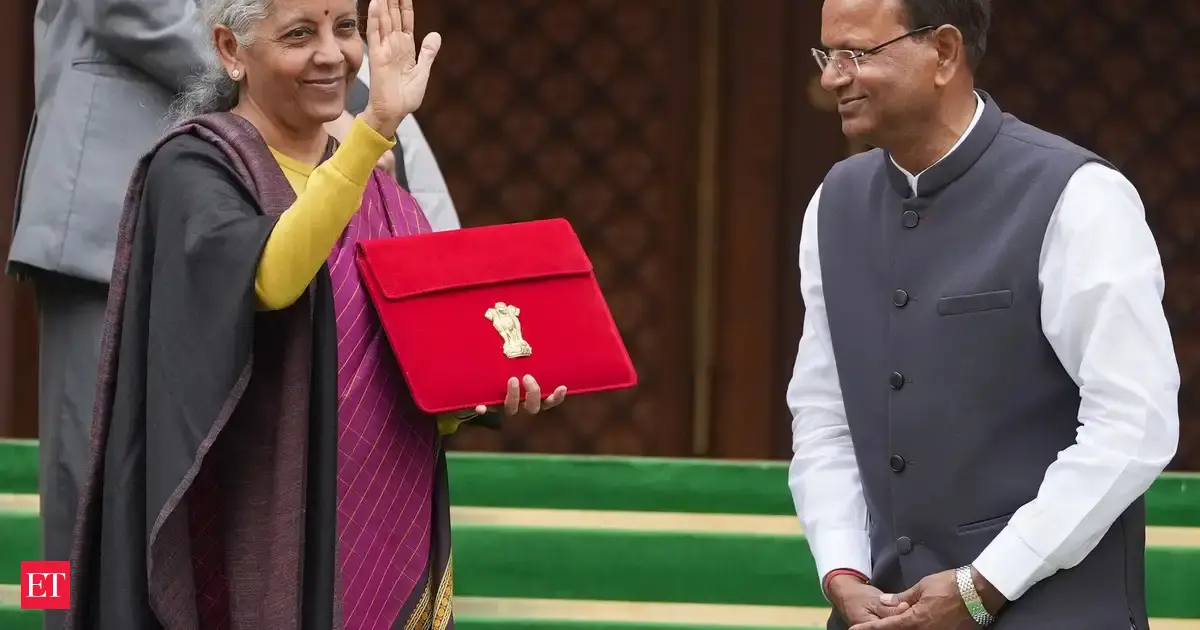
Budget 2026 seen driving cyclical growth, nominal GDP growth pegged at 10% for FY27: Morgan Stanley
Morgan Stanley forecasts India's nominal GDP growth at 10% for FY27, driven by the Union Budget 2026-27. The budget is seen balancing fiscal consolidation with growth support, focusing on capital expenditure. This strategic shift towards manufacturing, especially semiconductors, and boosting services exports is crucial for competitive exams, highlighting government policy direction and economic projections.
Revision structure
Monthly events and exam calendar context
Static GK and one-liner notes
Quiz and mock-test revision path
Key points
Exam-ready takeaways
The Union Budget 2026-27 is expected to boost economic growth while balancing fiscal consolidation.
Capital expenditure remains a key focus of the Budget 2026-27 for near-term expansion and future capacity.
The budget signals a strategic shift towards manufacturing, specifically high-value sectors like semiconductors.
Support for services exports is aimed at increasing India's global trade share.
Detailed analysis
Full exam-oriented breakdown
The Union Budget 2026-27, as projected by Morgan Stanley, marks a pivotal moment in India's economic trajectory, forecasting a robust 10% nominal GDP growth for FY27. This projection is rooted in the budget's strategic balancing act: fostering economic expansion while adhering to fiscal prudence. To truly grasp its significance, one must delve into the multifaceted layers of India's economic policy and its historical evolution. **Background Context:** India's economic journey, particularly since the 1991 reforms, has been characterized by cycles of growth and reform. In recent years, the government has increasingly focused on supply-side reforms and boosting domestic manufacturing to achieve a sustained high-growth path and become a $5 trillion economy. The COVID-19 pandemic presented unprecedented challenges, necessitating significant fiscal support, which led to an increase in the fiscal deficit. Subsequent budgets have aimed at gradual fiscal consolidation, as enshrined under the Fiscal Responsibility and Budget Management (FRBM) Act, 2003, while simultaneously pushing for growth through increased capital expenditure. The global economic landscape, marked by supply chain disruptions, geopolitical tensions, and inflationary pressures, further underscores the need for a resilient and self-reliant economy, driving policies like 'Atmanirbhar Bharat' and 'Make in India'. **What Happened (as per article):** Morgan Stanley's forecast of 10% nominal GDP growth for FY27 is a strong vote of confidence in India's economic management. The Union Budget 2026-27 is identified as the primary catalyst, designed to achieve a delicate balance between supporting growth and consolidating the fiscal deficit. A key highlight is the continued emphasis on capital expenditure (capex), which is crucial for creating long-term productive assets, generating employment, and crowding in private investment. Furthermore, the budget signals a strategic pivot towards high-value manufacturing sectors, particularly semiconductors, recognizing their critical role in the global economy and national security. Concurrently, there's a concerted effort to bolster services exports, leveraging India's established strengths in IT and IT-enabled services to enhance its share in global trade. **Key Stakeholders Involved:** The primary stakeholder is the **Government of India**, specifically the Ministry of Finance, which conceptualizes and implements the Union Budget. Their policy decisions directly impact the economy. The **Reserve Bank of India (RBI)**, as the monetary authority, plays a complementary role, aligning its monetary policy with the government's fiscal objectives to ensure price stability and support growth. **International financial institutions and rating agencies like Morgan Stanley** are crucial as their projections and analyses influence global investor sentiment and capital flows into India. **Indian industry and businesses** are direct beneficiaries and drivers of the capital expenditure push and manufacturing incentives, expected to expand capacity and create jobs. Finally, **Indian citizens and taxpayers** are the ultimate stakeholders, whose economic well-being, employment prospects, and quality of life are directly affected by the budget's provisions and the resulting economic growth. **Why This Matters for India:** This budgetary approach holds immense significance. Firstly, sustained 10% nominal GDP growth is vital for generating sufficient employment opportunities for India's large and young workforce, addressing issues of poverty and inequality. Secondly, balancing growth with fiscal consolidation ensures macroeconomic stability, preventing runaway inflation and maintaining investor confidence. The focus on capital expenditure lays the groundwork for future productivity gains, improving infrastructure and overall competitiveness. The strategic shift towards high-value manufacturing, especially semiconductors, is critical for reducing import dependence, boosting technological self-reliance, and integrating India into global supply chains for advanced technologies. This aligns perfectly with the 'Make in India' initiative, launched in 2014, and the Production Linked Incentive (PLI) schemes introduced more recently. Moreover, enhancing services exports will improve India's current account balance and strengthen its position as a global service provider. **Historical Context and Constitutional Provisions:** The concept of the Union Budget is enshrined in **Article 112 of the Indian Constitution**, which mandates the President to lay before both Houses of Parliament an 'Annual Financial Statement'. This article forms the constitutional basis for presenting the budget. The principle of 'no taxation without authority of law' is found in **Article 265**. The FRBM Act, 2003, represents a significant legislative step towards fiscal discipline, setting targets for fiscal deficit and public debt. The current emphasis on capital expenditure also reflects lessons from past economic cycles, where public investment has proven to be a powerful counter-cyclical tool and a long-term growth driver. The push for manufacturing aligns with the National Manufacturing Policy, 2011, which aimed to increase the sector's share in GDP. **Future Implications:** If the budget successfully executes its strategy, India could solidify its position as one of the fastest-growing major economies globally. This could lead to a significant increase in per capita income, improved social indicators, and enhanced geopolitical influence. The focus on semiconductors could foster a vibrant high-tech ecosystem, attracting more foreign direct investment in advanced manufacturing. However, challenges remain, including global economic uncertainties, geopolitical risks, and the need for efficient implementation of projects. The success of this budget will pave the way for India to achieve its long-term economic aspirations, transforming from a developing economy into a developed nation with a strong manufacturing base and a thriving services sector.
How to study
Turn news into exam marks
Revise monthly events by exam family instead of reading random updates.
Pair one-liners with mock tests so mistakes become the next revision list.
Keep state job pages, calendar pages and GK packs connected in one path.