

The Defence Secretary indicated a potential increase in the defence budget.
GK and monthly revision
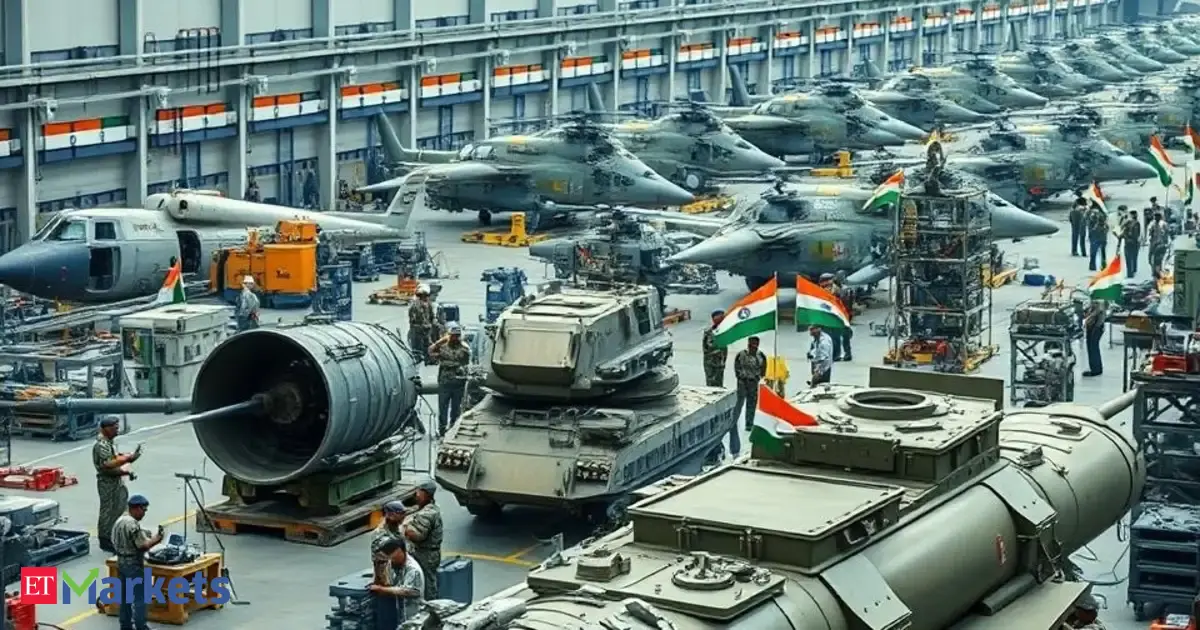
Defence Stock Watch: BEL, HAL, GRSE & others in focus today ahead of Union Budget 2026
The Defence Secretary has indicated a potential 20% increase in India's defence budget for Fiscal Year 2027. This significant proposed hike aims to bolster operational readiness and enhance self-reliance amidst prevailing global tensions. For competitive exams, this highlights government priorities in national security, economic allocation, and the 'Make in India' initiative in defence, making it crucial for understanding contemporary policy directions.
Revision structure
Monthly events and exam calendar context
Static GK and one-liner notes
Quiz and mock-test revision path
Key points
Exam-ready takeaways
The proposed increase is a significant 20% for the upcoming fiscal year.
This budget hike is specifically targeted for Fiscal Year 2027 (FY27).
A primary objective for the increase is to maintain operational readiness.
The move also aims to strengthen self-reliance in defence amidst ongoing global tensions.
Detailed analysis
Full exam-oriented breakdown
The indication by the Defence Secretary of a potential 20% increase in India's defence budget for Fiscal Year 2027 (FY27) is a significant development with far-reaching implications for national security, economic policy, and India's geopolitical standing. This proposed hike underscores a clear governmental priority: to bolster operational readiness and accelerate self-reliance in defence, particularly amidst an increasingly complex and volatile global security environment. **Background Context and What Happened:** India operates in a challenging neighbourhood, bordered by two nuclear-armed adversaries, Pakistan and China. Persistent border disputes, exemplified by the ongoing standoff along the Line of Actual Control (LAC) with China since May 2020, and the perennial threat of cross-border terrorism from Pakistan, necessitate a robust and modern military. Historically, India has been one of the world's largest importers of defence equipment. However, under the 'Aatmanirbhar Bharat' (Self-Reliant India) initiative launched in 2020, there has been a concerted push to indigenize defence production and reduce import dependence. The Defence Secretary's statement ahead of Union Budget 2026 for FY27 signals a concrete financial commitment towards achieving these objectives. A 20% increase would translate into substantial funds for acquiring new platforms, upgrading existing ones, investing in research and development (R&D), and enhancing the capabilities of the Indian Armed Forces. **Key Stakeholders Involved:** Several key players are central to this development. The **Ministry of Defence (MoD)**, under the guidance of the Defence Secretary, is the primary driver, articulating the strategic requirements and formulating procurement policies. The **Ministry of Finance (MoF)** plays a crucial role in budget allocation, balancing defence needs with other national priorities and fiscal constraints. The **Indian Armed Forces** (Army, Navy, Air Force) are the ultimate beneficiaries, providing the operational requirements and utilizing the allocated funds for modernization and readiness. Equally important are the **Defence Public Sector Undertakings (DPSUs)** like Bharat Electronics Limited (BEL), Hindustan Aeronautics Limited (HAL), and Garden Reach Shipbuilders & Engineers (GRSE), along with the growing number of private defence manufacturers. These entities are at the forefront of indigenous production and stand to gain significantly from increased domestic procurement orders. International partners, while still relevant for critical technologies, are being gradually replaced by domestic capabilities, aligning with the self-reliance agenda. **Significance for India:** This potential budget increase holds immense significance for India. Firstly, on **National Security**, it ensures the armed forces have the necessary resources to maintain a credible deterrence, respond effectively to threats, and protect India's territorial integrity and strategic interests. Secondly, it provides a massive impetus to the **domestic defence industry**. Increased orders will stimulate manufacturing, create jobs, foster innovation, and build a robust defence industrial ecosystem. This aligns directly with the 'Make in India' initiative, boosting economic growth and reducing capital outflow. Thirdly, from a **geopolitical perspective**, a stronger, self-reliant military enhances India's strategic autonomy and influence in the Indo-Pacific region and on the global stage. It signals India's resolve to protect its interests and contribute to regional stability. **Historical Context and Broader Themes:** India's journey towards defence self-reliance is not new, but it has gained unprecedented momentum in recent years. Post-independence, India largely relied on imports, initially from the Soviet Union and later from diverse global sources. Events like the Kargil War (1999) highlighted the critical need for indigenous capabilities and rapid procurement. Over the past decade, policies like the 'Negative Import List' (which restricts the import of certain defence items) and the revised Defence Acquisition Procedure (DAP) 2020, with its strong emphasis on 'Buy Indian – Indigenously Designed, Developed and Manufactured (IDDM)', have systematically pushed for domestic production. This proposed budget hike is a continuation and acceleration of these broader themes of national security, economic development through indigenous manufacturing, and strategic independence. **Future Implications:** Looking ahead, a 20% budget increase would likely lead to faster modernization of the armed forces, including the acquisition of advanced fighter jets, submarines, drones, and surveillance systems. It would also spur greater investment in frontier technologies like artificial intelligence, cyber warfare, and space-based defence assets. The existing Defence Industrial Corridors in Uttar Pradesh and Tamil Nadu are expected to receive further boosts, attracting more private investment and fostering regional development. Challenges, however, remain. Ensuring efficient utilization of funds, preventing cost overruns, maintaining transparency in procurement, and fostering a robust R&D ecosystem are crucial for the success of this initiative. Furthermore, the fiscal implications of such a significant increase on the overall government budget and potential trade-offs with other developmental sectors will need careful management. **Related Constitutional Articles, Acts, or Policies:** While there's no specific constitutional article directly mandating defence spending, the **Union List (Seventh Schedule, Article 246)** empowers the Parliament to legislate on 'Defence of India' (Entry 1). The budget process itself is governed by **Article 112 (Annual Financial Statement)**, which outlines the presentation of the Union Budget to Parliament. Defence expenditure is charged upon the **Consolidated Fund of India (Article 266)**. Key policy frameworks guiding this push include the **Defence Acquisition Procedure (DAP) 2020**, which prioritizes 'Buy Indian' categories and promotes indigenization, and the overarching **Aatmanirbhar Bharat Abhiyan** (Self-Reliant India Campaign) that has defence as a core pillar. The establishment of **Defence Industrial Corridors** is also a policy intervention aimed at creating manufacturing hubs.
How to study
Turn news into exam marks
Revise monthly events by exam family instead of reading random updates.
Pair one-liners with mock tests so mistakes become the next revision list.
Keep state job pages, calendar pages and GK packs connected in one path.