

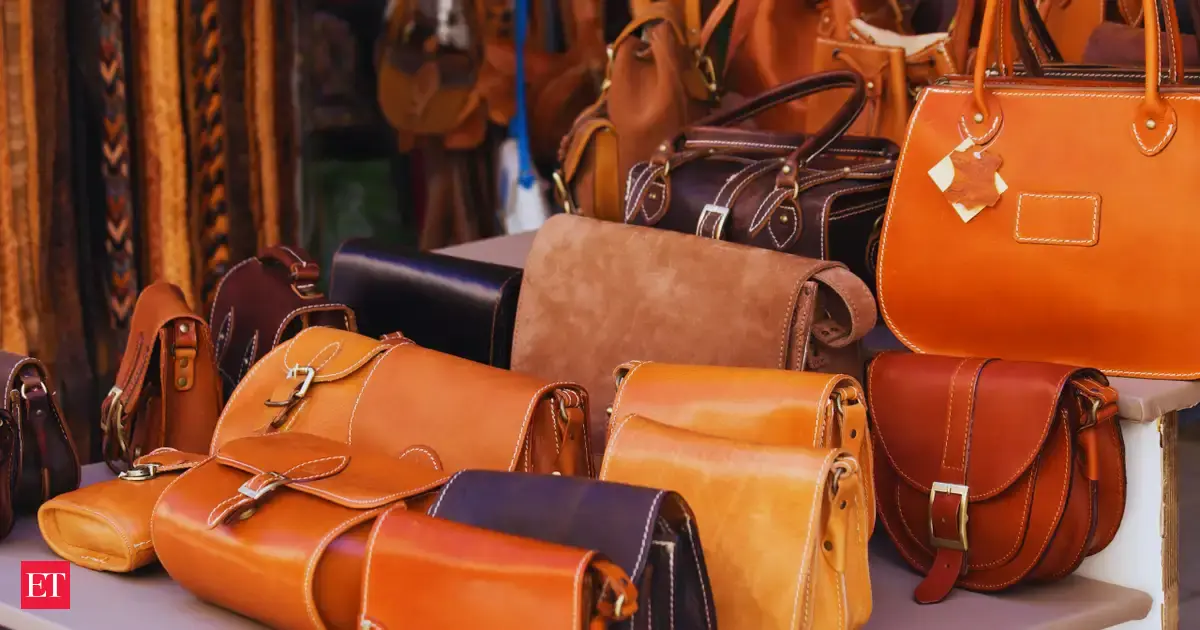
Finance Minister Nirmala Sitharaman proposed duty-free imports for certain specified inputs for the leather exports sector in the Union Budget 2026.
GK and monthly revision
FM Nirmala Sitharaman proposes duty-free imports of certain specified inputs for leather exports sector
Finance Minister Nirmala Sitharaman announced key measures in the Union Budget 2026 aimed at boosting exports and domestic manufacturing. These include duty-free imports for specified inputs in the leather sector and customs duty exemption for microwave oven parts. Additionally, the budget proposed developing fifteen archaeological sites and supporting assistive device manufacturing. These policy decisions are crucial for understanding the government's economic strategy, trade facilitation efforts, and sector-specific incentives for competitive exams.
Revision structure
Monthly events and exam calendar context
Static GK and one-liner notes
Quiz and mock-test revision path
Key points
Exam-ready takeaways
Parts for microwave ovens will be exempt from customs duty as per the Union Budget 2026 announcements.
The Union Budget 2026 proposed the development of fifteen archaeological sites across India.
Exporters will receive an extended period for final product exports under the new budget provisions.
The government announced support for the manufacturing of assistive devices as part of its budget initiatives.
Detailed analysis
Full exam-oriented breakdown
The Union Budget, presented annually by the Finance Minister, serves as a crucial blueprint for the government's economic policies and priorities for the upcoming fiscal year. The Union Budget 2026, as outlined by Finance Minister Nirmala Sitharaman, introduced several targeted measures aimed at bolstering India's economic growth, enhancing its export competitiveness, and promoting specific domestic manufacturing sectors. These announcements are not isolated decisions but are deeply rooted in India's broader economic strategy, particularly the 'Make in India' and 'Atmanirbhar Bharat' initiatives, which seek to transform India into a global manufacturing hub and reduce import dependence. At the core of these proposals is the government's commitment to boosting exports. The decision to allow duty-free imports of certain specified inputs for the leather exports sector is a direct intervention to make Indian leather products more competitive in international markets. The leather industry is a significant contributor to India's exports and provides substantial employment, especially to semi-skilled and unskilled labor. By reducing the input costs through duty exemptions, the government aims to empower manufacturers to offer more competitive prices, thereby increasing export volumes and generating foreign exchange. This move aligns with the 'Foreign Trade Policy' objectives, which periodically adjust to support export-oriented industries. Similarly, the exemption of customs duty on parts for microwave ovens is designed to invigorate domestic manufacturing in the electronics sector. This step encourages local assembly and production of microwave ovens, reducing reliance on imported finished goods. It is a strategic move to foster value addition within India, create jobs, and build a robust domestic supply chain for electronics, a sector identified for significant growth under the 'Production Linked Incentive' (PLI) schemes. This policy directly supports the 'Make in India' vision by making local manufacturing more economically viable and attractive. Key stakeholders involved in these decisions include the Finance Ministry, which drafts the budget under the constitutional mandate of Article 112 (Annual Financial Statement); the Ministry of Commerce and Industry, responsible for foreign trade policy; and the respective industry associations (e.g., Council for Leather Exports, Indian Cellular & Electronics Association). Exporters and domestic manufacturers are direct beneficiaries, while consumers may indirectly benefit from potentially lower prices and increased product availability. Furthermore, the Ministry of Culture plays a vital role in the proposal to develop fifteen archaeological sites, working alongside the Archaeological Survey of India (ASI) under the provisions of the Ancient Monuments and Archaeological Sites and Remains Act, 1958. This initiative aims to boost tourism, preserve cultural heritage, and create local employment opportunities. The significance for India is multi-faceted. Economically, these measures aim to stimulate growth, create jobs, and improve India's balance of payments by increasing exports and substituting imports. Socially, the support for manufacturing assistive devices underscores the government's commitment to social inclusion and the welfare of persons with disabilities, aligning with the spirit of the Rights of Persons with Disabilities Act, 2016. By promoting local manufacturing of these devices, the budget seeks to make them more accessible and affordable, enhancing the quality of life for a significant segment of the population. The development of archaeological sites not only preserves India's rich heritage but also promotes cultural tourism, which has a ripple effect on local economies, including hospitality, transport, and handicrafts sectors. Historically, India has utilized customs duties as both a revenue-generating tool and a protective measure for nascent domestic industries. However, with economic liberalization and a focus on global competitiveness, there has been a gradual shift towards rationalizing duties to facilitate trade and integrate India into global supply chains. The current budget reflects this nuanced approach, selectively reducing duties to boost specific sectors rather than blanket protectionism. The extended period for final product exports offers greater flexibility to exporters, helping them navigate supply chain disruptions and market fluctuations, thereby improving ease of doing business. Looking ahead, these policy changes are expected to contribute to India's ambition of becoming a $5 trillion economy. The success of these measures will depend on effective implementation, robust monitoring, and the ability of industries to leverage these incentives. Future implications include increased investment in the leather and electronics sectors, a potential rise in India's global trade share, and enhanced preservation and promotion of India's cultural heritage. The government's continued focus on sector-specific incentives and ease of doing business will be crucial for sustaining this momentum and achieving long-term economic prosperity and social development.
How to study
Turn news into exam marks
Revise monthly events by exam family instead of reading random updates.
Pair one-liners with mock tests so mistakes become the next revision list.
Keep state job pages, calendar pages and GK packs connected in one path.