

The government is launching an Infrastructure Risk Guarantee Fund in Budget 2026-27.
GK and monthly revision
Infra gets a leg up in Budget 2026-27
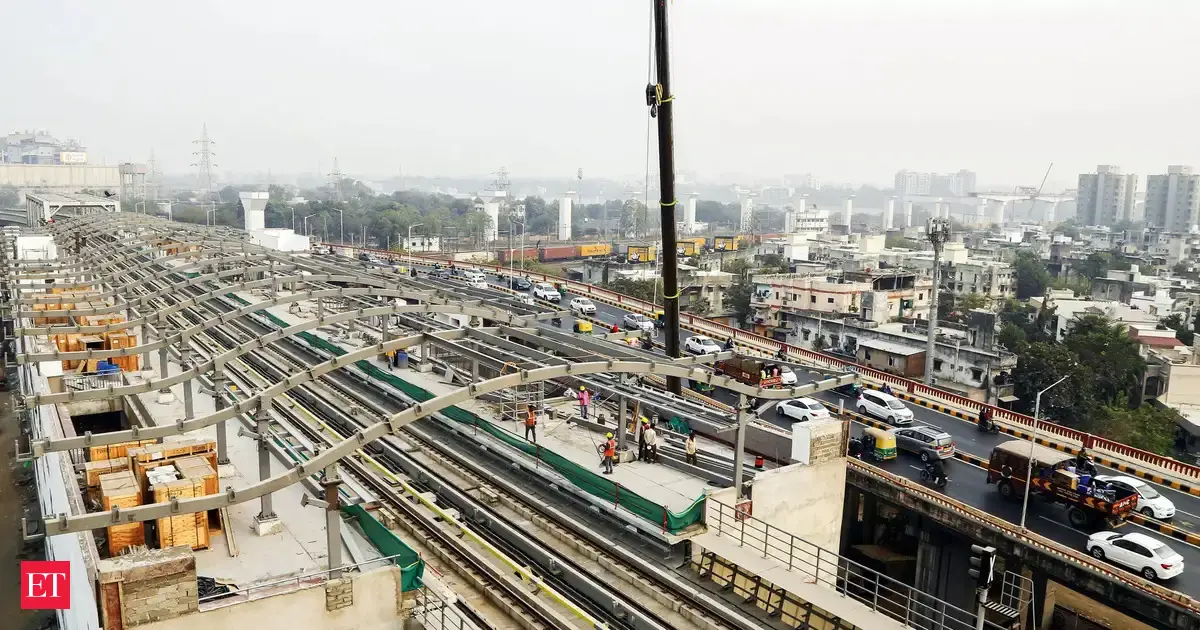
The Budget 2026-27 introduces significant infrastructure development initiatives, including an Infrastructure Risk Guarantee Fund to bolster lender confidence and private sector participation. It features an 11% increase in capital expenditure, specifically targeting infrastructure creation in Tier II and Tier III cities. This strategic focus aims to drive economic growth, generate employment, and improve regional connectivity, making it vital for competitive exam aspirants to understand government economic policy and development priorities.
Revision structure
Monthly events and exam calendar context
Static GK and one-liner notes
Quiz and mock-test revision path
Key points
Exam-ready takeaways
Capital expenditure for infrastructure creation will see an 11% increase.
The focus of infrastructure development will be on Tier II and Tier III cities.
A new scheme will promote domestic manufacturing of construction and infrastructure equipment.
These infrastructure initiatives are part of the Union Budget for the financial year 2026-27.
Detailed analysis
Full exam-oriented breakdown
The Union Budget 2026-27's significant thrust on infrastructure development marks a continuation and acceleration of India's long-term economic strategy. This focus is not new; successive Indian governments have recognized infrastructure as a critical engine for economic growth, employment generation, and improved living standards. However, the current budget's initiatives, particularly the establishment of an Infrastructure Risk Guarantee Fund, the substantial 11% increase in capital expenditure, and the specific targeting of Tier II and Tier III cities, signal a more refined and strategic approach. **Background Context:** India's rapid economic growth aspirations are often constrained by inadequate infrastructure. Despite significant investments over the past two decades, a substantial infrastructure deficit persists, especially in areas like logistics, urban services, and connectivity in smaller towns. Previous initiatives, such as the National Infrastructure Pipeline (NIP) launched in 2019, which envisioned an investment of over ₹111 lakh crore by 2025, and the more recent PM Gati Shakti National Master Plan (2021), aimed at integrated planning and coordinated implementation of infrastructure projects, laid the groundwork. These plans highlighted the need for not just public investment but also robust private sector participation. However, private investment in infrastructure has often been hampered by perceived risks, long gestation periods, and challenges in financing, leading to a gap between ambition and execution. **What Happened:** The Budget 2026-27 addresses these challenges head-on. The proposed **Infrastructure Risk Guarantee Fund** is a crucial intervention. Its purpose is to de-risk infrastructure projects for lenders, thereby encouraging greater participation from financial institutions. By providing a partial guarantee against specific risks inherent in large-scale infrastructure projects (e.g., construction delays, regulatory hurdles, payment defaults), the fund aims to improve project bankability and lower the cost of capital for private developers. This mechanism is designed to unlock private capital, which is essential given the scale of India's infrastructure needs. Furthermore, the **11% increase in capital expenditure** for infrastructure creation underscores the government's continued commitment to public investment as a growth driver. Capital expenditure has a high multiplier effect, meaning every rupee spent generates several rupees of economic activity, creates jobs across various sectors, and enhances productive capacity. This sustained public spending is vital to crowd in private investment and provide the foundational assets necessary for economic expansion. A strategic shift is evident in the **focus on developing infrastructure in Tier II and Tier III cities**. Historically, infrastructure development has often concentrated on metropolitan areas. This new emphasis aims to address regional imbalances, stimulate economic activity beyond major urban centers, improve connectivity, and enhance the quality of life in smaller cities. This move aligns with the broader goal of inclusive growth and reducing urban migration pressures on megacities. It also recognizes the potential of these emerging urban centers as future growth poles. Finally, the **new scheme to promote domestic manufacturing of construction and infrastructure equipment** is a direct push towards 'Atmanirbhar Bharat' (self-reliant India). By encouraging local production, India can reduce its reliance on imports, create manufacturing jobs, boost technological capabilities, and ensure a more resilient supply chain for its ambitious infrastructure projects. This will also foster innovation and competition within the domestic manufacturing sector. **Key Stakeholders Involved:** * **Government of India (Ministry of Finance, NITI Aayog, various line ministries like MoRTH, MoHUA):** As the primary policy framer, financier, and facilitator. The Ministry of Finance crafts the budget (Article 112 of the Constitution mandates the Annual Financial Statement), NITI Aayog provides strategic direction, and line ministries implement projects. * **Private Developers and Contractors:** They are the key executors of infrastructure projects. The Risk Guarantee Fund directly benefits them by improving project financing conditions. * **Financial Institutions (Banks, NBFCs, Infrastructure Finance Companies):** They provide the necessary capital. The Risk Guarantee Fund aims to boost their confidence in lending to infra projects. * **Local Urban Bodies (Municipal Corporations, Panchayats):** Particularly relevant for Tier II/III city development. The 74th Constitutional Amendment Act, 1992, devolves powers and responsibilities to urban local bodies, including planning for economic and social development and urban planning, which includes infrastructure. * **Construction and Equipment Manufacturers:** Directly benefit from the 'Make in India' scheme for domestic equipment. * **Citizens:** The ultimate beneficiaries, experiencing improved connectivity, services, and economic opportunities. **Significance for India:** These initiatives are profoundly significant for India's economic trajectory. They promise to: 1. **Drive Economic Growth:** Infrastructure spending is a proven stimulant for GDP growth, creating demand for various industries like steel, cement, and logistics. 2. **Generate Employment:** From construction workers to engineers and manufacturing personnel, infrastructure projects are major job creators. 3. **Enhance Competitiveness:** Better roads, ports, airports, and digital connectivity reduce logistics costs, improve supply chain efficiency, and make India a more attractive destination for investment. 4. **Promote Inclusive Development:** Focusing on Tier II/III cities helps bridge the urban-rural divide and ensures that the benefits of growth are more widely distributed, aligning with the Directive Principles of State Policy (e.g., Article 38). 5. **Strengthen 'Make in India':** The domestic manufacturing scheme supports industrial growth and self-reliance. **Historical Context and Broader Themes:** India's infrastructure push has evolved. From the initial focus on core sectors post-independence, through programs like the Golden Quadrilateral in the late 1990s and early 2000s, to more recent comprehensive programs like Bharatmala Pariyojana (roads), Sagarmala Pariyojana (ports), and the National Infrastructure Pipeline, the emphasis has consistently been on building foundational assets. The current budget builds upon these by integrating financial innovation (Risk Guarantee Fund) and a targeted regional approach, all under the umbrella of PM Gati Shakti for integrated planning. **Future Implications:** Looking ahead, these measures are expected to lead to a more robust and resilient infrastructure ecosystem. The de-risking of projects could attract greater foreign direct investment (FDI) into the sector. The focus on Tier II/III cities may lead to the emergence of new economic hubs, decentralizing growth and potentially addressing issues of urban congestion in metros. The emphasis on domestic manufacturing also sets the stage for India to become a global player in infrastructure equipment. However, successful implementation will depend on efficient project execution, timely land acquisition (governed by the Right to Fair Compensation and Transparency in Land Acquisition, Rehabilitation and Resettlement Act, 2013), environmental clearances, and sustained fiscal discipline, which is guided by the Fiscal Responsibility and Budget Management (FRBM) Act, 2003. These steps are critical for India to achieve its vision of becoming a developed nation by 2047, with world-class infrastructure underpinning its economic might and social progress.
How to study
Turn news into exam marks
Revise monthly events by exam family instead of reading random updates.
Pair one-liners with mock tests so mistakes become the next revision list.
Keep state job pages, calendar pages and GK packs connected in one path.