

The Supreme Court directed jail authorities to arrange specialist medical treatment.
GK and monthly revision
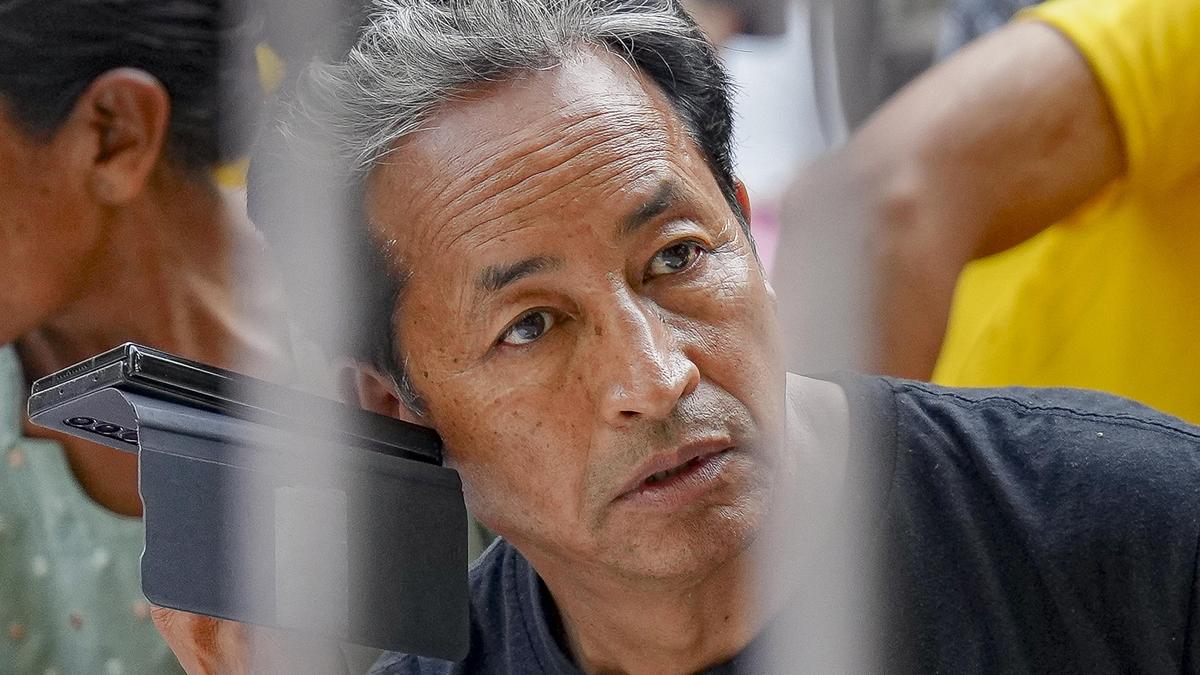
Sonam Wangchuk taken to AIIMS Jodhpur
The Supreme Court directed jail authorities to ensure specialist medical treatment for Sonam Wangchuk at AIIMS Jodhpur. This intervention followed his counsel's report of persistent stomach pain, allegedly due to poor water quality in jail. This highlights the judiciary's role in upholding prisoner rights and ensuring adequate medical care in custody, a crucial aspect of fundamental rights for competitive exams.
Revision structure
Monthly events and exam calendar context
Static GK and one-liner notes
Quiz and mock-test revision path
Key points
Exam-ready takeaways
The individual receiving treatment is named Sonam Wangchuk.
Treatment is to be provided at AIIMS Jodhpur.
The health issue cited was persistent stomach pain.
The pain was attributed by his counsel to poor water quality in the jail.
Detailed analysis
Full exam-oriented breakdown
The Supreme Court's recent directive to ensure specialist medical treatment for Sonam Wangchuk at AIIMS Jodhpur underscores a critical aspect of India's judicial system: the unwavering commitment to uphold fundamental rights, even for those in custody. This incident, while specific to an individual, casts a spotlight on broader issues concerning prisoner rights, judicial oversight, and the state of prison infrastructure in India. **Background Context: A Voice for Ladakh's Future** Sonam Wangchuk, a renowned education reformist and environmental activist, gained national prominence not only for his innovative educational initiatives (inspiring the character Phunsukh Wangdu in the film '3 Idiots') but also for his staunch advocacy for the fragile Himalayan ecosystem of Ladakh. For months leading up to this Supreme Court intervention, Wangchuk had been engaged in a hunger strike and protests, demanding the implementation of the Sixth Schedule of the Constitution for Ladakh. This special provision, applicable to certain tribal areas in Northeast India, aims to protect the cultural identity, land rights, and autonomy of indigenous communities. Wangchuk's primary concern has been the perceived threat of unchecked industrialization and tourism to Ladakh's delicate environment, arguing that without the Sixth Schedule, the region's unique glaciers and ecosystems are vulnerable. His detention, often linked to these protests, brought his health condition in jail into focus. **What Happened: Judicial Intervention for Humane Treatment** Following a plea by Sonam Wangchuk's counsel, who reported his client suffering from persistent stomach pain attributed to poor water quality in the jail, the Supreme Court of India intervened. The apex court directed the jail authorities to arrange for specialist medical treatment for Wangchuk at AIIMS Jodhpur. This directive is a clear affirmation of the principle that every individual, regardless of their status or the reasons for their incarceration, is entitled to adequate medical care and humane living conditions. **Key Stakeholders Involved:** * **Sonam Wangchuk:** The individual whose fundamental right to health and humane treatment is at stake. He represents a broader class of activists and prisoners whose rights might be compromised in custody. * **Supreme Court of India:** As the guardian of the Constitution and fundamental rights, the Supreme Court's intervention demonstrates its role in ensuring justice and upholding the rule of law. Its directives are binding on all authorities. * **Jail Authorities:** Responsible for the custody, safety, and well-being of prisoners. This incident highlights their accountability in providing basic amenities, including safe drinking water and medical facilities. * **Counsel/Legal Representatives:** Play a crucial role in bringing grievances of those in custody before the judiciary, acting as a vital link between prisoners and the legal system. * **AIIMS Jodhpur:** A premier medical institution tasked with providing specialized healthcare, underscoring the need for quality medical attention when basic jail facilities are insufficient. **Why This Matters for India: Upholding Human Dignity** This incident is significant for several reasons. Firstly, it reiterates the paramount importance of **prisoner rights** in a democratic society. Even those accused or convicted of crimes retain their fundamental human rights, including the right to life and personal liberty (Article 21 of the Constitution), which implicitly includes the right to health and humane treatment. The Supreme Court's directive acts as a check against potential negligence or abuse by state authorities. Secondly, it highlights the proactive role of **judicial activism and oversight**. The judiciary, particularly the Supreme Court, often steps in to protect individual liberties when executive actions or systemic failures threaten them. This reinforces public trust in the judiciary as a last resort for justice. Thirdly, it brings to the fore the persistent challenges within India's **prison system**. Issues like poor water quality, inadequate medical facilities, overcrowding, and lack of hygiene are chronic problems that undermine the dignity of prisoners. This case can potentially spur greater scrutiny and demand for prison reforms, aligning with the recommendations of various committees and the Model Prison Manual 2016. **Historical Context and Constitutional Provisions:** The protection of prisoner rights has a rich legal history in India. Landmark judgments like *Sunil Batra v. Delhi Administration (1978)* established that prisoners are not stripped of their fundamental rights merely by incarceration. The *D.K. Basu v. State of West Bengal (1997)* guidelines further laid down specific procedures to be followed during arrest and detention to prevent custodial violence and ensure human dignity. These judgments are rooted in **Article 21 of the Indian Constitution**, which guarantees the 'Right to Life and Personal Liberty.' The Supreme Court has expansively interpreted Article 21 to include the right to live with human dignity, the right to health, the right to medical care, and protection against degrading treatment. **Article 32** empowers individuals to directly approach the Supreme Court for the enforcement of fundamental rights. Additionally, the **Prisons Act, 1894**, and the subsequent **Model Prison Manual 2016**, provide the legal framework for prison administration, including provisions for medical care. **Future Implications:** This case could serve as a precedent, encouraging more rigorous monitoring of prison conditions across the country. It reinforces the accountability of jail authorities and strengthens the legal recourse available to prisoners. Furthermore, it keeps the broader conversation around environmental protection and the rights of indigenous communities in regions like Ladakh alive. The health and safety of activists in custody, especially those advocating for sensitive environmental and tribal rights issues, will likely receive increased attention, potentially influencing policy discussions on dissent, detention, and human rights in India. In essence, the Supreme Court's intervention is not just about one individual's medical treatment; it's a powerful affirmation of the foundational principles of justice, human dignity, and the rule of law that are cornerstones of India's democratic fabric.
How to study
Turn news into exam marks
Revise monthly events by exam family instead of reading random updates.
Pair one-liners with mock tests so mistakes become the next revision list.
Keep state job pages, calendar pages and GK packs connected in one path.