

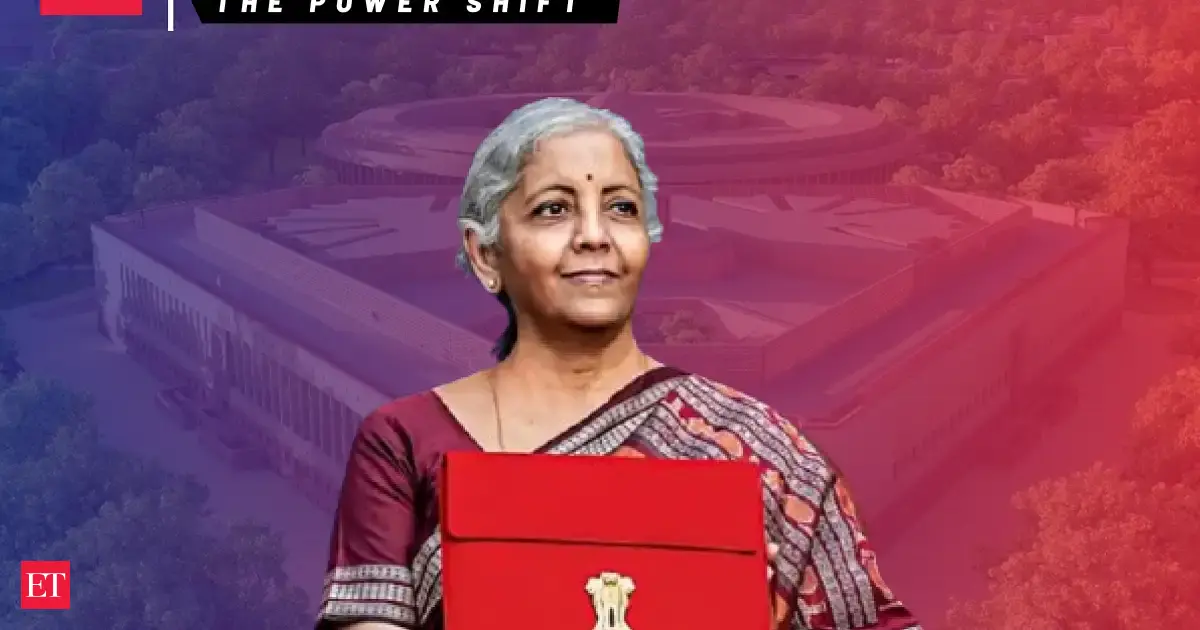
Union Budget 2026 was presented by Finance Minister Nirmala Sitharaman.
GK and monthly revision
Union Budget 2026: Govt targets lower debt, backs city regions and social initiatives
Finance Minister Nirmala Sitharaman presented the Union Budget 2026, outlining a strategy to decrease the Centre's debt-to-GDP ratio. The budget allocates Rs 5,000 crore over five years for urban-led growth and proposes a scheme to develop the Buddhist circuit in the Northeast. It also includes support for manufacturing assistive devices, making these key policy directions vital for competitive exam aspirants.
Revision structure
Monthly events and exam calendar context
Static GK and one-liner notes
Quiz and mock-test revision path
Key points
Exam-ready takeaways
The budget targets a decrease in the Centre's debt-to-GDP ratio.
Rs 5,000 crore is allocated for urban-led growth over a period of five years.
A new scheme will be introduced to develop the Buddhist circuit in the Northeast region.
The budget also includes provisions for supporting the manufacturing of assistive devices.
Detailed analysis
Full exam-oriented breakdown
The Union Budget 2026, presented by Finance Minister Nirmala Sitharaman, lays out a strategic roadmap for India's economic trajectory, focusing on fiscal prudence, urban development, regional growth, and social inclusion. This budget is not merely an accounting exercise but a comprehensive policy statement reflecting the government's priorities for the coming years. **Background Context: India's Fiscal Framework and Economic Aspirations** The Union Budget, formally known as the Annual Financial Statement under Article 112 of the Indian Constitution, is the government's estimate of its receipts and expenditures for the upcoming financial year. It's a critical instrument for economic planning and policy implementation. India's fiscal landscape has long been shaped by the need to balance developmental expenditure with fiscal responsibility. The Fiscal Responsibility and Budget Management (FRBM) Act, 2003, was enacted to institutionalize financial discipline, reduce fiscal deficit, and improve macro-economic management. In the years leading up to 2026, global economic uncertainties and domestic growth imperatives likely necessitated a renewed focus on debt management to ensure long-term economic stability and investor confidence. The emphasis on urban-led growth reflects the continuing trend of urbanization and the recognition that cities are engines of economic growth, while initiatives for the Northeast and assistive devices underscore a commitment to inclusive development and regional balance. **Key Budgetary Thrusts: Fiscal Prudence, Urbanisation, and Inclusive Development** The budget's core proposals highlight several crucial directions. Firstly, the target to decrease the Centre's debt-to-GDP ratio is a significant commitment to fiscal consolidation. A high debt-to-GDP ratio can lead to higher interest payments, crowding out productive investments, and potentially impacting India's credit rating. By aiming for a lower ratio, the government signals its intent to maintain a sustainable fiscal path, crucial for attracting both domestic and foreign investment and ensuring inter-generational equity. Secondly, the allocation of Rs 5,000 crore over five years for urban-led growth signifies a continued focus on India's burgeoning cities. With rapid urbanization, cities face immense pressure on infrastructure, housing, and public services. This investment is likely aimed at improving urban infrastructure, promoting smart city initiatives, enhancing liveability, and fostering economic opportunities in urban centres. This aligns with the vision of the 74th Constitutional Amendment Act, which empowered Urban Local Bodies (ULBs) and recognized their role in local governance and development. Previous initiatives like the Smart Cities Mission and AMRUT (Atal Mission for Rejuvenation and Urban Transformation) have laid the groundwork for such continued investments. Thirdly, the proposed scheme to develop the Buddhist circuit in the Northeast region holds immense strategic and cultural significance. The Northeast, with its rich cultural heritage and geographical proximity to Southeast Asia, is a cornerstone of India's 'Act East Policy'. Developing the Buddhist circuit will not only boost tourism, generate employment, and provide economic impetus to the region but also strengthen India's soft power and cultural diplomacy, particularly with Buddhist-majority nations in Asia. This initiative also ties into broader efforts for infrastructure development and connectivity in the region, which has historically faced developmental challenges. Finally, supporting the manufacturing of assistive devices addresses a critical social and economic need. This initiative aligns with the 'Make in India' campaign, promoting domestic manufacturing and self-reliance, while simultaneously fostering social inclusion. Assistive devices are crucial for enhancing the independence, participation, and quality of life for persons with disabilities. This policy is a direct step towards implementing the spirit of the Rights of Persons with Disabilities (RPWD) Act, 2016, which mandates equal opportunities and non-discrimination for PwDs. By promoting local manufacturing, it can make these devices more affordable and accessible, reducing reliance on imports. **Key Stakeholders and Significance for India** The primary stakeholders include the **Ministry of Finance**, responsible for budget formulation and implementation; **NITI Aayog**, providing strategic policy direction; **State Governments and Urban Local Bodies**, crucial for the execution of urban development projects; the **manufacturing sector**, especially those involved in assistive devices; the **tourism industry**, poised to benefit from the Buddhist circuit; and most importantly, the **citizens of India**, who are the ultimate beneficiaries of improved infrastructure, economic stability, and inclusive policies. This budget matters for India because it seeks to ensure macro-economic stability through fiscal prudence, drive economic growth through urbanisation, promote regional balance and cultural diplomacy through Northeast development, and foster social inclusion and self-reliance through support for assistive device manufacturing. It represents a multi-faceted approach to achieving 'Viksit Bharat' (Developed India) by 2047. **Future Implications** The successful implementation of these budgetary provisions could lead to a more stable macroeconomic environment, enhanced urban infrastructure and liveability, significant economic upliftment and integration of the Northeast, and greater empowerment for persons with disabilities. Challenges will include effective execution, inter-ministerial coordination, monitoring of funds, and ensuring that the benefits reach the intended beneficiaries without leakages. The fiscal consolidation path will be closely watched by international rating agencies and investors. The focus on specific sectors like urban development and assistive device manufacturing also signifies a shift towards targeted interventions for sustainable and equitable growth, potentially setting precedents for future policy directions.
How to study
Turn news into exam marks
Revise monthly events by exam family instead of reading random updates.
Pair one-liners with mock tests so mistakes become the next revision list.
Keep state job pages, calendar pages and GK packs connected in one path.