

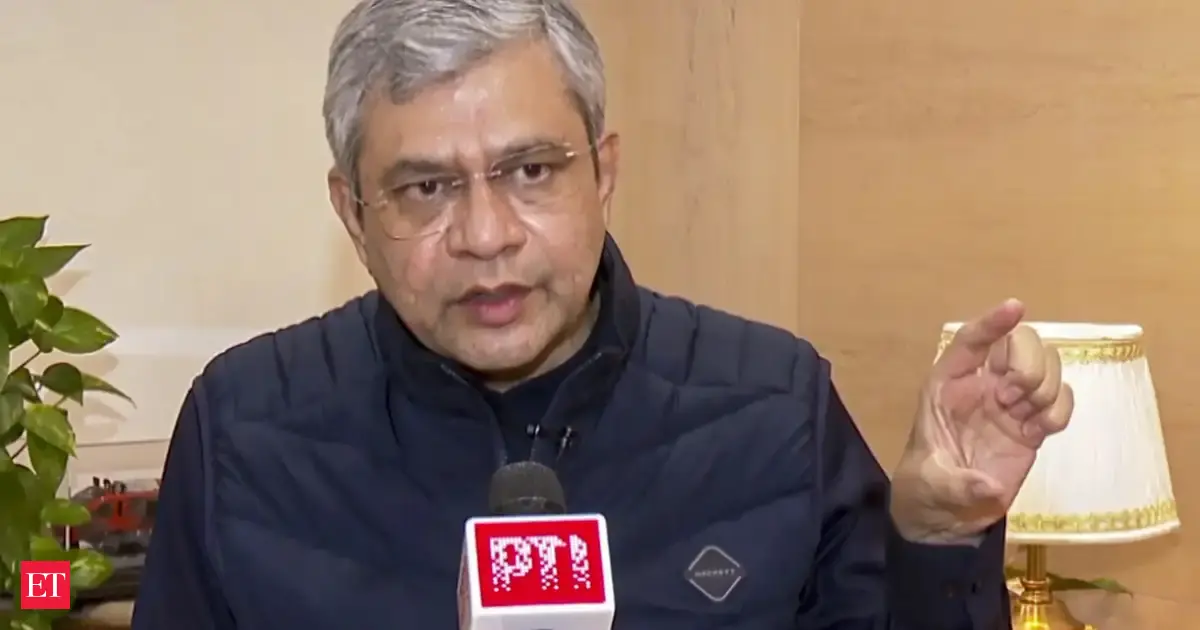
Union Minister Ashwini Vaishnaw announced plans for laying underground railway tracks.
GK and monthly revision
Centre planning underground rail tracks along 40-km corridor connecting Northeast, rest of India: Ashwini Vaishnaw
The Centre, as announced by Ashwini Vaishnaw, is planning to lay underground railway tracks along a 40-km strategic 'Chicken's Neck' corridor in West Bengal. This vital infrastructure project aims to significantly enhance connectivity and security between India's Northeast region and the rest of the country. Furthermore, the existing double line will be upgraded to a four-line track, marking a crucial development for regional logistics and national integration, highly relevant for competitive exams on infrastructure and geography.
Revision structure
Monthly events and exam calendar context
Static GK and one-liner notes
Quiz and mock-test revision path
Key points
Exam-ready takeaways
The project involves a 40-km strategic corridor located in West Bengal.
This vital route is commonly referred to as the 'Chicken's Neck' corridor.
The primary objective is to connect India's Northeast region with the rest of the country.
The existing double railway line along this corridor will be converted into a four-line track.
Detailed analysis
Full exam-oriented breakdown
The Union Minister for Railways, Ashwini Vaishnaw, recently announced an ambitious plan to lay underground railway tracks along a 40-km strategic corridor in West Bengal, famously known as the 'Chicken's Neck'. This project is not merely an infrastructure upgrade; it's a profound strategic move aimed at bolstering India's national integration, economic development, and security, particularly concerning the geopolitically sensitive Northeast region. This development will also see the existing double line converted into a four-line track, significantly enhancing capacity and efficiency. To truly grasp the significance of this project, we must understand its background context. The 'Chicken's Neck', or the Siliguri Corridor, is a narrow stretch of land, barely 22 kilometers wide at its narrowest point, connecting India's mainland to its seven northeastern states. This geographical bottleneck, flanked by Nepal to the north and Bangladesh to the south, Bhutan to the north-east, has historically been a point of strategic vulnerability. During the 1962 Sino-Indian War, and even in subsequent periods of regional instability, the corridor's fragility posed significant logistical challenges for troop movement and supply lines to the border regions. Decades of underdevelopment in the Northeast, partly due to this bottleneck and challenging terrain, have meant that improved, resilient connectivity remains a top priority for national development and security. This project involves several key stakeholders. The primary implementer and financier will be the **Ministry of Railways, Government of India**, through Indian Railways, demonstrating the central government's commitment to national infrastructure. The **Ministry of Defence** is a crucial stakeholder, as the enhanced connectivity directly impacts India's ability to rapidly deploy forces and supplies to its eastern borders, especially given the ongoing border tensions with China. The **Government of West Bengal** will play a vital role in facilitating land acquisition, providing necessary clearances, and ensuring law and order during the construction phase. Local communities residing along the corridor are also significant stakeholders, as the project will bring both potential disruptions (e.g., temporary displacement, environmental impact) and opportunities (e.g., employment, improved connectivity for personal travel and trade). The significance of this project for India is multi-faceted. Economically, it promises to be a game-changer for the Northeast. Improved rail connectivity means faster and cheaper movement of goods, boosting trade, tourism, and industrial growth in states like Assam, Meghalaya, Tripura, and others. It directly aligns with India's 'Act East Policy', positioning the Northeast as a gateway for enhanced trade and connectivity with Southeast Asian nations. Politically, it strengthens national integration by physically and emotionally connecting the region more seamlessly with the rest of India, helping to counter any feelings of isolation. Strategically, the underground tracks offer a more secure and resilient transport artery, less vulnerable to external threats or natural disasters that often plague surface infrastructure in the region. This is critical for national security and maintaining territorial integrity. Historically, while the Siliguri Corridor's strategic importance has always been recognized, comprehensive and resilient infrastructure development has been a gradual process. Post-independence, the focus was often on road networks, but the sheer volume of traffic and the strategic imperative for redundancy and security have necessitated robust rail upgrades. This current project marks a significant technological leap with underground tracks, a testament to modern engineering solutions for complex geopolitical challenges. Looking ahead, the future implications are substantial. The four-line track and underground sections will dramatically increase the carrying capacity for both passenger and freight trains, reducing travel times and logistics costs. This will spur economic activity, potentially leading to the establishment of new industrial hubs and increased tourism in the Northeast. From a defense perspective, it fortifies India's logistical backbone in a sensitive border region. However, challenges remain, including the technical complexities and high costs associated with underground construction, potential environmental impact, and the need for seamless coordination between central and state agencies. The project also underscores the broader theme of integrated infrastructure development under initiatives like PM Gati Shakti, which aims for multi-modal connectivity. From a constitutional perspective, **Railways** fall under **Entry 22 of the Union List** in the **Seventh Schedule** of the Indian Constitution, granting the Parliament exclusive power to legislate on this subject. This empowers the central government to undertake such large-scale national projects. Furthermore, the **Land Acquisition, Rehabilitation and Resettlement Act, 2013**, will govern the process of acquiring land for the project, ensuring fair compensation and rehabilitation for affected persons. This project is a prime example of the Union government exercising its legislative and executive powers to achieve strategic national goals, demonstrating the interplay between governance, economy, and national security.
How to study
Turn news into exam marks
Revise monthly events by exam family instead of reading random updates.
Pair one-liners with mock tests so mistakes become the next revision list.
Keep state job pages, calendar pages and GK packs connected in one path.