

Special Economic Zone (SEZ) units have been granted a temporary relaxation for domestic sales.
GK and monthly revision
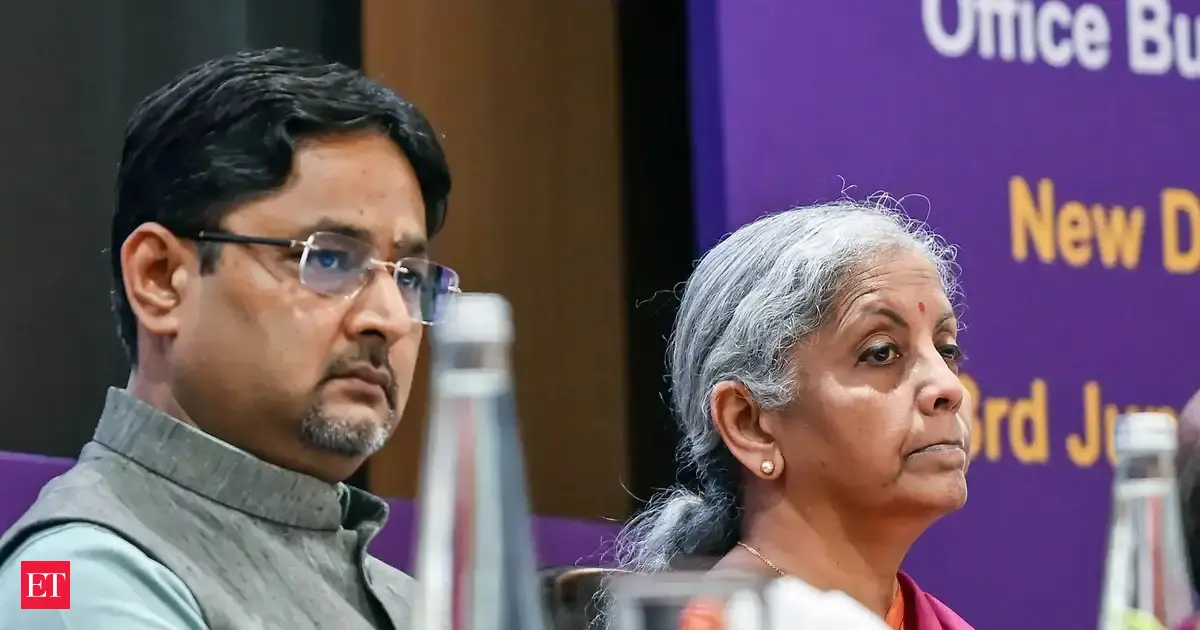
Relaxation to SEZ units on domestic sales will be temporary: Revenue secretary
In a significant move, the government has granted Special Economic Zone (SEZ) units a temporary relaxation, allowing them to sell their manufactured goods directly in the domestic tariff area. This initiative aims to mitigate the impact of fluctuating global trade pressures on SEZ manufacturers. For competitive exams, this highlights government interventions in trade policy and the functioning of SEZs, crucial for understanding economic reforms and their implications.
Revision structure
Monthly events and exam calendar context
Static GK and one-liner notes
Quiz and mock-test revision path
Key points
Exam-ready takeaways
The initiative allows SEZ manufacturers to sell their goods directly within the local tariff area.
This measure is designed to alleviate pressures stemming from fluctuating global trade.
The opportunity for domestic sales is explicitly stated as a 'limited-time opportunity'.
The announcement regarding this temporary relaxation was made by the Revenue Secretary.
Detailed analysis
Full exam-oriented breakdown
The Indian government's recent decision to grant a temporary relaxation to Special Economic Zone (SEZ) units, allowing them to sell their manufactured goods directly into the Domestic Tariff Area (DTA), marks a significant, albeit temporary, shift in India's trade policy. This move, announced by the Revenue Secretary, is a direct response to the global economic headwinds and fluctuating international trade volumes that have impacted the primary purpose of SEZs: export promotion. **Background Context: The Genesis and Purpose of SEZs** To truly understand this development, one must first grasp the concept and history of SEZs in India. Special Economic Zones are geographically delineated enclaves treated as foreign territory for trade operations, duties, and tariffs. India adopted the SEZ model to boost exports, attract foreign investment, and create employment opportunities. The journey began with Asia's first Export Processing Zone (EPZ) established in Kandla in 1965. However, the comprehensive framework for SEZs came with the **Special Economic Zones Act, 2005**, and the SEZ Rules, 2006. This legislation provided a stable and attractive policy regime, offering various incentives like 100% income tax exemption on export income for the first five years, 50% for the next five years, and 50% of the ploughed back export profit for the subsequent five years. Other benefits include duty-free import/domestic procurement of goods for development, operation, and maintenance of SEZ units, and single-window clearance mechanisms. The core principle was that goods produced in SEZs were primarily for export; any sale into the DTA attracted full customs duties and other levies, treating them as imports. **What Happened: A Temporary Reprieve** Facing a slowdown in global trade, SEZ units have been struggling to meet their Net Foreign Exchange Earning (NFE) obligations, which mandate that their exports must exceed their imports over a five-year block. The temporary relaxation allows these units to sell their products in the domestic market by paying the applicable customs duties and other taxes. This is a crucial lifeline, enabling them to utilize their installed capacities, maintain production, and prevent job losses, even when international demand is subdued. The 'limited-time opportunity' aspect is key, signaling the government's intention to revert to the original export-focused mandate once global trade stabilizes. **Key Stakeholders Involved** Several key players are impacted by this policy shift. The **Government of India**, particularly the Ministry of Finance and the Ministry of Commerce & Industry, is the primary policymaker, balancing the need to support SEZ units with the broader objectives of domestic industry protection and revenue generation. **SEZ units and their manufacturers** are the direct beneficiaries, gaining access to a new market channel during challenging times. This helps them sustain operations and potentially avoid closure. The **domestic industry** in the DTA, however, views this with a degree of caution. While SEZ units will pay duties, there's always a concern about increased competition and potential market disruption, especially if the relaxation becomes prolonged. Finally, **consumers** might benefit from an increased supply of goods, potentially leading to more competitive pricing, though the primary intent is not consumer welfare but industrial support. **Significance for India: A Balancing Act** This move holds significant implications for the Indian economy. Firstly, it demonstrates the government's pragmatic and adaptive approach to economic policy, recognizing the need for flexibility in the face of global uncertainties. It's a proactive measure to prevent de-industrialization and job losses within SEZs. Secondly, it highlights the ongoing tension between India's export promotion agenda and its 'Make in India' and 'Atmanirbhar Bharat' initiatives, which prioritize domestic manufacturing and self-reliance. While SEZ units are domestic entities, their operations are geared towards foreign markets. Allowing DTA sales blurs this line, potentially offering a temporary bridge between these two policy objectives. Thirdly, it could provide a much-needed boost to manufacturing output, contributing to GDP, even if the goods are not exported. The collection of customs duties on these DTA sales will also contribute to government revenue, which is vital. **Historical Context and Future Implications** Historically, India has often adjusted its trade policies in response to global economic shifts. The evolution from EPZs to SEZs itself was a response to the need for a more stable and attractive investment climate. This temporary relaxation is reminiscent of similar measures taken during past economic downturns, albeit on a smaller scale. Looking ahead, the future implications are manifold. If global trade remains volatile, there might be pressure to extend or even make this relaxation a more permanent feature, which could necessitate a broader re-evaluation of the SEZ policy framework. This could lead to a 'hybrid model' where SEZ units serve both domestic and international markets more seamlessly, albeit with appropriate duty structures. However, any such move would require careful consideration of its impact on the DTA industry and compliance with World Trade Organization (WTO) rules, particularly concerning domestic content requirements and subsidies. The government will need to continuously monitor the balance between supporting SEZ units and ensuring a level playing field for domestic manufacturers, aligning with the broader vision of a robust, self-reliant Indian economy. **Related Constitutional Articles, Acts, or Policies** The primary legislation governing this area is the **Special Economic Zones Act, 2005**, and the **SEZ Rules, 2006**. These define the operational framework, incentives, and conditions for SEZs, including provisions for DTA sales. The **Customs Act, 1962**, is crucial as it dictates the levy and collection of customs duties on goods entering the DTA from SEZs. India's overarching **Foreign Trade Policy**, typically updated periodically by the Ministry of Commerce & Industry, also sets the general direction for exports and imports and often includes specific provisions related to SEZs. While not directly a constitutional article, the principles of **Article 301** (Freedom of Trade, Commerce, and Intercourse) underpin the overall economic framework within India, ensuring that internal trade policies are consistent with national economic objectives. The current move aligns with the broader economic goal of sustaining manufacturing and employment, complementing initiatives like 'Make in India' by ensuring existing manufacturing capacities remain productive.
How to study
Turn news into exam marks
Revise monthly events by exam family instead of reading random updates.
Pair one-liners with mock tests so mistakes become the next revision list.
Keep state job pages, calendar pages and GK packs connected in one path.