

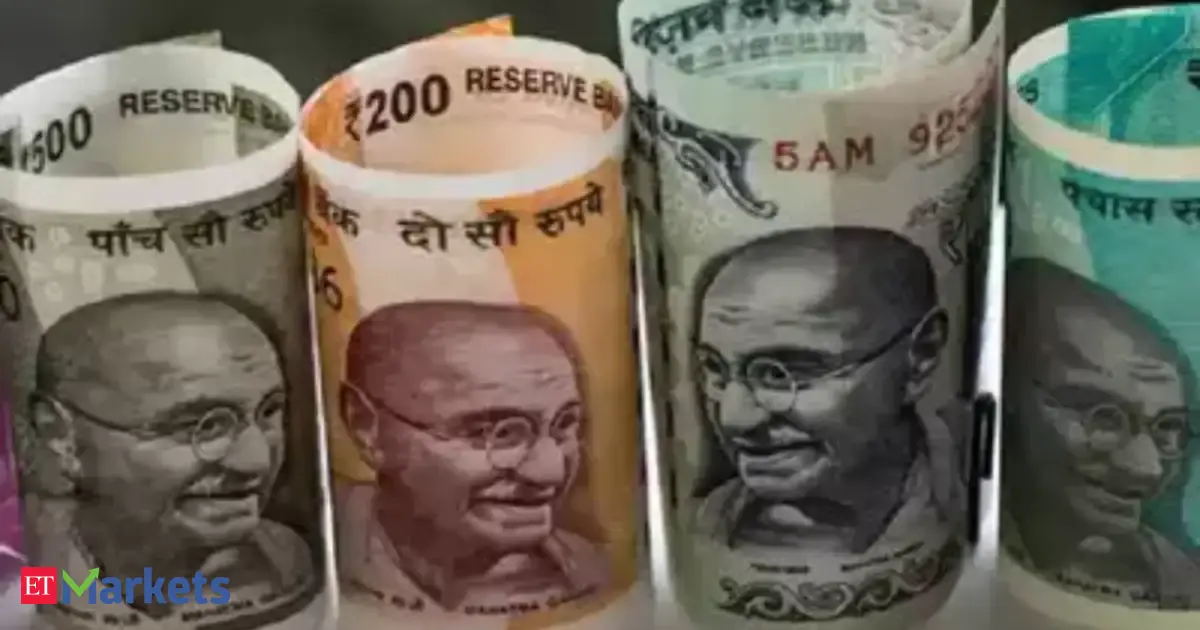
The Indian Rupee recorded its best single-day gain in over a month on a Monday.
GK and monthly revision
Rupee shored up by RBI intervention, swaps cushion liquidity as bonds sell off
The Indian Rupee achieved its best single-day gain in over a month, primarily driven by the Reserve Bank of India's likely intervention through dollar sales. This strategic move, combined with modest foreign inflows, helped insulate the currency from global market volatility. This event underscores the RBI's active role in managing currency stability and liquidity, a critical topic for competitive exam aspirants studying monetary policy and economic interventions.
Revision structure
Monthly events and exam calendar context
Static GK and one-liner notes
Quiz and mock-test revision path
Key points
Exam-ready takeaways
The appreciation was primarily attributed to likely dollar sales by the Reserve Bank of India (RBI).
RBI's intervention involved selling US dollars to absorb liquidity and strengthen the rupee.
Modest foreign inflows also contributed to the rupee's positive performance.
The intervention aimed to mitigate the spillover effects of global market volatility on the Indian currency.
Detailed analysis
Full exam-oriented breakdown
The recent appreciation of the Indian Rupee, its best single-day gain in over a month, offers a crucial insight into the Reserve Bank of India's (RBI) proactive role in managing currency stability and liquidity. This event, driven primarily by the RBI's likely intervention through dollar sales and supported by modest foreign inflows, underscores the complexities of exchange rate management in an increasingly interconnected global economy. **Background Context:** India, like many emerging economies, is susceptible to global financial market volatility. Factors such as shifts in global interest rates (especially by the US Federal Reserve), geopolitical tensions, commodity price fluctuations (particularly crude oil), and changes in investor sentiment can trigger significant capital outflows. These outflows typically lead to a depreciation of the domestic currency as foreign investors sell local assets and convert rupees into dollars, increasing dollar demand. A depreciating rupee makes imports more expensive, potentially fueling inflation (known as imported inflation), and can deter foreign investment, impacting economic growth. The RBI, as the nation's central bank, is mandated to maintain price stability, foster financial stability, and ensure an orderly foreign exchange market. **What Happened:** The article highlights that the Rupee's surge was largely due to the RBI's intervention. When the RBI 'sells dollars,' it essentially steps into the foreign exchange market to increase the supply of US dollars. This action, by increasing dollar supply, simultaneously absorbs an equivalent amount of Indian Rupees from the banking system. By reducing the availability of dollars and increasing the demand for rupees, the RBI effectively strengthens the domestic currency. This also has a secondary effect of tightening domestic liquidity, which can be a tool to manage inflation or prevent excessive speculation. The 'modest inflows' mentioned likely refer to Foreign Institutional Investor (FII) or Foreign Portfolio Investor (FPI) investments into Indian equities or debt, which naturally bring in dollars and contribute to rupee appreciation. This combined effect helped dull the 'spillover from global market volatility,' indicating a successful containment of external pressures. **Key Stakeholders Involved:** 1. **Reserve Bank of India (RBI):** The primary actor, responsible for monetary policy, managing foreign exchange reserves, and maintaining financial stability. Its intervention directly impacts the rupee's value and domestic liquidity. The RBI operates under the **Reserve Bank of India Act, 1934**, which grants it powers for currency management. Its Monetary Policy Committee (MPC) is tasked with maintaining price stability while keeping growth in mind. 2. **Ministry of Finance, Government of India:** Works in coordination with the RBI on broader economic policy. While RBI handles monetary policy, the Ministry manages fiscal policy, and their alignment is crucial for overall economic health. 3. **Foreign Institutional Investors (FIIs)/Foreign Portfolio Investors (FPIs):** Their investment decisions (inflows or outflows) significantly influence the demand and supply of foreign currency, directly impacting the rupee's exchange rate. 4. **Exporters and Importers:** Exporters benefit from a weaker rupee as their goods become cheaper abroad, while importers face higher costs. A stable rupee provides predictability for trade planning. 5. **General Public/Consumers:** A stable or appreciating rupee helps contain imported inflation, making essential imports like crude oil and electronics more affordable. **Why This Matters for India:** This intervention is significant for several reasons. Firstly, it demonstrates the RBI's commitment to maintaining an orderly foreign exchange market, preventing excessive volatility that could harm businesses and investor confidence. Secondly, by shoring up the rupee, the RBI helps mitigate imported inflation, which is crucial for achieving its inflation targeting mandate. India imports a substantial portion of its energy needs and other critical goods, making the rupee's value directly impactful on domestic prices. Thirdly, a stable currency is attractive to foreign investors, encouraging capital inflows essential for funding India's growth and infrastructure projects. Lastly, by absorbing liquidity through dollar sales, the RBI also manages domestic money supply, which is a key component of its broader monetary policy framework. **Historical Context:** India has a history of managing its currency through various regimes, from a fixed exchange rate to a managed float. Significant interventions by the RBI have occurred during periods of heightened global economic stress, such as the 2008 global financial crisis and the 2013 'taper tantrum' when the US Federal Reserve hinted at reducing its quantitative easing, leading to massive capital outflows from emerging markets. These experiences have refined the RBI's toolkit and approach to exchange rate management, balancing market forces with the need for stability. **Future Implications:** The RBI's intervention signals its continued vigilance and readiness to use its foreign exchange reserves to counter adverse external shocks. In the near future, the rupee's trajectory will likely depend on global factors like crude oil prices, the pace of interest rate hikes by major central banks (especially the Fed), and geopolitical developments. Domestically, India's economic growth, inflation trajectory, and the pace of foreign investment will also play a crucial role. The RBI will likely continue its 'managed float' approach, intervening to curb excessive volatility without targeting a specific exchange rate level. The size of India's foreign exchange reserves, currently robust, provides the RBI with ample firepower for such interventions, allowing it to act as a buffer against external shocks and maintain financial stability. **Related Constitutional Articles, Acts, or Policies:** While there isn't a specific constitutional article directly detailing currency intervention, the **Reserve Bank of India Act, 1934**, particularly **Section 17**, outlines the business the Bank may transact, including buying and selling foreign exchange. The **Foreign Exchange Management Act (FEMA), 1999**, provides the legal framework for foreign exchange transactions in India. The RBI's monetary policy operates within the framework of the **Monetary Policy Framework Agreement**, which formally mandates the RBI to maintain price stability, primarily by targeting inflation. These legal and policy frameworks empower the RBI to undertake such interventions for economic stability.
How to study
Turn news into exam marks
Revise monthly events by exam family instead of reading random updates.
Pair one-liners with mock tests so mistakes become the next revision list.
Keep state job pages, calendar pages and GK packs connected in one path.