

India and US finalize a significant trade agreement.
GK and monthly revision
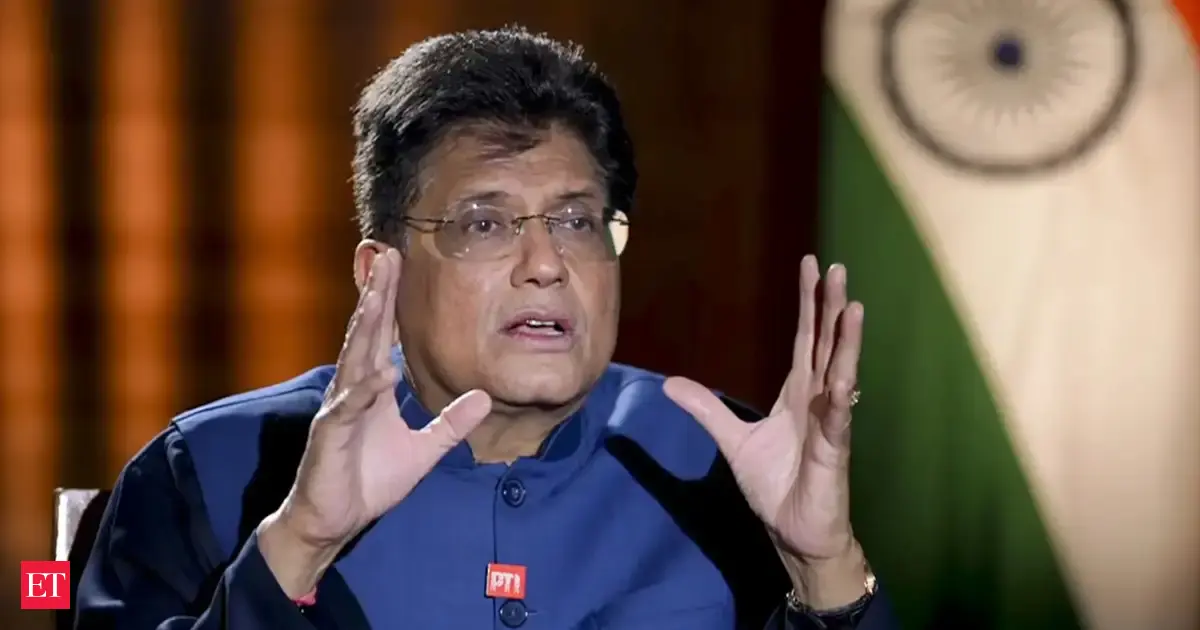
India-US trade deal unlocks unprecedented opportunities for farmers, MSMEs, entrepreneurs, and skilled workers: Piyush Goyal
India and the United States have reached a significant trade agreement that is poised to create substantial opportunities for Indian farmers, Micro, Small, and Medium Enterprises (MSMEs), and entrepreneurs. This deal is expected to facilitate the transfer of technology from the US to India, thereby accelerating India's progress towards its goal of becoming a developed nation ("Viksit Bharat") by 2047. Furthermore, the agreement will bolster initiatives like "Make in India" and "Design in India," enabling Indian businesses to access and compete in the global market. This development signifies a major step in strengthening bilateral economic ties and promoting indigenous manufacturing and innovation.
Revision structure
Monthly events and exam calendar context
Static GK and one-liner notes
Quiz and mock-test revision path
Key points
Exam-ready takeaways
Deal to boost opportunities for farmers, MSMEs, and entrepreneurs.
Facilitates technology transfer from US to India, aiding "Viksit Bharat 2047".
Opens global market access for "Make in India" and "Design in India" initiatives.
Detailed analysis
Full exam-oriented breakdown
The recent announcement by Union Minister Piyush Goyal regarding the finalization of a significant trade agreement between India and the United States marks a pivotal moment in the bilateral relationship, promising unprecedented opportunities across various Indian sectors. This deal is not merely a transactional agreement but a strategic move designed to bolster India's economic growth, enhance its manufacturing capabilities, and accelerate its ambitious vision of 'Viksit Bharat 2047'. The background to this agreement is rooted in the evolving dynamics of India-US relations. For decades, the relationship was characterized by a certain distance, often influenced by Cold War geopolitics. However, post-1991 economic liberalization in India and the turn of the millennium saw a gradual but significant warming of ties, culminating in a 'strategic partnership'. While defense and strategic cooperation surged, trade relations often lagged, occasionally facing friction over issues like tariffs, intellectual property rights, and market access. The US, for instance, withdrew India's Generalized System of Preferences (GSP) benefits in 2019, impacting Indian exports. Despite these hurdles, both nations recognized the immense potential of a stronger economic bond, driven by shared democratic values and a common interest in a free and open Indo-Pacific. This trade deal, therefore, represents a conscious effort to iron out some of these past creases and build a more robust economic framework. At its core, the agreement is projected to unlock opportunities for key stakeholders within India. Farmers stand to benefit from potential access to advanced agricultural technologies, better market linkages, and improved supply chains, which could enhance productivity and profitability. Micro, Small, and Medium Enterprises (MSMEs), often considered the backbone of the Indian economy, are poised to gain significantly from technology transfer and increased access to the vast US market. This could lead to capacity building, modernization, and integration into global value chains. Entrepreneurs and skilled workers will find new avenues for growth, job creation, and skill development, particularly as US technology flows into India and 'Make in India' initiatives gain global traction. On the US side, the deal provides greater market access for its products and services, fostering collaboration with a rapidly growing economy and a strategic partner. The significance of this agreement for India is multi-faceted. Economically, it promises to boost exports, attract foreign direct investment (FDI), and stimulate domestic manufacturing under the 'Make in India' and 'Design in India' initiatives. The focus on technology transfer is crucial for India's technological upgradation, which is essential for competing globally and moving up the value chain. Politically, it strengthens the strategic partnership with the US, a key ally in balancing regional powers and promoting a rules-based international order. Socially, the creation of jobs and the empowerment of MSMEs and farmers can lead to inclusive growth and poverty reduction. Historically, India's engagement with international trade has evolved significantly. From a largely protectionist stance post-independence, India has steadily moved towards greater integration with the global economy, especially after the 1991 reforms. This deal aligns with India's current foreign policy objective of enhancing economic diplomacy and forging deeper bilateral and multilateral trade agreements. The vision of 'Viksit Bharat 2047' – a developed India by the centenary of its independence – relies heavily on robust economic growth, technological self-reliance, and global competitiveness. This trade agreement is seen as a critical enabler for achieving these goals. From a constitutional and policy perspective, such trade agreements fall under the executive power of the Union government, often exercised through the Ministry of Commerce and Industry. While there isn't a single constitutional article directly governing bilateral trade deals, the power to enter into treaties and agreements is inherent in the executive's foreign policy mandate. Article 253 of the Constitution empowers Parliament to make any law for implementing any treaty, agreement, or convention with any other country or any decision made at any international conference, association, or other body. Legislation like the Foreign Trade (Development & Regulation) Act, 1992, provides the statutory framework for governing foreign trade in India. Moreover, the deal's focus on MSMEs aligns with the objectives of the MSME Development Act, 2006, and various government policies aimed at promoting these enterprises. The emphasis on technology transfer and 'Make in India' also resonates with policies like the National Manufacturing Policy and the 'Startup India' initiative. The future implications of this agreement are substantial. It could pave the way for a more comprehensive Free Trade Agreement (FTA) between the two nations, further liberalizing trade and investment. Enhanced technology collaboration could see India becoming a hub for advanced manufacturing and R&D, potentially attracting more global players. It will also deepen strategic convergence, especially in critical and emerging technologies, supply chain resilience, and defense. However, successful implementation will require continuous dialogue, addressing potential trade disputes, and ensuring that the benefits truly trickle down to all sections of society, particularly farmers and small businesses. The deal sets a positive precedent for India's engagement with other major economies, reinforcing its position as a significant player in the global economic landscape.
How to study
Turn news into exam marks
Revise monthly events by exam family instead of reading random updates.
Pair one-liners with mock tests so mistakes become the next revision list.
Keep state job pages, calendar pages and GK packs connected in one path.