

Russia emphasizes the strategic importance of its partnership with India.
GK and monthly revision
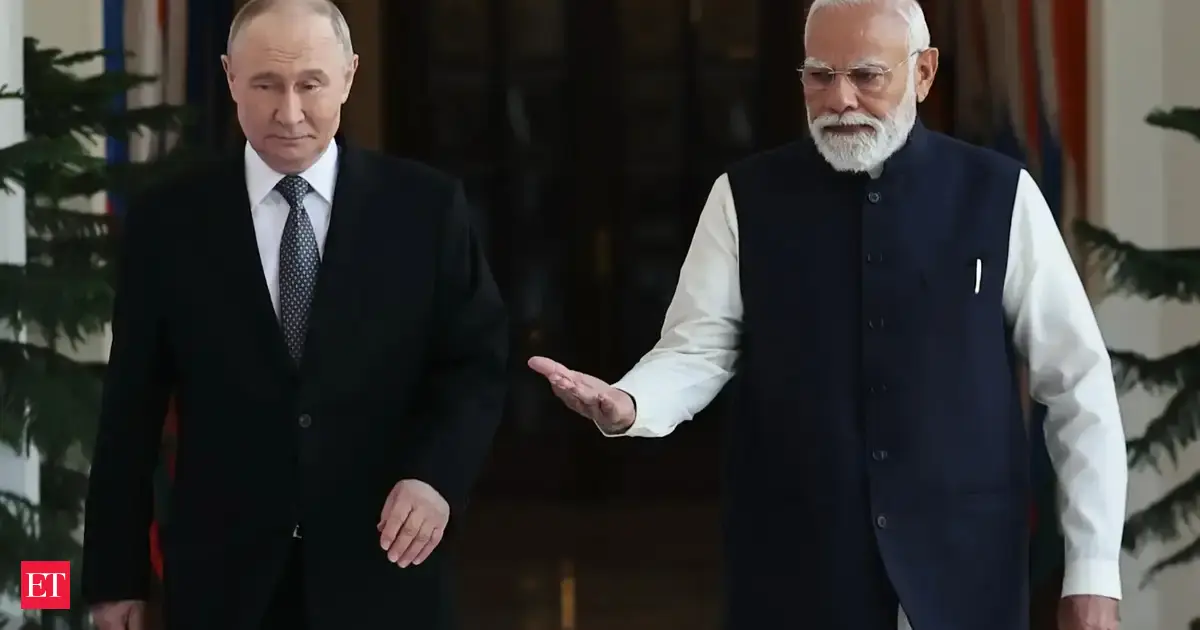
Russia says ties with India 'most important' after Trump pushes US, Venezuela oil
The article highlights Russia
Revision structure
Monthly events and exam calendar context
Static GK and one-liner notes
Quiz and mock-test revision path
Key points
Exam-ready takeaways
This statement follows US President Trump
Russia is willing to engage in strategic arms dialogue with India.
The article touches upon international trade dynamics and diplomatic relations.
Detailed analysis
Full exam-oriented breakdown
The statement from the Kremlin, emphasizing the 'most important' strategic partnership with India following a comment by then-US President Trump regarding India's potential halt of Russian crude purchases, unveils a complex tapestry of geopolitical interests, energy security, and strategic autonomy that India navigates on the global stage. This incident highlights the intricate balancing act New Delhi performs to safeguard its national interests amidst competing global powers. **Background Context and What Happened:** Historically, India and Russia (formerly the Soviet Union) have shared a deep-rooted strategic partnership, forged during the Cold War era. This relationship has been a cornerstone of India's foreign policy, particularly in defence, nuclear energy, and space cooperation. Russia remains India's largest defence supplier, a legacy that continues despite India's diversification efforts. In recent decades, India's relations with the United States have also grown significantly, driven by converging strategic interests, trade, and diaspora ties. The US has emerged as a major defence partner and a crucial source of technology and investment. The specific incident involved then-US President Trump's assertion that India would cease purchasing Russian crude oil as part of a broader deal to boost US trade. While the precise details of such a 'deal' were not fully elaborated by the US administration at the time, the statement was widely interpreted as an attempt to leverage India's growing economic needs and its desire for closer ties with the US to influence its energy procurement and foreign policy choices. The US has frequently used economic and diplomatic pressure to promote its own energy exports and to isolate countries like Russia (and Iran, Venezuela) through sanctions, such as the Countering America's Adversaries Through Sanctions Act (CAATSA), which impacts defence deals with Russia. In response, the Kremlin swiftly reiterated the paramount importance of its strategic partnership with India. This was not merely a diplomatic nicety; it underscored Russia's vested interest in maintaining its influence in a key partner nation and a major market for its goods, especially defence equipment and energy. Russia also explicitly mentioned its willingness to engage in strategic arms dialogue, signaling its commitment to continued defence cooperation, which is a critical pillar of the bilateral relationship. **Key Stakeholders Involved:** 1. **India:** As one of the world's largest and fastest-growing energy consumers, India is heavily reliant on crude oil imports. Its primary interest lies in ensuring energy security, diversifying its import sources, and securing the best possible terms. India also seeks to maintain its strategic autonomy, balancing relations with major powers without becoming beholden to any single one. Its defence needs are substantial, making partners like Russia and the US crucial. 2. **Russia:** A major global energy exporter and a traditional defence supplier to India, Russia aims to preserve its long-standing strategic partnership with India, secure its energy markets, and maintain its geopolitical influence in Asia. 3. **United States:** The US, under the Trump administration and subsequently, has sought to expand its energy exports, create new markets, and use its economic and diplomatic leverage to align countries with its foreign policy objectives, including reducing reliance on adversaries and promoting its own strategic interests. **Significance for India:** This episode has profound significance for India across several dimensions: * **Energy Security:** India imports over 85% of its crude oil requirements. Diversifying sources (from the Middle East, Russia, US, etc.) is crucial to mitigate supply risks and price volatility. US pressure to reduce Russian oil imports could impact India's energy mix, potentially leading to higher costs or fewer options, thereby affecting its energy security strategy. * **Strategic Autonomy:** India's foreign policy has historically been characterized by strategic autonomy, a principle enshrined implicitly in its approach to international relations, even if not explicitly in a constitutional article like Article 51 (Promotion of international peace and security). This incident tests India's ability to chart an independent course, balancing its relationships with both Washington and Moscow without succumbing to external pressures. Maintaining this autonomy is vital for India's credibility and long-term national interest. * **Defence Cooperation:** Russia has been a reliable defence partner for decades. While India is diversifying its defence procurements, Russian platforms (like S-400 missile systems) remain critical for its security. US attempts to curtail India's defence ties with Russia, often through legislation like CAATSA, create dilemmas for India's defence planning and technological self-reliance (Atmanirbhar Bharat in Defence). * **Economic Implications:** The push for increased US trade and energy purchases has economic ramifications, including potential changes in trade balances, investment flows, and technology transfer. India's Foreign Trade Policy is continuously adjusted to optimize these dynamics. **Historical Context and Future Implications:** India's relationship with Russia, rooted in the 1971 Indo-Soviet Treaty of Peace, Friendship and Cooperation, has evolved but remains robust. The post-Cold War era saw India pivot towards a more multi-aligned foreign policy, fostering stronger ties with the US, Europe, and East Asian nations. This incident underscores the challenges of multi-alignment, where India must skillfully manage competing expectations from its strategic partners. Looking ahead, India will likely continue its strategy of diversification in both energy and defence. It will strive to enhance its indigenous defence manufacturing capabilities as part of the 'Make in India' and 'Atmanirbhar Bharat' initiatives to reduce external dependencies. The geopolitical landscape is constantly shifting, and India's ability to maintain a balanced foreign policy, ensuring its national interests are paramount, will be crucial. This involves careful diplomacy, strategic economic decisions, and a clear articulation of its sovereign choices on the global stage, underpinned by its commitment to international law and multilateralism as envisioned in Article 51 of the Constitution. The future will see India engaging more deeply with various global energy suppliers, including the US, while simultaneously maintaining its crucial defence and strategic ties with Russia. This complex balancing act will define India's role as a rising global power, demonstrating its capacity for independent decision-making in a multipolar world.
How to study
Turn news into exam marks
Revise monthly events by exam family instead of reading random updates.
Pair one-liners with mock tests so mistakes become the next revision list.
Keep state job pages, calendar pages and GK packs connected in one path.