

India and the US have agreed on a new trade deal.
GK and monthly revision
India US trade deal: EAM Jaishankar, Marco Rubio welcome new pact; discuss energy, nuclear, defence, critical minerals
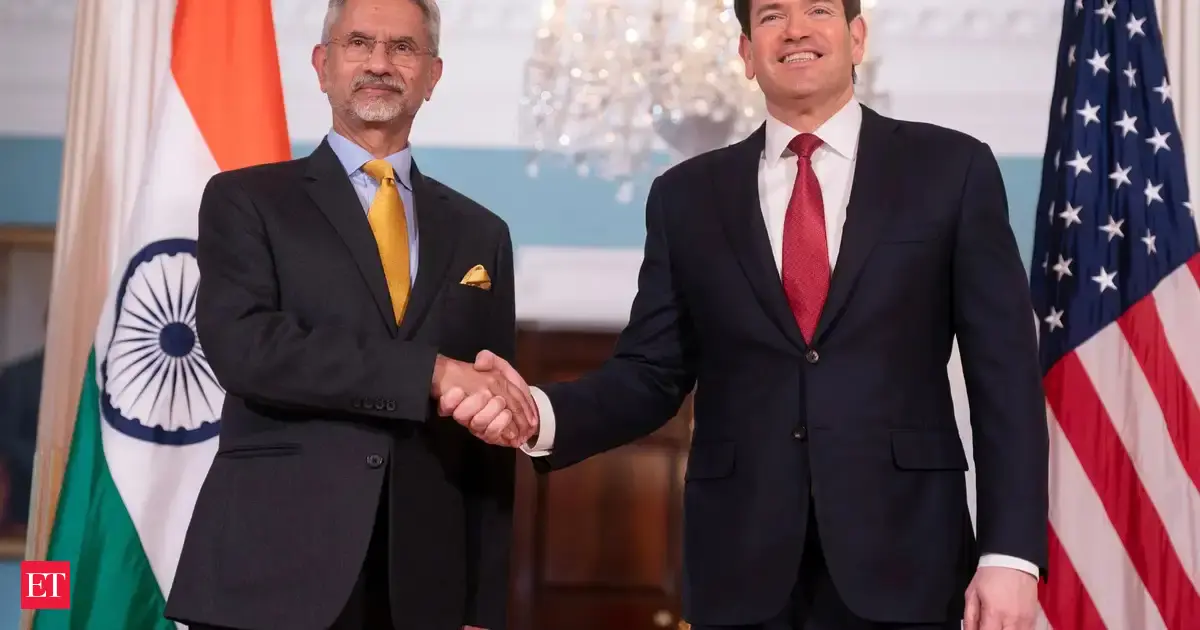
India and the US have forged a new trade deal following a meeting between External Affairs Minister S Jaishankar and US Secretary of State Marco Rubio in Washington DC. The agreement aims to enhance bilateral cooperation across several key sectors. Discussions focused on strengthening collaboration in the exploration and mining of critical minerals, underscoring the strategic importance of these resources for both nations. The leaders also highlighted the significance of their democratic partnership and explored avenues for increased cooperation in trade, energy, defense, and advanced technology. This pact signifies a deepening of the Indo-US strategic relationship, with potential implications for global supply chains and geopolitical alignments.
Revision structure
Monthly events and exam calendar context
Static GK and one-liner notes
Quiz and mock-test revision path
Key points
Exam-ready takeaways
Discussions focused on strengthening cooperation in critical minerals exploration and mining.
Bilateral cooperation in trade, energy, defense, and technology was emphasized.
The meeting highlighted the importance of the partnership between the two democracies.
EAM S Jaishankar and US Secretary of State Marco Rubio held the meeting in Washington DC.
Detailed analysis
Full exam-oriented breakdown
The recent discussions between India's External Affairs Minister S Jaishankar and US Secretary of State Marco Rubio in Washington D.C., focusing on a new trade deal and enhanced cooperation across critical sectors, signify a robust and evolving strategic partnership between the two democracies. This development is not an isolated event but rather a continuation of a deepening relationship that has gained significant momentum over the past two decades. **Background Context:** The India-US relationship has transformed dramatically from the Cold War era's estrangement to a comprehensive global strategic partnership. Initially marked by India's non-alignment and US alignment with Pakistan, the post-Cold War period saw a gradual thaw. The 2008 India-US Civil Nuclear Agreement was a watershed moment, signaling a new era of trust and cooperation. Since then, the relationship has expanded to encompass defense, counter-terrorism, trade, technology, and people-to-people ties. Both nations share democratic values and converging interests in maintaining a free, open, and prosperous Indo-Pacific. However, trade has often been a point of contention, with issues like market access, tariffs, and intellectual property rights frequently debated. The US withdrawal of India's Generalized System of Preferences (GSP) benefits in 2019 highlighted the need for a more stable and comprehensive trade framework. **What Happened:** The core of the recent development is the agreement on a "trade deal" and discussions on strengthening bilateral cooperation, particularly in critical minerals exploration and mining. While the specifics of the "trade deal" suggest a targeted approach rather than a comprehensive Free Trade Agreement (FTA) at this stage, the emphasis on sectors like energy, defense, and technology underscores a strategic alignment. The focus on critical minerals—such as lithium, cobalt, and rare earths—is particularly significant. These minerals are indispensable for modern technologies, including electric vehicles, renewable energy infrastructure, advanced electronics, and defense applications. India's reliance on a few countries, predominantly China, for these minerals poses both economic and strategic vulnerabilities. The discussions aim to diversify supply chains and enhance India's self-reliance in this crucial sector. **Key Stakeholders Involved:** On the Indian side, the Ministry of External Affairs, led by EAM S Jaishankar, plays a pivotal role in shaping foreign policy and economic diplomacy. The Ministry of Commerce and Industry is central to trade negotiations, while the Ministry of Mines and NITI Aayog are crucial for policy formulation related to critical minerals and strategic planning. For the US, the Department of State, headed by Secretary Marco Rubio, leads diplomatic efforts. The Department of Commerce, Department of Energy, and Department of Defense are also key players, reflecting the multi-faceted nature of the discussions. Beyond government entities, the private sectors in both countries, including mining companies, defense manufacturers, and technology firms, are significant stakeholders, as they will be the primary beneficiaries and drivers of these cooperative ventures. **Why this Matters for India:** This development holds immense significance for India. Economically, enhanced trade ties with the US, one of the world's largest markets, can boost India's exports, attract foreign direct investment, and facilitate technology transfer. Cooperation in critical minerals is a game-changer for India's 'Atmanirbhar Bharat' (Self-Reliant India) initiative and its ambitious clean energy transition goals. Securing a stable supply of critical minerals is vital for developing indigenous manufacturing capabilities in sectors like EVs and semiconductors, reducing dependence on geopolitical rivals, and strengthening supply chain resilience. Strategically, it deepens the India-US partnership, reinforcing India's position as a key player in the Indo-Pacific and a reliable partner in balancing regional power dynamics. Defense cooperation, including technology sharing and co-production, further enhances India's military capabilities and strategic autonomy. This alignment also helps India in its broader foreign policy objective of multi-alignment and diversifying its strategic partnerships. **Historical Context and Broader Themes:** The emphasis on critical minerals ties into a global geopolitical competition for resources, especially as nations transition to green economies. Historically, resource security has always been a key driver of international relations. For India, this cooperation aligns with its National Minerals Policy, which seeks to ensure mineral security and sustainable mining. The broader theme here is supply chain diversification and resilience, a lesson learned globally during the COVID-19 pandemic and ongoing geopolitical tensions. This also connects to India's role in the Minerals Security Partnership (MSP), a US-led initiative of 14 countries aimed at securing critical mineral supply chains. **Future Implications:** This agreement could pave the way for a more comprehensive trade agreement in the future, fostering greater economic integration. It is expected to lead to increased US investment in India's critical minerals sector, potentially through joint ventures and technology transfers for exploration, extraction, and processing. This will bolster India's domestic manufacturing capabilities and reduce import dependency. Furthermore, it strengthens the strategic convergence between India and the US, particularly in the context of the Quad (Quadrilateral Security Dialogue) and broader Indo-Pacific strategies, aiming to counter the growing influence of China. This enhanced cooperation will likely extend to other high-tech areas, solidifying India's position in the global technology landscape and contributing to its vision of becoming a developed nation by 2047. **Related Constitutional Articles, Acts, or Policies:** While no specific constitutional article directly mandates or prohibits trade deals, **Article 51** of the Indian Constitution, which promotes international peace and security and fosters respect for international law and treaty obligations, provides the overarching framework for India's foreign policy and international agreements. The implementation of such trade deals falls under the executive powers exercised by the Union Government. Domestically, these discussions align with India's **Foreign Trade Policy**, which is updated periodically by the Ministry of Commerce and Industry, aiming to boost exports and integrate India into global value chains. The **Mines and Minerals (Development and Regulation) Act, 1957**, and the **National Mineral Policy, 2019**, are key legislative and policy frameworks governing mineral exploration and mining in India, which will be crucial for facilitating the proposed cooperation in critical minerals. India's commitment to climate change mitigation and renewable energy targets, as outlined in its **Nationally Determined Contributions (NDCs)** under the Paris Agreement, also underpins the urgency to secure critical minerals for green technologies.
How to study
Turn news into exam marks
Revise monthly events by exam family instead of reading random updates.
Pair one-liners with mock tests so mistakes become the next revision list.
Keep state job pages, calendar pages and GK packs connected in one path.