

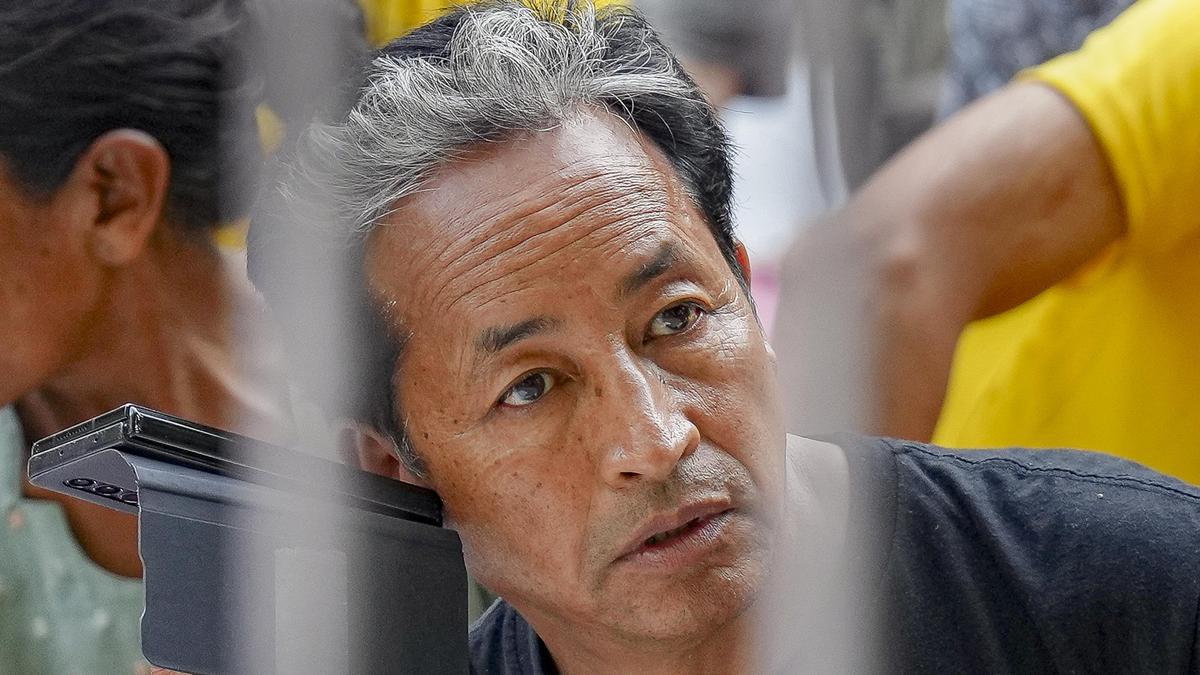
The Supreme Court asked the Centre to reconsider the detention of climate activist Sonam Wangchuk.
GK and monthly revision
Supreme Court asks if Centre can reconsider Sonam Wangchuk’s detention on health grounds
The Supreme Court has asked the Centre to reconsider the detention of climate activist Sonam Wangchuk, primarily on health grounds. The Additional Solicitor General submitted that Wangchuk's provocative speeches led to violence in Leh in 2025. This case is significant for competitive exams as it involves judicial intervention, civil liberties, and the legal aspects of preventive detention, highlighting the role of the judiciary in safeguarding fundamental rights.
Revision structure
Monthly events and exam calendar context
Static GK and one-liner notes
Quiz and mock-test revision path
Key points
Exam-ready takeaways
The primary ground for reconsideration cited by the Supreme Court is Sonam Wangchuk's health.
The Additional Solicitor General (ASG) submitted that Wangchuk made provocative speeches.
These alleged provocative speeches reportedly led to violence in Leh.
The violence in Leh, as stated by the ASG, occurred in the year 2025.
Detailed analysis
Full exam-oriented breakdown
The Supreme Court's intervention in the matter of climate activist Sonam Wangchuk's alleged detention, particularly on health grounds, brings to the forefront critical aspects of civil liberties, judicial oversight, and the administration of Union Territories in India. This case is not merely about an individual's freedom but encapsulates broader debates surrounding the right to protest, preventive detention laws, and the unique demands of regions like Ladakh. **Background Context:** Sonam Wangchuk is a renowned education reformer and climate activist, widely known for inspiring the character Phunsukh Wangdu in the film '3 Idiots'. His recent activism has centered on advocating for Ladakh, specifically demanding its inclusion under the Sixth Schedule of the Indian Constitution and statehood. These demands stem from concerns over the region's fragile ecology and the cultural identity of its indigenous people, which locals fear are threatened by unchecked industrial development post-abrogation of Article 370 and the reorganisation of Jammu & Kashmir. In August 2019, the erstwhile state of Jammu & Kashmir was bifurcated into two Union Territories: Jammu & Kashmir (with a legislature) and Ladakh (without a legislature), under the Jammu and Kashmir Reorganisation Act, 2019. This reorganisation led to significant changes in governance and autonomy, sparking protests and demands for greater protection for Ladakh's distinct identity and environment. **What Happened:** Sonam Wangchuk embarked on a 'fast unto death' in March 2024 to press for these demands, reportedly facing restrictions on his movement and expression. The Supreme Court of India subsequently intervened, asking the Centre to reconsider Wangchuk's detention, with a specific emphasis on his health. This judicial move signals the Court's concern for fundamental rights, even in cases involving alleged threats to public order. The Additional Solicitor General (ASG), representing the Central Government, submitted that Wangchuk had made "provocative speeches" which allegedly led to violence in Leh in 2025. While the year '2025' appears to be a forward-looking allegation, the core of the government's argument rests on the potential for disruption and public disorder caused by his activism, justifying restrictive measures. **Key Stakeholders Involved:** 1. **Sonam Wangchuk:** The climate activist and petitioner, representing the voice of Ladakh's environmental and cultural concerns. 2. **Supreme Court of India:** The apex judicial body, acting as the guardian of the Constitution and fundamental rights, scrutinizing the executive's actions. 3. **Central Government (Union of India):** Represented by the Additional Solicitor General, responsible for maintaining law and order, and administering Union Territories like Ladakh. 4. **People of Ladakh:** The primary beneficiaries or affected party by the outcomes, whose demands Wangchuk champions. 5. **Ladakh Autonomous Hill Development Councils (LAHDCs):** Local self-governing bodies whose powers and autonomy are central to the debate on Ladakh's governance. **Why This Matters for India:** This case holds immense significance for India. Firstly, it underscores the delicate balance between the right to freedom of speech and expression (Article 19(1)(a)) and the state's power to maintain public order, national security, and prevent incitement to violence (reasonable restrictions under Article 19(2)). Secondly, it highlights the role of the judiciary, especially the Supreme Court, in safeguarding the personal liberty (Article 21) and protection against arrest and detention (Article 22) of citizens, acting as a check on executive power. The debate around Ladakh's inclusion in the Sixth Schedule is crucial for understanding India's federal structure and the special provisions for tribal areas (Articles 244 and 244A). The demands reflect broader concerns about preserving indigenous cultures and fragile ecosystems in the face of developmental pressures, a recurring theme in environmental governance. **Historical Context:** The historical context is rooted in the unique geopolitical and demographic characteristics of Ladakh. Historically part of Jammu & Kashmir, Ladakh always had a distinct identity. The reorganisation in 2019, while fulfilling a long-standing demand for separation from Kashmir, created a new set of challenges regarding political representation and protection of land, culture, and employment. The call for Sixth Schedule status mirrors similar demands from other regions in India seeking greater autonomy and protection for tribal populations and their traditional way of life. **Future Implications:** The outcome of this case will have several implications. It could set a precedent for how the judiciary reviews preventive detention in cases involving activism and public protests. It will also influence the ongoing dialogue between the Centre and Ladakh's representatives regarding the region's future governance structure. A favourable judicial intervention could strengthen the rights of activists and environmental defenders. Conversely, a stricter stance could empower the state to curb dissent, raising concerns about shrinking democratic space. The Centre's response to the demands for Sixth Schedule status or statehood for Ladakh will also be closely watched, potentially impacting other Union Territories or regions with similar aspirations for greater autonomy and protection. This case serves as a crucial test for India's commitment to democratic freedoms and environmental stewardship in its sensitive border regions.
How to study
Turn news into exam marks
Revise monthly events by exam family instead of reading random updates.
Pair one-liners with mock tests so mistakes become the next revision list.
Keep state job pages, calendar pages and GK packs connected in one path.