

Cuba is facing its gravest energy crisis since the 1990s.
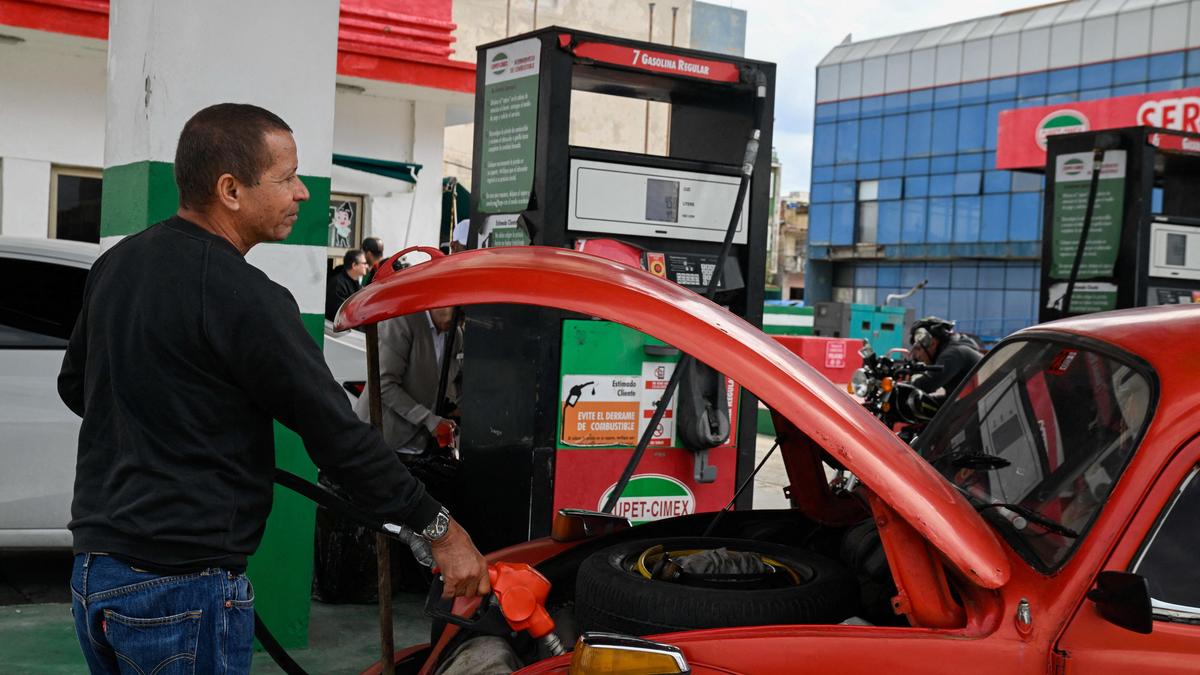
GK and monthly revision
Trump’s oil blockade pushes Cuba to the brink
Cuba is experiencing its most severe energy crisis since the 1990s, with only weeks of fuel remaining. This critical situation stems from U.S. military actions in Venezuela and new sanctions imposed by the Trump administration, which have significantly cut off Cuba's vital oil supplies. This geopolitical development is crucial for understanding international relations, energy security, and the impact of sanctions on national economies for competitive exams.
Revision structure
Monthly events and exam calendar context
Static GK and one-liner notes
Quiz and mock-test revision path
Key points
Exam-ready takeaways
The crisis is primarily due to U.S. military action in Venezuela.
Fresh U.S. sanctions are choking off Cuba's vital oil supplies.
Havana, Cuba's capital, is reported to have only weeks of fuel left.
The U.S. policies causing the blockade were implemented under the Trump administration.
Detailed analysis
Full exam-oriented breakdown
The energy crisis gripping Cuba, described as its gravest since the 1990s, is a stark illustration of the complex interplay between geopolitics, international sanctions, and their profound humanitarian consequences. At its core, this crisis stems from the aggressive 'maximum pressure' campaign by the Trump administration against both Venezuela and Cuba, effectively choking off Cuba's vital oil supplies. A Storied History of Animosity: US-Cuba Relations To truly understand the current predicament, one must delve into the fraught history between the United States and Cuba. The animosity dates back to the 1959 Cuban Revolution, which saw Fidel Castro's communist government overthrow the US-backed dictatorship of Fulgencio Batista. This event fundamentally shifted Cuba into the Soviet Union's sphere of influence, leading to a decades-long Cold War standoff. Key moments include the failed Bay of Pigs invasion in 1961 and the Cuban Missile Crisis in 1962, which brought the world to the brink of nuclear war. In response, the US imposed a comprehensive economic, commercial, and financial embargo on Cuba in the early 1960s, which remains largely in effect today. For decades, Cuba relied heavily on Soviet aid and oil, but with the collapse of the USSR in 1991, Cuba plunged into its 'Special Period,' a severe economic crisis marked by widespread shortages, particularly of fuel. The Venezuela Connection: A Lifeline Severed Following the 'Special Period,' Venezuela emerged as Cuba's new lifeline, especially after Hugo Chávez came to power in 1999. Chávez, a socialist ally of Fidel Castro, established a preferential oil deal, exchanging Venezuelan crude for Cuban medical services and expertise. This arrangement became crucial for Cuba's energy security. However, Venezuela itself has been mired in a severe economic and political crisis since the mid-2010s, exacerbated by falling oil prices and internal mismanagement. The US, under the Trump administration, intensified sanctions against the Nicolás Maduro government in Venezuela, targeting its state-owned oil company, PDVSA, with the explicit goal of forcing Maduro from power. These actions severely crippled Venezuela's oil production and its ability to supply Cuba. Trump's "Maximum Pressure" Campaign The Trump administration's policy towards Cuba marked a significant reversal from the Obama era, which had seen a historic thaw in relations, including the re-establishment of diplomatic ties in 2015. Trump reimposed and tightened sanctions, invoking Title III of the Helms-Burton Act (Cuban Liberty and Democratic Solidarity (LIBERTAD) Act of 1996), which allows US nationals to sue foreign companies and individuals 'trafficking' in confiscated property in Cuba. Additionally, restrictions were placed on remittances and travel, and the US actively targeted ships and companies involved in transporting Venezuelan oil to Cuba. These measures, coupled with the existing US embargo, have created an 'oil blockade' that Cuba's government describes as an act of war, pushing the island nation to the brink with only weeks of fuel supplies remaining. Key Stakeholders and Their Stakes * **United States:** The primary orchestrator, aiming to destabilize the Cuban and Venezuelan governments, citing human rights abuses and lack of democracy. Its actions reflect a long-standing foreign policy objective in the region. * **Cuba:** The direct victim, struggling to maintain its economy and social services amidst severe shortages. The government seeks to resist external pressure while searching for alternative energy sources and international support. * **Venezuela:** A crucial intermediary, its own crippled oil industry and political instability make it unable to sustain its previous support to Cuba. The Maduro government faces immense internal and external pressure. * **Ordinary Cubans:** Bearing the brunt of the crisis, facing daily hardships like limited transport, power outages, and food distribution challenges, directly impacting their quality of life. Why This Matters for India While geographically distant, this crisis holds significant lessons and relevance for India, particularly in the realm of international relations and energy security. 1. **Energy Security:** India, a major oil importer, understands the criticality of diversifying energy sources and supply routes. The Cuban crisis highlights the vulnerability of relying heavily on a single supplier or facing unilateral sanctions that disrupt global supply chains. India's own strategic oil reserves and efforts to diversify imports (e.g., from Russia, Saudi Arabia, the US itself) are crucial policies in this context. 2. **Sovereignty and Non-Interference:** India has historically advocated for the sovereignty of nations and opposed unilateral sanctions and external interference in the internal affairs of sovereign states. This stance is rooted in its foreign policy principles, including the Panchsheel (Five Principles of Peaceful Coexistence) and the Non-Aligned Movement (NAM), which align with the spirit of **Article 51 of the Indian Constitution's Directive Principles of State Policy**. Article 51 mandates the state to 'promote international peace and security; maintain just and honourable relations between nations; foster respect for international law and treaty obligations.' India's principled stand against such blockades underscores its commitment to a rules-based international order rather than one dictated by coercive measures. 3. **International Relations:** The crisis serves as a case study in power politics, demonstrating how a major power can leverage economic tools to achieve foreign policy objectives, often with significant humanitarian costs. It reinforces the need for strong multilateral institutions and adherence to international law to prevent such unilateral actions. Future Implications The immediate future for Cuba appears grim, with the potential for deeper economic hardship, social unrest, and a further decline in living standards. The crisis might force Cuba to seek closer ties with other geopolitical players like Russia and China, who have historically offered support to nations facing Western pressure. For the US, the effectiveness and ethical implications of such 'maximum pressure' campaigns remain a subject of debate, particularly regarding their human cost. A change in US administration could potentially lead to a re-evaluation of these policies, but the deep-seated historical animosity ensures that US-Cuba relations will remain complex for the foreseeable future. Globally, this incident reinforces the volatility of energy markets and the constant geopolitical risks to global supply chains, urging nations like India to robustly pursue self-reliance and diversification in critical sectors.
How to study
Turn news into exam marks
Revise monthly events by exam family instead of reading random updates.
Pair one-liners with mock tests so mistakes become the next revision list.
Keep state job pages, calendar pages and GK packs connected in one path.