

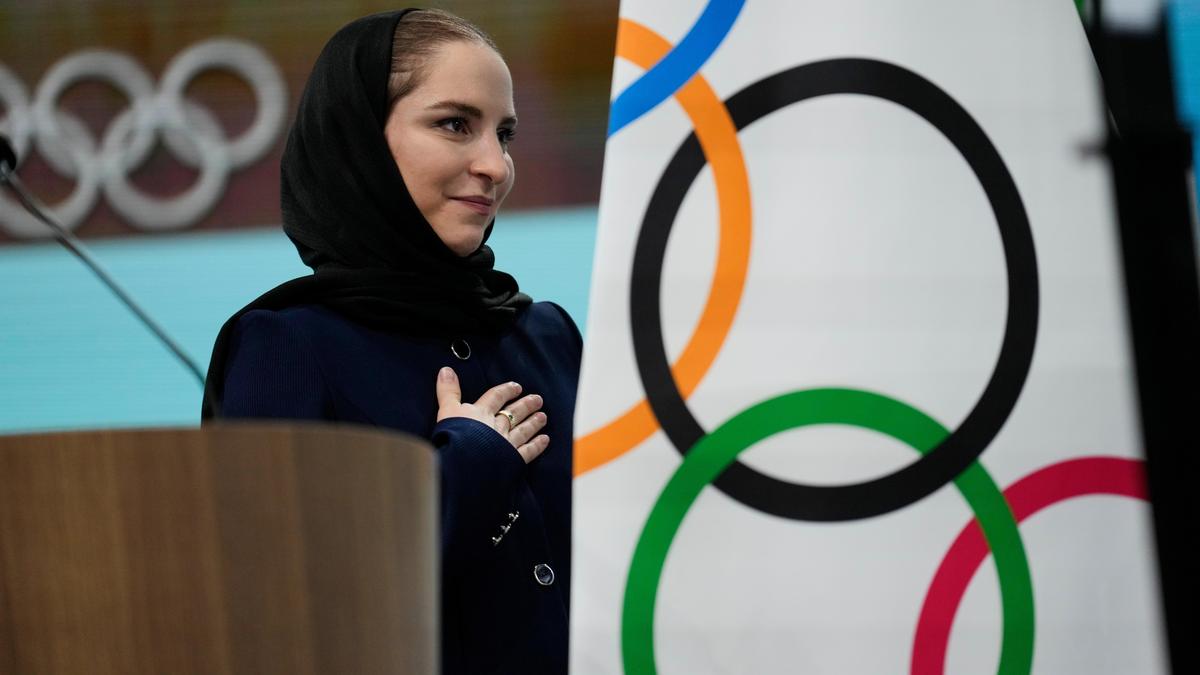
Soraya Aghaei is the first female member from Iran to be elected to the International Olympic Committee (IOC).
GK and monthly revision
IOC elects first female member from Iran to join exclusive global Olympic body
Soraya Aghaei has been elected as the first female member from Iran to join the International Olympic Committee (IOC). She is also the youngest representative and the 107th member of this exclusive global Olympic body, securing her position with a 95-2 vote. This marks a significant development for gender representation in international sports governance and is the first time an Iranian has joined the IOC since 2004, making her only the third Iranian representative ever. This information is relevant for general awareness sections in competitive exams.
Revision structure
Monthly events and exam calendar context
Static GK and one-liner notes
Quiz and mock-test revision path
Key points
Exam-ready takeaways
Aghaei is currently the youngest representative and the 107th member of the IOC.
She secured her election to the IOC with a vote count of 95 in favour and 2 against.
Soraya Aghaei is only the third-ever Iranian representative to join the IOC.
Her election marks the first time an Iranian has joined the IOC since 2004.
Detailed analysis
Full exam-oriented breakdown
The election of Soraya Aghaei as the first female member from Iran to the International Olympic Committee (IOC) marks a significant milestone in global sports governance, reflecting a broader push for diversity and gender equality. This development is not merely about a single individual joining an elite body; it symbolizes evolving international norms and has implications for how sports organizations worldwide, including India, approach representation. **Background Context:** The International Olympic Committee, founded in 1894 by Pierre de Coubertin, is the supreme authority of the Olympic Movement. Its primary role is to oversee the organization of the Olympic Games and to promote Olympism globally. Historically, the IOC, like many international governing bodies, was predominantly male-dominated and largely represented Western European interests. Over the decades, there has been a gradual, yet persistent, demand for greater inclusivity, driven by the increasing participation of women in sports and the recognition of diverse regional contributions. The IOC itself has, under its 'Olympic Agenda 2020+5', committed to fostering gender equality, youth engagement, and sustainability, making diversity in its own membership a crucial aspect of its strategic roadmap. **What Happened:** Soraya Aghaei, an accomplished badminton player, was elected to the IOC with a strong mandate, securing 95 votes in favour and only 2 against. This makes her the 107th member of the exclusive body and, notably, its youngest representative. Her election is historic for Iran, as she is the first Iranian woman ever to join the IOC and only the third Iranian representative overall, with the last Iranian member having joined in 2004. This selection highlights not only her personal achievements but also the IOC's deliberate efforts to broaden its geographical and gender representation, particularly from regions that have historically been underrepresented in its decision-making processes. **Key Stakeholders Involved:** The primary stakeholder is the **International Olympic Committee (IOC)** itself, which initiated and approved her membership, demonstrating its commitment to its stated diversity goals. **Soraya Aghaei** is a crucial stakeholder, as her election empowers her to bring a unique perspective—that of a young, female athlete from the Middle East—to global sports governance. The **National Olympic Committee of the Islamic Republic of Iran** is also a key player, likely having nominated or supported her candidacy, and stands to benefit from its increased representation on the global stage. Lastly, the **global sporting community**, particularly women athletes and advocates for gender equality in sports, are significant stakeholders who view this as a positive step towards more inclusive and representative leadership. **Why This Matters for India:** For India, Aghaei's election holds significant relevance. India, with its vast population and growing sports ambitions, faces similar challenges in ensuring equitable representation for women in sports administration. This development serves as an inspiration and a precedent. India's own efforts, guided by the spirit of **Article 14 (Equality before law)** and **Article 15 (Prohibition of discrimination on grounds of religion, race, caste, sex or place of birth)** of its Constitution, aim to promote gender equality in all spheres, including sports. Programmes like the 'Khelo India' initiative and the 'National Sports Policy of India (2007)' actively seek to increase women's participation and leadership in sports. Aghaei's inclusion in the IOC encourages India to further its own reforms in sports federations, ensuring greater transparency, meritocracy, and gender balance. Moreover, it underscores the importance of soft power and sports diplomacy, where India's engagement with international sports bodies can be strengthened by advocating for similar progressive reforms. **Historical Context:** The IOC's journey towards diversity has been a long one. While women were first allowed to compete in the Olympics in 1900, it took decades for them to gain significant representation in administrative roles. The first female IOC member, Flor Isava-Fonseca of Venezuela, was elected in 1981, marking a slow but steady shift. The increase in the number of female athletes and the global spotlight on gender disparities eventually pushed the IOC to formalize its commitment to gender equality, culminating in initiatives like Olympic Agenda 2020 and its successor, Olympic Agenda 2020+5, which explicitly target increasing female representation in all areas of the Olympic Movement. This historical trajectory highlights that Aghaei's election is not an isolated event but a culmination of sustained global efforts towards a more equitable sports landscape. **Future Implications:** Aghaei's election is expected to foster greater diversity in the IOC's decision-making processes, bringing fresh perspectives on athlete welfare, regional challenges, and gender-specific issues. It could encourage more National Olympic Committees, especially from the Middle East and other underrepresented regions, to actively promote women for leadership roles. This move strengthens the IOC's legitimacy and global appeal, demonstrating its commitment to inclusivity. For Iran, it could potentially lead to increased support for women's sports domestically and greater engagement with international sporting norms. Globally, it reinforces the idea that sports governance must mirror the diversity of the athletes and fans it serves, pushing for continued reforms and opening doors for more women to ascend to leadership positions in international sports organizations.
How to study
Turn news into exam marks
Revise monthly events by exam family instead of reading random updates.
Pair one-liners with mock tests so mistakes become the next revision list.
Keep state job pages, calendar pages and GK packs connected in one path.