

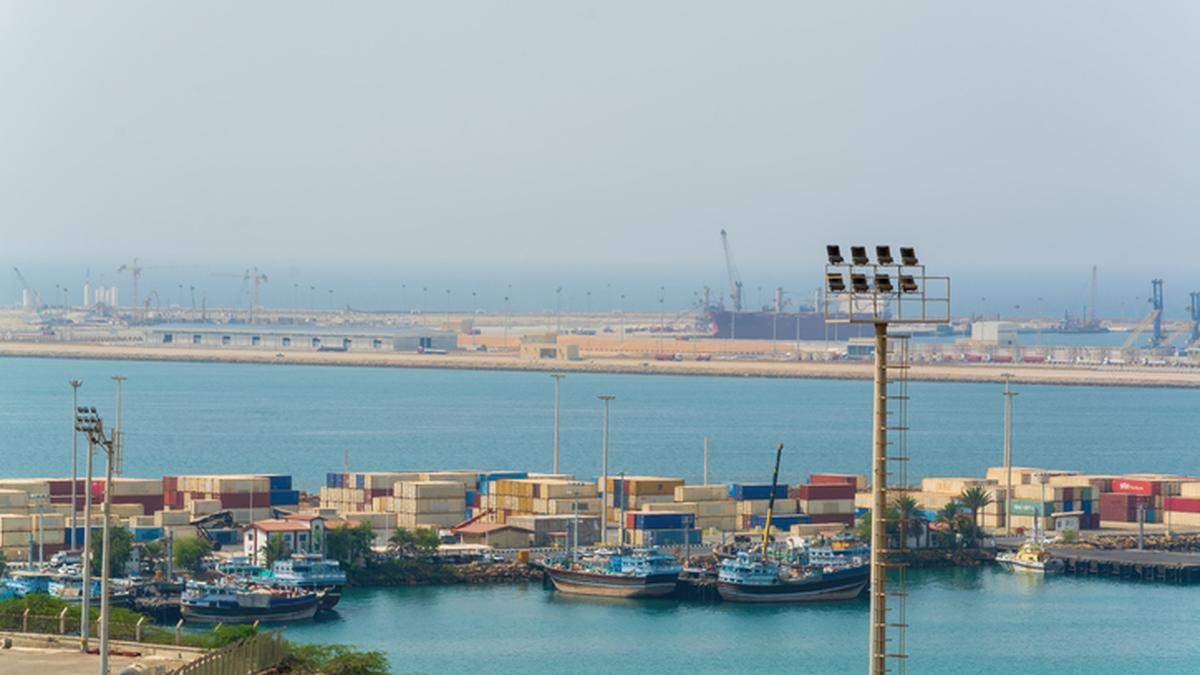
The Chabahar Port project is located in Iran and is strategically vital for India to access Afghanistan and Central Asia.
GK and monthly revision
Accused of dropping Chabahar under U.S. pressure, Centre says it is engaged with all stakeholders
India faces accusations of abandoning the strategic Chabahar port project in Iran due to U.S. pressure, a claim denied by the Centre, which asserts ongoing engagement with all stakeholders. This development is crucial as the port offers India a vital trade route to Afghanistan and Central Asia, bypassing Pakistan. Its future impacts India's geopolitical strategy and economic connectivity, making it a significant topic for competitive exams focusing on international relations and infrastructure.
Revision structure
Monthly events and exam calendar context
Static GK and one-liner notes
Quiz and mock-test revision path
Key points
Exam-ready takeaways
India has been accused by the Iranian Ambassador of conveying no information on the future of the Chabahar project.
The Ministry of External Affairs (MEA) stated in Parliament that India is engaged with all stakeholders regarding the project.
India has disbursed its total commitment of ₹120 million for the Chabahar port project.
The U.S. sanctions waiver related to the Chabahar project is scheduled to end in April.
Detailed analysis
Full exam-oriented breakdown
The Chabahar Port project, located in Iran's Sistan-Baluchestan province, represents a cornerstone of India's geopolitical and geoeconomic strategy, particularly for accessing Afghanistan and Central Asia. Its strategic importance stems from its ability to bypass Pakistan, providing India with a direct sea-land trade route to landlocked Afghanistan and further into the resource-rich Central Asian republics. This initiative is a critical component of India's broader 'Connect Central Asia' policy and its participation in the International North-South Transport Corridor (INSTC). The current situation has cast a shadow of uncertainty over the project. The Iranian Ambassador's recent statement, alleging that India has conveyed no information regarding the future of the Chabahar project, sparked concerns about its potential abandonment. This accusation was promptly addressed by India's Ministry of External Affairs (MEA), which clarified in Parliament that India remains actively engaged with all stakeholders. The MEA further highlighted that India has disbursed its total commitment of ₹120 million (approximately $15 million) for the port's development. A critical deadline looms in April, when the U.S. sanctions waiver, which has allowed limited engagement with the port project, is set to expire. This expiration could significantly complicate India's continued involvement. Key stakeholders in this complex geopolitical play include India, Iran, Afghanistan, and the United States. For **India**, Chabahar is not just a port; it's a strategic gateway. Economically, it facilitates trade, especially for humanitarian aid and goods like wheat and pulses to Afghanistan, bypassing the often-unpredictable transit routes through Pakistan. Geopolitically, it offers a counterweight to China's growing influence in the region, particularly its development of the Gwadar Port in Pakistan as part of the China-Pakistan Economic Corridor (CPEC). It also strengthens India's bilateral ties with Iran and its 'Act West' policy. **Iran**, as the host nation, views Chabahar as a crucial economic asset, bringing foreign investment and facilitating its own regional trade. It also leverages the project to counter the isolation imposed by international sanctions. **Afghanistan** is a primary beneficiary, as the port provides a viable, reliable, and cost-effective alternative for its international trade, reducing its dependence on Pakistan and fostering economic stability. The **United States** plays a pivotal, albeit indirect, role through its stringent sanctions regime against Iran. While initially granting waivers for Chabahar due to its humanitarian significance for Afghanistan, the impending expiration of these waivers creates immense pressure on India, forcing it to balance its strategic interests with its relationship with the U.S. The historical context of Chabahar dates back to 2003, when India and Iran first agreed to develop the port. However, progress remained slow due to various factors, including international sanctions against Iran. A significant breakthrough came in May 2016, when India, Iran, and Afghanistan signed a trilateral agreement on transit and transport, committing to developing Chabahar as a regional hub. India committed to investing $500 million in the port's development, including two berths. This project is a tangible manifestation of India's commitment to regional connectivity and its long-standing policy of strategic autonomy. For India, the future implications are profound. A successful Chabahar project would solidify India's position as a regional power, enhance its trade linkages, and provide critical access to energy resources from Central Asia. It would also demonstrate India's ability to navigate complex geopolitical landscapes and pursue its national interests. Conversely, if the project stalls or is abandoned under U.S. pressure, it would be a significant setback for India's strategic ambitions, potentially ceding further ground to China in regional connectivity and raising questions about India's foreign policy independence. It could also strain India-Iran relations and negatively impact Afghanistan's economic prospects. While direct constitutional articles are less applicable to international projects, India's engagement with Chabahar aligns with its foreign policy objectives derived from the Directive Principles of State Policy (Article 51), promoting international peace and security, fostering respect for international law, and encouraging settlement of international disputes by arbitration. Furthermore, it underpins economic policies aimed at enhancing trade, as envisioned under the Foreign Trade (Development and Regulation) Act, 1992, and broader strategic autonomy in international relations. In essence, the Chabahar Port project is a litmus test for India's strategic resolve and its ability to balance competing global interests while pursuing its long-term vision for regional connectivity and economic prosperity.
How to study
Turn news into exam marks
Revise monthly events by exam family instead of reading random updates.
Pair one-liners with mock tests so mistakes become the next revision list.
Keep state job pages, calendar pages and GK packs connected in one path.