

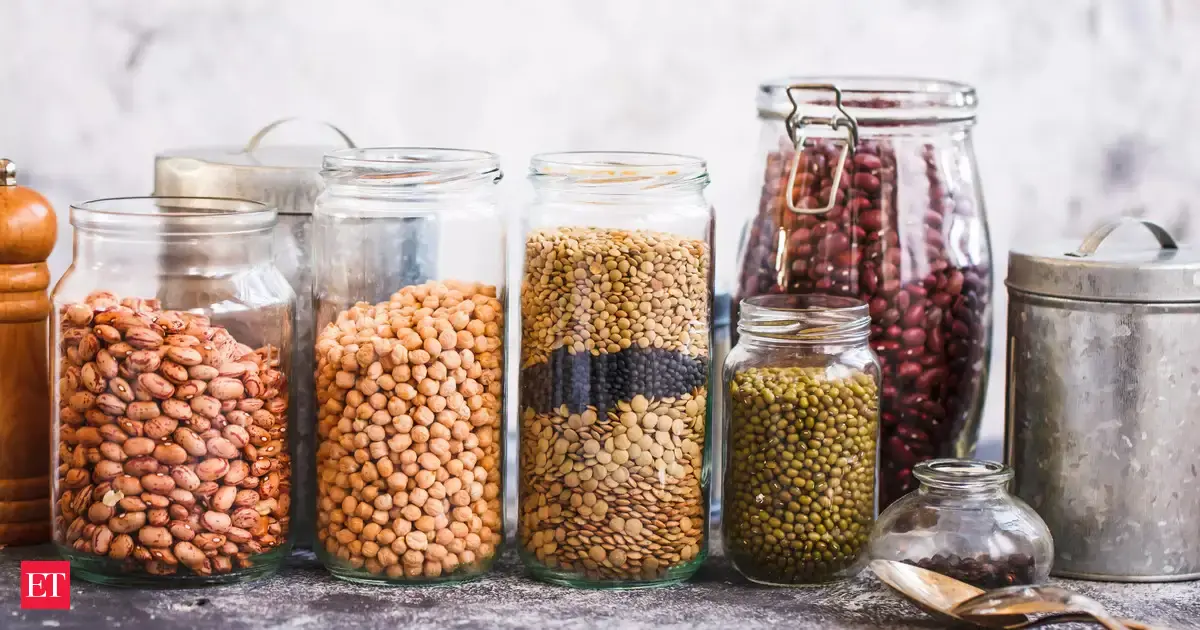
Pulses prices have risen by up to 20% after a year of falling.
GK and monthly revision
Pulses prices jump up to 20%; tur, urad return to MSP levels
Pulse prices, including tur and urad, have witnessed a significant jump of up to 20% after a year of decline, with tur and urad reaching Minimum Support Price (MSP) levels. This surge is primarily attributed to lower crop output in India and other countries, coupled with currency issues. This development is crucial for competitive exams as it highlights agricultural economics, inflation drivers, and government support mechanisms like MSP, impacting farmer sentiment and food security.
Revision structure
Monthly events and exam calendar context
Static GK and one-liner notes
Quiz and mock-test revision path
Key points
Exam-ready takeaways
Tur and Urad prices have returned to Minimum Support Price (MSP) levels.
Key pulses affected by the price increase include Tur, Chana, and Urad.
A primary reason for the price surge is lower crop output in India and other countries.
Currency issues are also identified as a contributing factor to the rising pulse prices.
Detailed analysis
Full exam-oriented breakdown
The recent surge in pulse prices, with tur and urad returning to Minimum Support Price (MSP) levels after a year of decline, highlights a critical juncture in India's agricultural economy. As the world's largest producer and consumer of pulses, India's domestic supply and price stability have profound implications for its vast population, farmer welfare, and overall economic health. Historically, India's pulse sector has been characterized by significant price volatility, often referred to as 'boom and bust' cycles. Periods of high prices incentivized farmers to increase sowing, leading to oversupply and a subsequent crash in prices, discouraging cultivation in the next season. This inconsistency has made farmers hesitant to invest in pulse cultivation despite government efforts. Pulses are a vital source of protein for a large segment of the Indian population, particularly vegetarians, making their affordability crucial for nutritional security. Recognizing this, the government has, over the years, implemented policies like MSP to provide a floor price for farmers and encourage production, aiming for self-sufficiency. What happened this time is a significant increase of up to 20% in the prices of key pulses like tur (pigeon pea), urad (black gram), and chana (chickpea). This upward trend is primarily driven by two factors: lower crop output and currency issues. Domestically, adverse weather conditions, including erratic monsoons or unseasonal rains in major pulse-producing states, can significantly reduce yields. Globally, similar climactic challenges in other pulse-exporting nations, or geopolitical disruptions, can restrict international supply. The 'currency issues' refer to the depreciation of the Indian Rupee against major currencies, making imports of pulses more expensive. Since India often relies on imports to bridge its demand-supply gap, a weaker Rupee directly translates to higher landed costs for imported pulses, pushing up domestic prices. Several key stakeholders are directly impacted by this development. **Farmers** are the primary beneficiaries of rising prices, especially those whose produce fetches prices at or above MSP. This improved sentiment is crucial ahead of the next planting season (Kharif, for tur and urad), as it may encourage them to allocate more land to pulses, potentially leading to increased output in the future. However, they also face rising input costs. **Consumers**, on the other hand, bear the brunt of higher prices, leading to increased household food budgets and potential nutritional compromise for lower-income groups. This contributes to food inflation, impacting the overall Consumer Price Index (CPI). The **Government** (both Central and State) plays a delicate balancing act, aiming to ensure fair prices for farmers while maintaining affordability for consumers. Ministries like Agriculture & Farmers Welfare, Consumer Affairs, Food & Public Distribution, along with agencies like NAFED (National Agricultural Cooperative Marketing Federation of India) and FCI (Food Corporation of India), are involved in procurement, buffer stock management, and trade policies. This situation holds significant importance for India. Economically, rising pulse prices contribute to food inflation, which can erode purchasing power and necessitate intervention from the Reserve Bank of India (RBI) through monetary policy measures. Socially, it impacts food security and nutrition, especially for vulnerable populations. From an agricultural policy perspective, it highlights the continuous challenge of achieving self-sufficiency in pulses and the effectiveness of MSP as a price signal. The **Essential Commodities Act, 1955**, empowers the government to control production, supply, distribution, and prices of essential commodities like pulses, often invoked during periods of scarcity or high inflation to prevent hoarding and black marketing. While agriculture falls under the **State List (Entry 14 of List II, Seventh Schedule)**, the Central government plays a crucial role in national policy formulation, MSP fixation (based on recommendations from the Commission for Agricultural Costs and Prices - CACP, and approved by the Cabinet Committee on Economic Affairs - CCEA), and managing inter-state trade and international imports/exports. The implicit right to food, linked to **Article 21 (Right to Life and Personal Liberty)**, underscores the government's responsibility to ensure food availability and affordability. Looking ahead, the current price trajectory could incentivize higher pulse acreage in the upcoming Kharif season, potentially stabilizing or even reducing prices in the medium term, assuming favorable weather. However, the government might need to actively manage its buffer stocks (maintained under the Price Stabilisation Fund - PSF) to release pulses into the market and cool down prices if they escalate further. Import policies, including duties and quotas, will also be crucial tools. Long-term implications include a renewed focus on improving pulse productivity through better seeds, irrigation, and agronomic practices, alongside strengthening the supply chain to minimize post-harvest losses. This episode reinforces the need for a robust, data-driven agricultural policy that can swiftly respond to domestic and international market dynamics while safeguarding both farmer interests and consumer welfare.
How to study
Turn news into exam marks
Revise monthly events by exam family instead of reading random updates.
Pair one-liners with mock tests so mistakes become the next revision list.
Keep state job pages, calendar pages and GK packs connected in one path.