

A significant trade deal has been signed between India and the United States.
GK and monthly revision
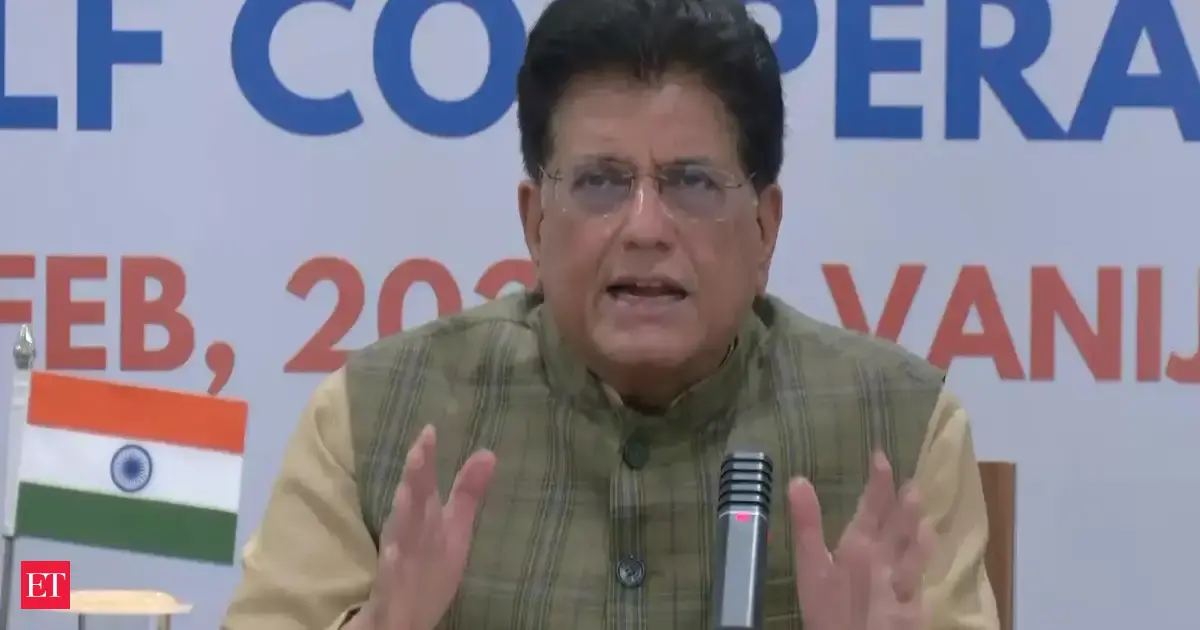
Addressing non-tariff barriers to tech cooperation, BTA focuses on facilitating trade: Piyush Goyal
India and the United States have signed a significant trade deal aimed at easing market access and reducing trade barriers. This agreement will expand cooperation in advanced technologies, including GPUs, and benefit Indian exporters through reduced tariffs. It is crucial for boosting bilateral trade and strengthening economic ties between the two nations, making it important for competitive exams focusing on international relations and economy.
Revision structure
Monthly events and exam calendar context
Static GK and one-liner notes
Quiz and mock-test revision path
Key points
Exam-ready takeaways
The agreement aims to ease market access and reduce trade barriers between the two nations.
Cooperation will expand in advanced technologies, specifically mentioning GPUs.
Indian exporters are expected to benefit from reduced tariffs due to this deal.
The primary goal is to boost bilateral trade and strengthen economic ties between India and the US.
Detailed analysis
Full exam-oriented breakdown
The announcement by Union Minister Piyush Goyal regarding a significant trade deal between India and the United States, focusing on addressing non-tariff barriers and facilitating trade, marks a pivotal moment in the evolving bilateral economic relationship. This agreement, though not explicitly detailed as a full Free Trade Agreement (FTA) in the provided snippet, signifies a concerted effort to deepen cooperation, particularly in advanced technologies like GPUs (Graphics Processing Units), and enhance market access for Indian exporters. **Background Context and Historical Trajectory:** India and the US have shared a complex but increasingly strategic economic relationship. For decades, trade relations were characterized by cautious engagement, often punctuated by disputes over market access, intellectual property rights, and tariffs. The US, for instance, withdrew India's Generalized System of Preferences (GSP) status in 2019, impacting duty-free access for several Indian products. However, in recent years, a strategic imperative driven by shared geopolitical concerns, particularly regarding China, and a mutual recognition of economic complementarities, has pushed both nations towards closer collaboration. This shift is evident in various high-level dialogues such as the US-India Trade Policy Forum (TPF), the US-India Strategic Clean Energy Partnership, and the Quad grouping (involving Australia and Japan), which increasingly focus on supply chain resilience, critical and emerging technologies, and economic security. **What Happened and Key Elements:** The stated objective of this deal is to ease market access and reduce trade barriers, which historically have been both tariff and non-tariff in nature. Non-tariff barriers (NTBs) can include complex customs procedures, stringent regulatory standards, quotas, and subsidies, which often pose greater challenges than tariffs. By addressing NTBs, the agreement aims to streamline trade flows and reduce compliance costs for businesses. A crucial aspect highlighted is the expansion of cooperation in advanced technologies, specifically mentioning GPUs. GPUs are fundamental to artificial intelligence (AI), high-performance computing, and data centers, making their access and joint development strategically vital for India's digital economy and technological sovereignty. The reduction of tariffs for Indian exporters is another direct benefit, making Indian goods more competitive in the US market and potentially boosting sectors like textiles, pharmaceuticals, engineering goods, and IT services. **Key Stakeholders Involved:** On the Indian side, the **Ministry of Commerce and Industry**, led by Piyush Goyal, is the primary driver. Indian **exporters** across various sectors stand to gain from reduced tariffs and eased market access. **Indian tech companies** and research institutions will benefit from enhanced access to advanced technologies like GPUs and potential collaboration opportunities. From the US perspective, the **Office of the United States Trade Representative (USTR)**, led by Katherine Tai, plays a crucial role. **US technology companies**, particularly those involved in semiconductor manufacturing (like NVIDIA, a major GPU producer), and other American businesses seeking market access in India are key beneficiaries. The **governments of both nations** are significant stakeholders, viewing this deal as part of a broader strategy to strengthen their comprehensive global strategic partnership and build resilient supply chains. **Significance for India:** This trade deal holds immense significance for India. Economically, it promises to **boost bilateral trade**, which stood at over $120 billion in goods and services in 2022-23, potentially helping India narrow its trade deficit with the US. Enhanced market access and reduced tariffs can lead to **increased exports**, fostering economic growth and job creation. Access to advanced technologies like GPUs is critical for India's ambitions in AI, semiconductor manufacturing, and digital transformation, aligning with initiatives like 'Make in India' and 'Atmanirbhar Bharat' (Self-Reliant India). Strategically, this agreement further solidifies India's position as a reliable economic and technological partner for the US, strengthening its global standing and providing a counterweight to geopolitical competitors. It also supports India's integration into global supply chains, especially in critical and emerging technologies. **Constitutional Provisions and Policy Frameworks:** India's ability to enter into and implement such international agreements is rooted in its constitutional framework. **Article 253** of the Indian Constitution empowers Parliament to make laws for implementing any international treaty, agreement, or convention. The executive power of the Union, under **Article 73**, extends to matters with respect to which Parliament has power to make laws, thus enabling the government to negotiate and sign such deals. The **Foreign Trade (Development and Regulation) Act, 1992**, provides the legal framework for governing foreign trade. Furthermore, this deal aligns with India's **Foreign Trade Policy (FTP)**, which aims to boost exports and integrate India into the global value chain. India's recent focus on building a domestic semiconductor ecosystem, exemplified by the **Semicon India Program**, directly benefits from enhanced cooperation on GPUs and related technologies. **Future Implications and Broader Themes:** This agreement signals a deepening of the India-US strategic partnership beyond traditional defense and diplomatic ties, extending significantly into the economic and technological domains. It could pave the way for more comprehensive agreements, potentially even a full Free Trade Agreement (FTA) or a Comprehensive Economic Partnership Agreement (CEPA) in the long run, though such agreements are complex and time-consuming to negotiate. The focus on critical and emerging technologies (CET) is a broader theme, indicating a joint effort to shape the future of technology governance and supply chain resilience. Challenges may include ensuring equitable benefits, addressing lingering trade disputes, and navigating complex regulatory landscapes. However, the stated intent to tackle non-tariff barriers suggests a mature approach to bilateral trade, aiming for sustainable and mutually beneficial growth.
How to study
Turn news into exam marks
Revise monthly events by exam family instead of reading random updates.
Pair one-liners with mock tests so mistakes become the next revision list.
Keep state job pages, calendar pages and GK packs connected in one path.