

The agreement is an "Interim Agreement framework" established between India and the United States.
GK and monthly revision
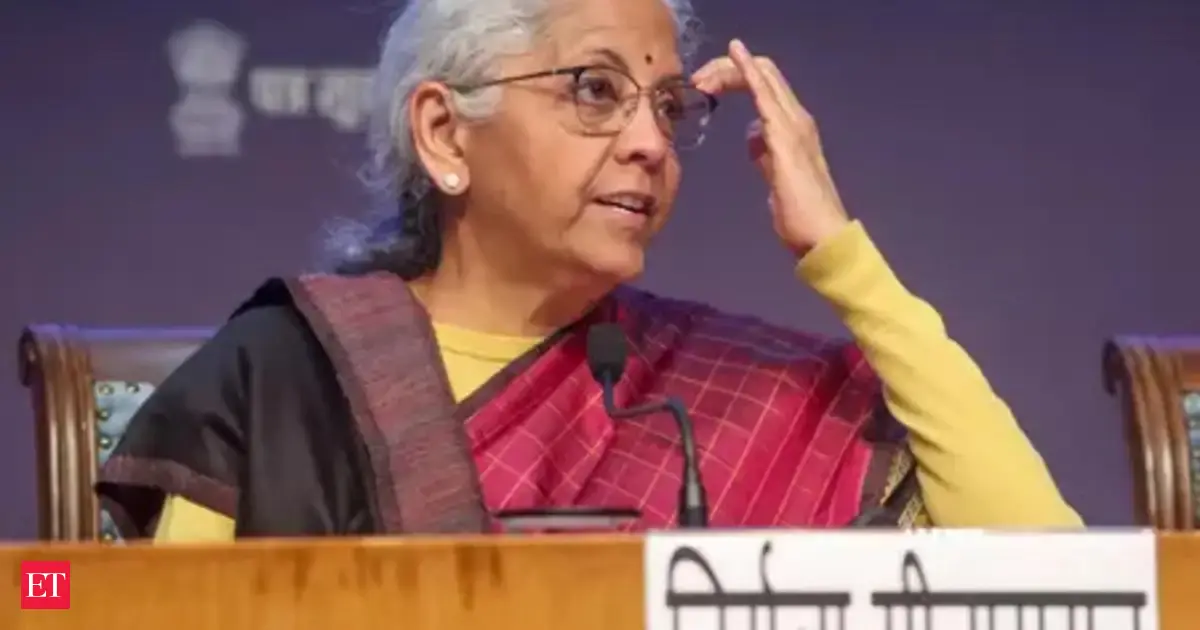
India US Interim Agreement framework to support MSMEs integration into global value chains: FM Sitharaman
India and the US have announced an interim agreement framework aimed at integrating Micro, Small, and Medium Enterprises (MSMEs) into global value chains. Finance Minister Nirmala Sitharaman highlighted that this framework involves reducing import duties on various goods to significantly boost bilateral trade. This development is crucial for competitive exams as it signifies a major step in India's trade policy, international economic cooperation, and efforts to strengthen its MSME sector.
Revision structure
Monthly events and exam calendar context
Static GK and one-liner notes
Quiz and mock-test revision path
Key points
Exam-ready takeaways
Finance Minister Nirmala Sitharaman announced this framework, emphasizing its economic significance.
A primary objective of the framework is to support the integration of MSMEs (Micro, Small, and Medium Enterprises) into global value chains.
The framework entails a reduction of import duties on a number of goods by both countries.
The overarching goal of this initiative is to boost two-way trade between India and the US.
Detailed analysis
Full exam-oriented breakdown
The announcement of an India-US Interim Agreement framework to integrate Micro, Small, and Medium Enterprises (MSMEs) into global value chains (GVCs), as highlighted by Finance Minister Nirmala Sitharaman, marks a significant juncture in India's international trade strategy and bilateral relations with the United States. This framework, centered on reducing import duties, is designed to enhance two-way trade and provide a crucial impetus to India's vast MSME sector. **Background Context and Historical Trajectory:** India and the United States share a complex yet increasingly strategic relationship. While political and security ties have strengthened considerably over the past two decades, economic relations, particularly trade, have often faced friction. Previous attempts to forge a comprehensive trade deal or a Free Trade Agreement (FTA) have stalled due to disagreements on various issues, including agricultural market access, intellectual property rights, and tariffs on industrial goods. A notable point of contention was the US withdrawal of Generalized System of Preferences (GSP) benefits for India in 2019, which impacted a range of Indian exports. Despite these hurdles, both nations have recognized the immense potential for economic cooperation, especially in the context of diversifying global supply chains away from over-reliance on a single country and fostering resilient economic partnerships. This interim agreement can be seen as a pragmatic step to build trust and momentum towards a more comprehensive trade architecture, addressing immediate concerns and leveraging existing complementarities. **What Happened: The Core of the Agreement:** The interim agreement framework is designed as a facilitative mechanism rather than a full-fledged FTA. Its primary mechanism involves a mutual reduction of import duties on a specified list of goods by both countries. While the exact list of goods is crucial and will determine the immediate impact, the stated objective is clear: to boost bilateral trade. Critically, the framework specifically targets the integration of MSMEs into global value chains. Global value chains refer to the full range of activities that firms and workers perform to bring a product from its conception to its end use. For MSMEs, integrating into these chains often presents significant challenges related to scale, quality standards, logistics, and access to international markets. By reducing tariffs, the agreement aims to lower the cost of inputs for MSMEs and make their exports more competitive, thus facilitating their participation in the intricate web of global production and distribution. **Key Stakeholders Involved:** On the Indian side, the primary stakeholders include the Ministry of Finance (responsible for tariff policy), the Ministry of Commerce and Industry (overseeing trade negotiations and policy), and most importantly, the millions of MSMEs across various sectors (manufacturing, services, agriculture). These MSMEs stand to gain from increased market access and reduced input costs. Indian exporters and importers are also direct beneficiaries. For the US, stakeholders include the Office of the United States Trade Representative (USTR), the Department of Commerce, and American businesses looking for diversified supply chains and new markets. The agreement also implicitly involves international bodies like the World Trade Organization (WTO), as any tariff reductions must comply with WTO principles of non-discrimination and transparency. **Significance for India:** This agreement carries profound significance for India across multiple dimensions. Economically, it promises to boost exports, stimulate industrial growth, and create employment opportunities within the MSME sector, which is a major contributor to India's GDP (around 30%) and employment (over 110 million people). Integrating MSMEs into GVCs aligns perfectly with India's 'Make in India' and 'Atmanirbhar Bharat' (Self-Reliant India) initiatives, encouraging domestic manufacturing and enhancing its global competitiveness. Politically, it deepens India's strategic partnership with the US, signaling a shared commitment to open trade and economic collaboration. This collaboration is vital for India's geopolitical standing, especially in the Indo-Pacific region. Socially, empowering MSMEs through enhanced trade opportunities can lead to more equitable growth and upliftment in various regions, fostering inclusive development. The agreement also offers India an opportunity to diversify its export basket and reduce reliance on traditional markets. **Constitutional and Policy Framework:** India's trade policies are guided by its constitutional framework and relevant legislation. Article 51 of the Constitution, a Directive Principle of State Policy, encourages the State to promote international peace and security and foster respect for international law and treaty obligations. Trade agreements fall under the ambit of the Union List (Entry 14 for 'entering into treaties and agreements with foreign countries and implementing of treaties, agreements and conventions with foreign countries') and Entry 41 ('Trade and Commerce with foreign countries; import and export across customs frontiers'). Parliament, under Article 246, has the exclusive power to legislate on these matters. The MSME Development Act, 2006, provides the statutory framework for the promotion and development of MSMEs. Furthermore, India's Foreign Trade Policy (FTP), periodically announced by the Ministry of Commerce & Industry, sets the overall direction for India's international trade, with a strong focus on export promotion and integration into the global economy. This interim agreement is a concrete step aligned with the objectives of the current FTP, aiming to make India a significant player in global trade. **Future Implications:** This interim framework is likely a precursor to a more comprehensive trade agreement or even a full FTA between India and the US. Successful implementation and the demonstrated benefits for MSMEs could build the necessary political will and industry confidence to tackle more complex trade issues. It could also encourage further investment from the US into India, particularly in sectors where MSMEs play a crucial role. However, challenges remain, including addressing non-tariff barriers, ensuring equitable benefits across all MSME segments, and navigating potential domestic industry concerns about increased competition. The agreement's success will be a critical test case for how India balances its protectionist impulses with the need for global integration, shaping its position in the evolving world trade order for years to come.
How to study
Turn news into exam marks
Revise monthly events by exam family instead of reading random updates.
Pair one-liners with mock tests so mistakes become the next revision list.
Keep state job pages, calendar pages and GK packs connected in one path.