

An interim trade agreement framework has been reached between India and the United States.
GK and monthly revision
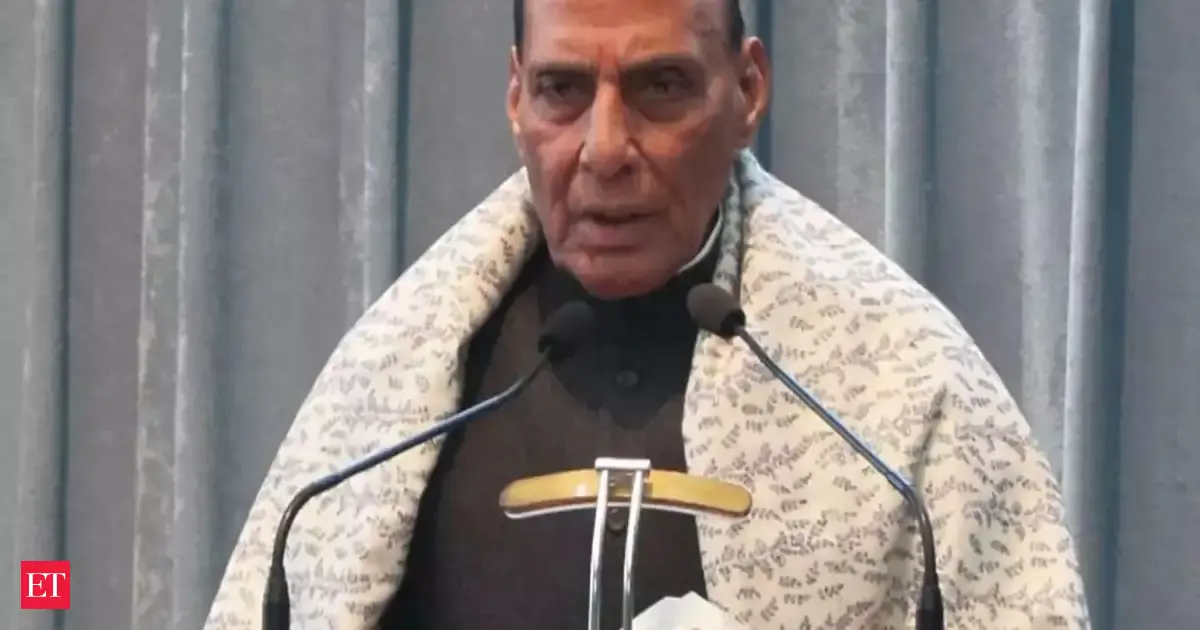
India-US trade deal to boost exports, jobs; farmers’ interests safeguarded: Rajnath Singh
India and the United States have finalized an interim trade agreement framework aimed at boosting bilateral trade. This deal is expected to increase Indian exports, create jobs, and safeguard farmers' interests. It involves reciprocal tariff reductions and India's commitment to significant US energy and aircraft product purchases over five years, making it crucial for economic and international relations sections of competitive exams.
Revision structure
Monthly events and exam calendar context
Static GK and one-liner notes
Quiz and mock-test revision path
Key points
Exam-ready takeaways
The deal aims to boost India's exports and create jobs, with specific emphasis on safeguarding farmers' interests.
The US will reduce tariffs on Indian goods, while India will lower tariffs on US industrial and agricultural products.
India has committed to buying significant US energy and aircraft products.
These planned purchases of US energy and aircraft products are to be executed over a five-year period.
Detailed analysis
Full exam-oriented breakdown
The interim trade agreement framework reached between India and the United States marks a significant step in strengthening bilateral economic ties, coming after a period of considerable trade friction. To truly understand its importance, we must delve into its background, implications, and broader context. **Background Context: Navigating Trade Tensions** For several years, India and the US have grappled with a series of trade disputes. A major point of contention arose when the US, under the Trump administration, withdrew India's Generalized System of Preferences (GSP) status in June 2019. This move removed preferential duty-free entry for certain Indian products into the US market, impacting Indian exporters. The US cited India's failure to provide "equitable and reasonable access to its markets" across various sectors, including dairy and medical devices. India, in retaliation, imposed higher tariffs on 28 US products. These trade irritants persisted even as both nations sought to deepen their strategic partnership, especially in the Indo-Pacific region, driven by shared concerns over China's growing influence. The current interim deal emerges from a sustained effort to de-escalate these tensions and establish a more predictable trade environment, acknowledging the mutual benefits of a robust economic relationship. **What Happened: A Framework for Reciprocity** The core of this interim agreement lies in reciprocal concessions. The United States has agreed to reduce tariffs on certain Indian goods, providing Indian exporters with better market access. In return, India will lower tariffs on specific US industrial and agricultural products. This reciprocal tariff reduction is a classic tool in trade negotiations aimed at boosting bilateral trade volumes. Furthermore, a crucial component of the deal is India's commitment to purchase significant quantities of US energy and aircraft products over a five-year period. This commitment not only addresses the US's desire to reduce its trade deficit but also aligns with India's growing energy needs and modernization of its aviation sector. **Key Stakeholders Involved** Several key players are central to this agreement. On the Indian side, the **Government of India**, particularly the Ministry of Commerce and Industry and the Ministry of External Affairs, has been the primary negotiator. **Indian exporters**, especially those in sectors like textiles, pharmaceuticals, and certain agricultural goods, stand to benefit from reduced US tariffs, gaining better access to a lucrative market. **Indian farmers** are a critical stakeholder, with the government explicitly stating their interests are safeguarded, implying careful selection of US agricultural imports to avoid harming domestic producers. For the United States, the **US government**, led by the Office of the United States Trade Representative (USTR), championed the deal. **US industrial and agricultural producers**, including energy companies and aircraft manufacturers, gain from India's purchasing commitments and reduced Indian tariffs, offering them expanded market opportunities. **Significance for India: Economic and Strategic Boost** This interim trade deal holds immense significance for India. Economically, it is projected to **boost India's exports** and **create jobs**, particularly in sectors gaining preferential access to the US market. Enhanced market access can lead to increased foreign exchange earnings and potentially attract foreign direct investment. Strategically, the agreement underscores the deepening **India-US strategic partnership**. In an increasingly complex geopolitical landscape, a robust economic relationship strengthens the overall bilateral ties, providing a counterweight to other regional powers and enhancing India's standing on the global stage. It also diversifies India's trade relationships, reducing over-reliance on any single market. The commitment to purchase US energy products also aligns with India's energy security objectives, while aircraft purchases support its growing aviation sector and defense modernization plans. **Historical Context and Broader Themes** The India-US trade relationship has evolved from initial skepticism during the Cold War to a comprehensive strategic partnership today. While bilateral trade has grown significantly, reaching over $120 billion in goods and services in 2022, it has also been punctuated by disputes. This interim agreement is a testament to the enduring commitment to resolve differences and build a stronger economic foundation. It reflects broader themes of **economic liberalization** and **globalization**, even as nations increasingly prioritize national interests. It also highlights the importance of **bilateral trade agreements** in an era where multilateral trade bodies like the WTO face challenges in consensus-building. For India, it fits into its 'Look East' and 'Act East' policies, as well as its broader engagement with major global economies, balancing its 'Make in India' and 'Atmanirbhar Bharat' initiatives with the need for global integration. **Future Implications: Towards a Comprehensive Deal?** Being an 'interim' framework, this agreement likely paves the way for more comprehensive negotiations. The ultimate goal for both nations could be a full-fledged Free Trade Agreement (FTA), which would entail deeper tariff reductions, broader market access, and potentially address issues like intellectual property rights, e-commerce, and investment rules. A successful interim deal builds trust and momentum for these more complex discussions. Furthermore, it could influence India's approach to other trade blocs and agreements, such as the Indo-Pacific Economic Framework for Prosperity (IPEF), where India is a participant. The implementation of this deal will also be crucial in shaping perceptions and future policy decisions regarding trade liberalization in India, especially concerning the protection of sensitive sectors like agriculture. **Related Constitutional Articles, Acts, or Policies** The power to enter into international treaties and agreements, like this trade deal, is vested with the Executive in India. However, for such agreements to have domestic legal effect, Parliament often needs to legislate. **Article 253** of the Indian Constitution grants Parliament the power to make any law for implementing any treaty, agreement, or convention with any other country or any decision made at any international conference, association, or other body. This article is crucial for giving legal backing to the commitments made in international agreements. Additionally, **Article 246** read with **Entry 14 of the Union List (List I)** in the Seventh Schedule, which covers 'Entering into treaties and agreements with foreign countries and implementing of treaties, agreements and conventions with foreign countries', affirms the Union Parliament's exclusive legislative competence over foreign affairs and international agreements. The **Customs Act, 1962**, would be the primary legislation under which tariff reductions and duties would be administered. The government's **Foreign Trade Policy (FTP)**, updated periodically, provides the overarching framework for India's trade relations and aligns with such agreements. Policies like 'Make in India' and 'Atmanirbhar Bharat' are also relevant, as the deal's impact on domestic manufacturing and self-reliance will be closely watched.
How to study
Turn news into exam marks
Revise monthly events by exam family instead of reading random updates.
Pair one-liners with mock tests so mistakes become the next revision list.
Keep state job pages, calendar pages and GK packs connected in one path.