

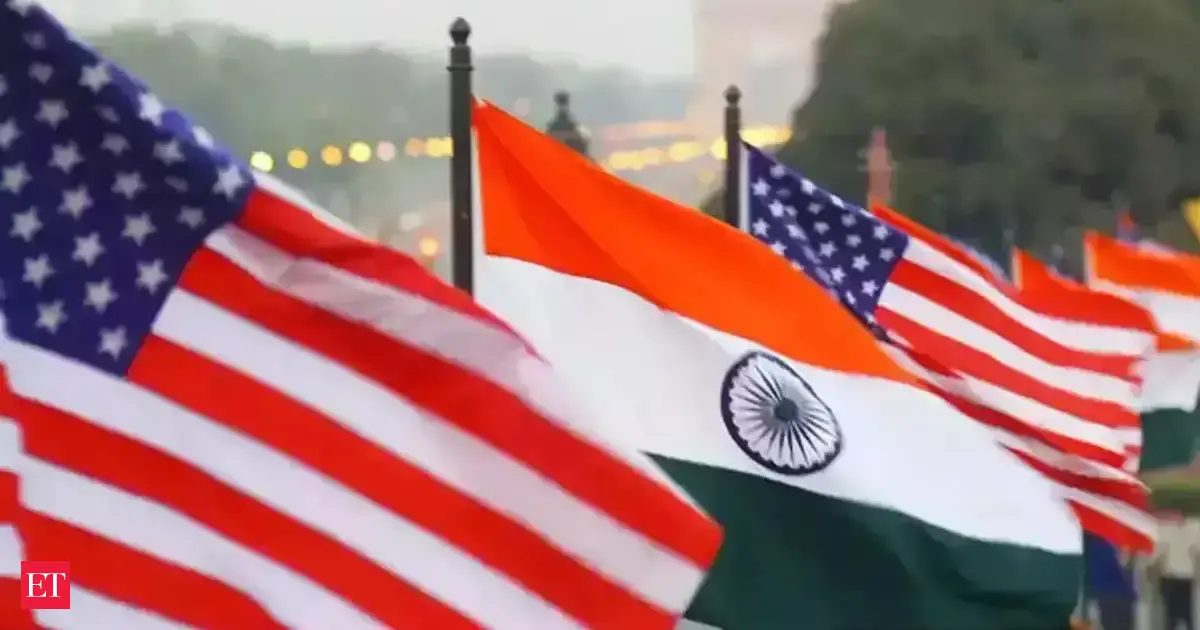
India and the US announced a framework for the first phase of a bilateral trade agreement.
GK and monthly revision
US wines, spirits, dry fruits to enter India at lower or zero duty under trade pact
India and the US have announced a framework for the first phase of a bilateral trade agreement. This pact aims to reduce or eliminate import duties on various goods, including US wines, spirits, and dry fruits, thereby boosting two-way trade between the two nations. This development is crucial for understanding India's economic diplomacy and trade liberalization efforts, making it significant for competitive exams focusing on economy and international relations.
Revision structure
Monthly events and exam calendar context
Static GK and one-liner notes
Quiz and mock-test revision path
Key points
Exam-ready takeaways
The agreement involves both sides reducing import duties on a number of goods.
Specific US products mentioned for duty reduction or zero duty include wines, spirits, and dry fruits.
The primary objective of this agreement is to boost two-way trade between India and the US.
The announcement regarding this trade pact was made on a Saturday.
Detailed analysis
Full exam-oriented breakdown
The recent announcement by India and the United States regarding a framework for the first phase of a bilateral trade agreement marks a significant step in their evolving economic relationship. This pact, aimed at reducing or eliminating import duties on a range of goods, including US wines, spirits, and dry fruits, is designed to boost two-way trade and address long-standing commercial irritants between the two nations. **Background Context and Historical Trajectory:** India-US trade relations have historically been complex, characterized by periods of cooperation and contention. While both nations have seen their strategic partnership deepen, particularly in defense and geopolitics, economic ties have often lagged due to various trade barriers and protectionist measures. For years, both countries have engaged in dialogues to resolve these issues, but a comprehensive trade deal remained elusive. A major point of contention was the US withdrawal of India's Generalized System of Preferences (GSP) benefits in June 2019, citing concerns over market access for American products. India, in turn, had imposed retaliatory tariffs on 28 US products. This move highlighted the need for a structured framework to normalize and expand trade relations, moving beyond piecemeal negotiations. The current agreement can be seen as an effort to rebuild trust and create a foundation for future, more extensive trade liberalization. **What Happened and Key Stakeholders:** The announced framework represents the 'first phase' of a bilateral trade agreement. This implies a calibrated approach, focusing on specific sectors where consensus on duty reduction or elimination is more readily achievable. The immediate beneficiaries from the US side are its wine, spirits, and dry fruit industries, which will gain greater market access in India through lower tariffs. While the article specifically mentions US products, a bilateral agreement inherently implies reciprocal concessions, meaning India would also gain reduced duties or market access for some of its products in the US. The primary objective is a mutual increase in two-way trade. Key stakeholders involved include: * **Indian Government**: Specifically, the Ministry of Commerce and Industry, responsible for negotiating and implementing trade policy. Their objective is to secure better market access for Indian goods, attract investment, and strengthen strategic ties. * **US Government**: The Office of the United States Trade Representative (USTR) leads negotiations for the US, advocating for American industries and market access. * **Indian Industries**: While some Indian exporters (e.g., in textiles, handicrafts, pharmaceuticals) might benefit from reciprocal duty cuts, certain domestic industries (like local wine producers) might face increased competition from cheaper US imports, necessitating careful policy considerations. * **US Industries**: Wineries, distilleries, and agricultural producers of dry fruits stand to gain directly from increased sales in the Indian market. * **Consumers in India**: Will benefit from a wider variety of goods and potentially lower prices for imported US products. **Significance for India:** This trade pact holds multi-faceted significance for India. Economically, it promises to boost bilateral trade, which stood at approximately $120 billion in goods and services in 2021-22, with the US being India's largest trading partner. Reducing tariffs enhances market access for Indian exports to the US (if reciprocal concessions are included) and diversifies India's import basket. It signals India's continued commitment to trade liberalization, albeit in a phased manner, aligning with its vision of becoming a $5 trillion economy. Strategically, strengthening economic ties with the US reinforces the broader Indo-Pacific partnership, crucial for regional stability and counterbalancing rising geopolitical influences. It also signals India's willingness to engage constructively on trade issues, enhancing its image as a reliable global partner. **Constitutional Provisions and Policy Framework:** From a constitutional perspective, the power to enter into and implement international treaties and agreements primarily rests with the Union Parliament. **Article 253** of the Indian Constitution empowers Parliament to make any law for implementing any treaty, agreement, or convention with any other country or any decision made at any international conference, association, or other body. This provides the legislative backing for such trade agreements. Furthermore, **Article 246** read with **Schedule VII** (Union List) grants the Union Government exclusive power over 'Foreign Affairs' (Entry 10), 'Entering into treaties and agreements with foreign countries and implementing of treaties, agreements, and conventions' (Entry 14), and 'Trade and commerce with foreign countries; import and export across customs frontiers' (Entry 41). The actual implementation of duty reductions would be done through amendments to the Customs Act, 1962, and related customs notifications, which fall under the purview of the Ministry of Finance. This agreement also aligns with India's broader Foreign Trade Policy (FTP), which aims to boost exports and integrate India into the global economy. **Future Implications:** This 'first phase' agreement is likely a precursor to a more comprehensive trade deal, possibly a Free Trade Agreement (FTA) or an Economic Partnership Agreement (EPA), which could cover a wider range of goods, services, investment, and intellectual property rights. The success of this initial phase will build momentum and trust for deeper negotiations. It could also set a precedent for India's engagement with other trading partners, demonstrating a pragmatic approach to trade liberalization. However, India will need to carefully balance the benefits of increased trade with the need to protect nascent domestic industries and ensure fair competition. The pact will also influence global supply chain dynamics, potentially making India a more attractive destination for US investments and manufacturing, aligning with initiatives like 'Make in India' and 'Atmanirbhar Bharat' (Self-Reliant India), provided the terms are mutually beneficial.
How to study
Turn news into exam marks
Revise monthly events by exam family instead of reading random updates.
Pair one-liners with mock tests so mistakes become the next revision list.
Keep state job pages, calendar pages and GK packs connected in one path.