

India and the US have finalized an interim trade agreement.
GK and monthly revision
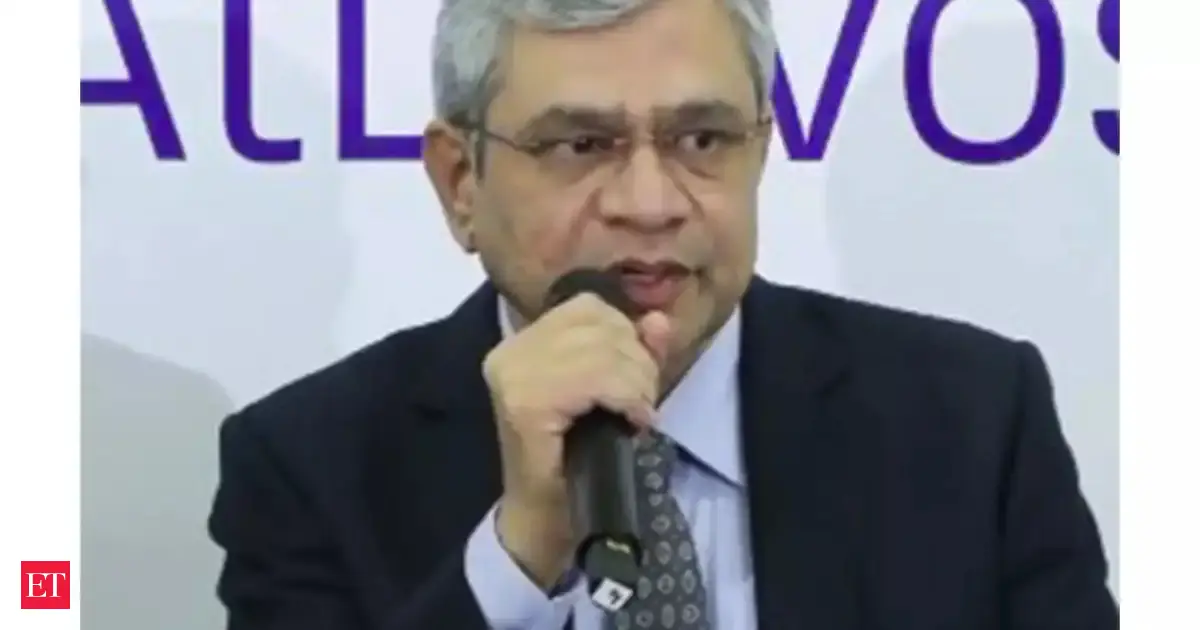
Vaishnaw: India in close talks with US on electronics, IP
India and the US have finalized an interim trade agreement, specifically focusing on electronics and intellectual property. This deal is designed to significantly boost trade in advanced technology products, such as GPUs, and foster substantial growth in the data center sector. For competitive exams, this highlights crucial bilateral economic relations, sector-specific policy, and potential investments exceeding 200 billion dollars, impacting India's technological and economic landscape.
Revision structure
Monthly events and exam calendar context
Static GK and one-liner notes
Quiz and mock-test revision path
Key points
Exam-ready takeaways
The agreement primarily focuses on electronics and intellectual property (IP).
It aims to boost trade in technology products, specifically mentioning Graphics Processing Units (GPUs).
Significant growth is anticipated in the data center sector as a result of this deal.
Investments in the technology sector are projected to exceed 200 billion dollars.
Detailed analysis
Full exam-oriented breakdown
The recent finalization of an interim trade agreement between India and the United States marks a significant development in their bilateral economic relations, particularly focusing on the crucial sectors of electronics and intellectual property (IP). This agreement is not an isolated event but rather a culmination of years of strategic engagement and a shared vision for a more resilient global supply chain, especially in the wake of geopolitical shifts and the COVID-19 pandemic. **Background Context and What Happened:** For decades, India and the US have fostered a strategic partnership, evolving from a relationship primarily defined by security concerns to one encompassing robust economic and technological cooperation. Trade discussions, however, have often been complex, involving disputes over tariffs, market access, and intellectual property rights. Initiatives like the India-US Trade Policy Forum (TPF) have served as platforms for dialogue, aiming to resolve these issues and deepen trade ties. The current interim agreement, as highlighted by Union Minister Ashwini Vaishnaw, signals a pragmatic step forward, bypassing some of the larger, more contentious issues of a comprehensive Free Trade Agreement (FTA) to focus on immediate, mutually beneficial areas. Specifically, the deal aims to boost trade in advanced technology products like Graphics Processing Units (GPUs) and anticipates substantial growth in the data center sector, projecting investments exceeding $200 billion. **Key Stakeholders Involved:** On the Indian side, key stakeholders include the Ministry of Commerce and Industry, the Ministry of Electronics and Information Technology (MeitY), and the Ministry of External Affairs, which collectively shape India's trade and technology policy. Indian domestic electronics manufacturers, IT service providers, and startups stand to gain significantly from increased market access and investment. For the US, the Office of the United States Trade Representative (USTR) and the Department of Commerce are central, representing the interests of American tech giants and semiconductor manufacturers. Multinational corporations operating in both countries are also major stakeholders, influencing and benefiting from policy harmonization and reduced trade barriers. **Why This Matters for India:** This agreement holds immense significance for India's economic and strategic aspirations. Economically, it aligns perfectly with the 'Make in India' and 'Digital India' initiatives, aiming to transform India into a global manufacturing hub and a digital powerhouse. Increased trade in electronics, especially high-value components like GPUs, can bolster India's nascent semiconductor ecosystem and attract foreign direct investment (FDI) into domestic manufacturing. The projected $200 billion investment in the technology sector, particularly data centers, will create numerous job opportunities, stimulate ancillary industries, and enhance India's digital infrastructure, crucial for a burgeoning digital economy. From a strategic perspective, strengthening technological ties with the US contributes to supply chain diversification (the 'China+1' strategy), reducing reliance on single-country supply chains and enhancing India's resilience in the global technology landscape. Furthermore, cooperation on IP reflects a commitment to fostering an innovation-driven economy, providing better protection for Indian innovators while attracting foreign R&D. **Historical Context and Broader Themes:** The India-US strategic partnership has deepened considerably over the past two decades, driven by converging geopolitical interests and economic complementarities. This agreement can be seen as a tangible outcome of discussions within broader frameworks like the Indo-Pacific Economic Framework for Prosperity (IPEF), which the US launched in 2022 to strengthen economic ties with partners in the Indo-Pacific region. While IPEF does not involve traditional tariff reductions, its pillars on supply chain resilience, clean energy, and fair economy resonate with the objectives of this interim deal. Historically, India's economic liberalization in the early 1990s paved the way for greater integration into the global economy, and subsequent policies like the National Policy on Electronics (2019) and the Production Linked Incentive (PLI) schemes have aimed to boost domestic manufacturing and exports in critical sectors. **Future Implications and Related Policies:** The interim agreement could serve as a stepping stone towards a more comprehensive bilateral trade agreement, setting precedents and building trust. It is expected to accelerate India's digital transformation, making it a more attractive destination for global tech companies seeking to expand their presence or diversify their operations. However, challenges remain, including regulatory harmonization, data privacy concerns (addressed by the Digital Personal Data Protection Act, 2023), and the need for continuous skill development to meet the demands of a high-tech manufacturing and services sector. From a constitutional perspective, international agreements like this are facilitated by **Article 253** of the Indian Constitution, which empowers Parliament to make laws for implementing any international treaty, agreement, or convention. Furthermore, the agreement touches upon various acts like the **IT Act, 2000** (for digital transactions and cybersecurity), the **Patents Act, 1970**, and the **Copyright Act, 1957** (for Intellectual Property protection). The success of this agreement will depend on effective implementation and continued collaboration, solidifying India's position as a key player in the global technology ecosystem.
How to study
Turn news into exam marks
Revise monthly events by exam family instead of reading random updates.
Pair one-liners with mock tests so mistakes become the next revision list.
Keep state job pages, calendar pages and GK packs connected in one path.