

India achieved zero-duty access for numerous exports to the United States under an interim trade deal.
GK and monthly revision
Zero duty, open market: Goyal says US doors open tariff free for India’s farmers and pharma
India has secured zero-duty access for various exports to the United States, marking a significant interim trade deal. This agreement primarily benefits India's agriculture, pharmaceutical, and manufactured goods sectors by eliminating US import tariffs. It's crucial for competitive exams as it highlights India's strengthening trade relations and economic policy, boosting export potential for key Indian industries.
Revision structure
Monthly events and exam calendar context
Static GK and one-liner notes
Quiz and mock-test revision path
Key points
Exam-ready takeaways
The agreement specifically benefits three key Indian sectors: agriculture, pharmaceuticals, and manufactured goods.
Key agricultural products such as tea, spices, and coffee will now face no US import tariffs.
Pharmaceutical exports from India, valued in billions, will also gain duty-free entry into the US market.
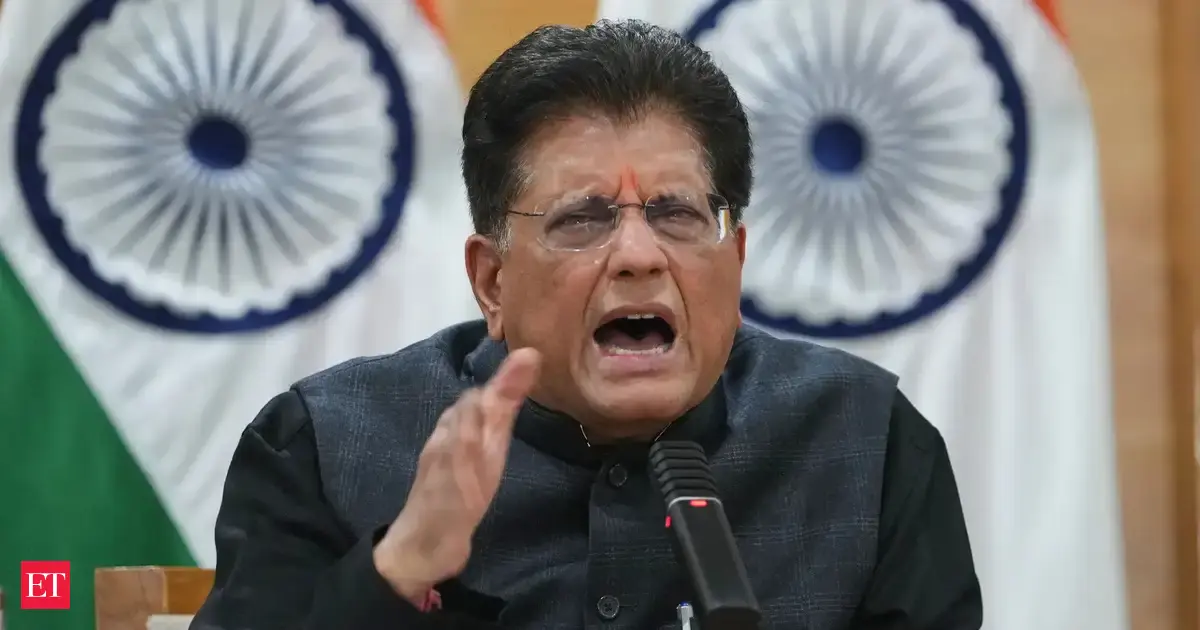
Union Minister Piyush Goyal highlighted the US market's tariff-free opening for India's farmers and pharma industry.
Detailed analysis
Full exam-oriented breakdown
The recent announcement by Union Minister Piyush Goyal regarding zero-duty access for numerous Indian exports to the United States marks a significant milestone in India-US trade relations. This interim trade deal, opening doors for India's agriculture, pharmaceuticals, and manufactured goods sectors, is a crucial development for India's economic aspirations and global positioning. Understanding this agreement requires delving into its background, implications, and future potential. **Background Context: A Journey of Trade and Tensions** India and the United States have a complex yet evolving trade relationship. Historically, the US has been one of India's largest trading partners, with bilateral trade reaching over $120 billion in goods in 2022-23. However, this relationship has not been without its challenges. A notable point of contention arose in 2019 when the US, under the Trump administration, withdrew India's designation as a beneficiary country under its Generalized System of Preferences (GSP) program. The GSP program, established in 1976, allowed duty-free entry for thousands of products from developing countries into the US market. India was the largest beneficiary of this program, and its withdrawal significantly impacted several Indian export sectors. This move was primarily attributed to concerns over market access barriers in India for US products and other trade practices. Post-GSP withdrawal, both nations engaged in protracted negotiations to resolve trade disputes and forge a new framework for bilateral trade, leading to the current interim agreement. **The Interim Deal: Opening New Avenues** This new agreement effectively restores a semblance of the GSP benefits, albeit in a more targeted manner. It grants zero-duty access for a broad range of Indian exports, specifically emphasizing three critical sectors: agriculture, pharmaceuticals, and manufactured goods. For India's vast agricultural sector, products like tea, spices, and coffee – staples of Indian exports and crucial for farmer incomes – will now face no import tariffs in the US. This is a substantial boost for rural economies. The pharmaceutical sector, where India is a global leader, particularly in generic medicines, will also see billions of dollars worth of exports enter the US market duty-free, enhancing its competitiveness. Similarly, various manufactured goods will benefit, supporting India's 'Make in India' initiative by making Indian products more attractive to US buyers. This 'interim' nature suggests that while significant, it is a stepping stone towards a more comprehensive trade agreement. **Key Stakeholders and Their Interests** Several key stakeholders are directly impacted by this deal. On the Indian side, the **Ministry of Commerce and Industry**, led by Minister Piyush Goyal, has been the primary architect and negotiator, aiming to boost national exports and economic growth. **Indian exporters**, across agriculture, pharma, and manufacturing, are the direct beneficiaries, gaining enhanced market access. **Farmers** will see better prices and demand for their produce, potentially leading to increased income. **Pharmaceutical companies** will strengthen their foothold in the crucial US market. From the US perspective, **US importers** and **consumers** stand to benefit from a wider range of competitively priced Indian goods. The **Office of the United States Trade Representative (USTR)**, while negotiating for US interests, also recognizes the strategic importance of a strong economic partnership with India. **Significance for India: Economic and Strategic Boost** This zero-duty access holds immense significance for India. Economically, it promises to **boost export earnings**, contribute to a healthier balance of payments, and attract foreign exchange. It will also **stimulate job creation** across the benefiting sectors, from farm laborers to pharmaceutical researchers. Strategically, it **strengthens India's bilateral ties with the US**, a key geopolitical partner, and diversifies India's export markets, reducing reliance on a few regions. The agreement reinforces India's position as a reliable global supplier, especially for pharmaceuticals and agricultural commodities, aligning with its vision of becoming a $5 trillion economy. It also provides a significant fillip to the **'Make in India' initiative**, encouraging domestic production for international markets. **Policy and Constitutional Underpinnings** While specific constitutional articles directly dictate trade deals, the executive power to enter into international agreements is derived from **Article 73** of the Indian Constitution, which extends the executive power of the Union to matters with respect to which Parliament has power to make laws. Furthermore, **Article 253** empowers Parliament to make any law for implementing any treaty, agreement, or convention with any other country or any decision made at any international conference, association, or other body. This provides the legislative framework for implementing such trade agreements. The **Foreign Trade (Development & Regulation) Act, 1992**, and subsequent amendments, along with the **Foreign Trade Policy (FTP)**, are the primary policy instruments that govern India's international trade. The current FTP (e.g., FTP 2023) aims to streamline processes, reduce transaction costs, and enhance India's competitiveness in global markets, goals directly supported by this US trade deal. **Future Implications: Towards a Comprehensive FTA?** This interim agreement could be a precursor to a more comprehensive **India-US Free Trade Agreement (FTA)**. Both nations have expressed interest in deepening economic ties, and this deal builds trust and momentum. A full FTA would significantly reduce trade barriers across a much broader range of goods and services, potentially including investment, intellectual property, and digital trade. Such an agreement would further integrate India into global supply chains, enhance its manufacturing capabilities, and provide greater stability for exporters. However, negotiating a full FTA is complex, involving intricate discussions on sensitive issues like tariffs, subsidies, and regulatory harmonization. The success of this interim deal will likely influence the pace and scope of future negotiations, solidifying India's role in the evolving global economic order.
How to study
Turn news into exam marks
Revise monthly events by exam family instead of reading random updates.
Pair one-liners with mock tests so mistakes become the next revision list.
Keep state job pages, calendar pages and GK packs connected in one path.