

Professor G.N. Devy proposed using linguistic and cultural markers for caste enumeration in the upcoming Census.
GK and monthly revision
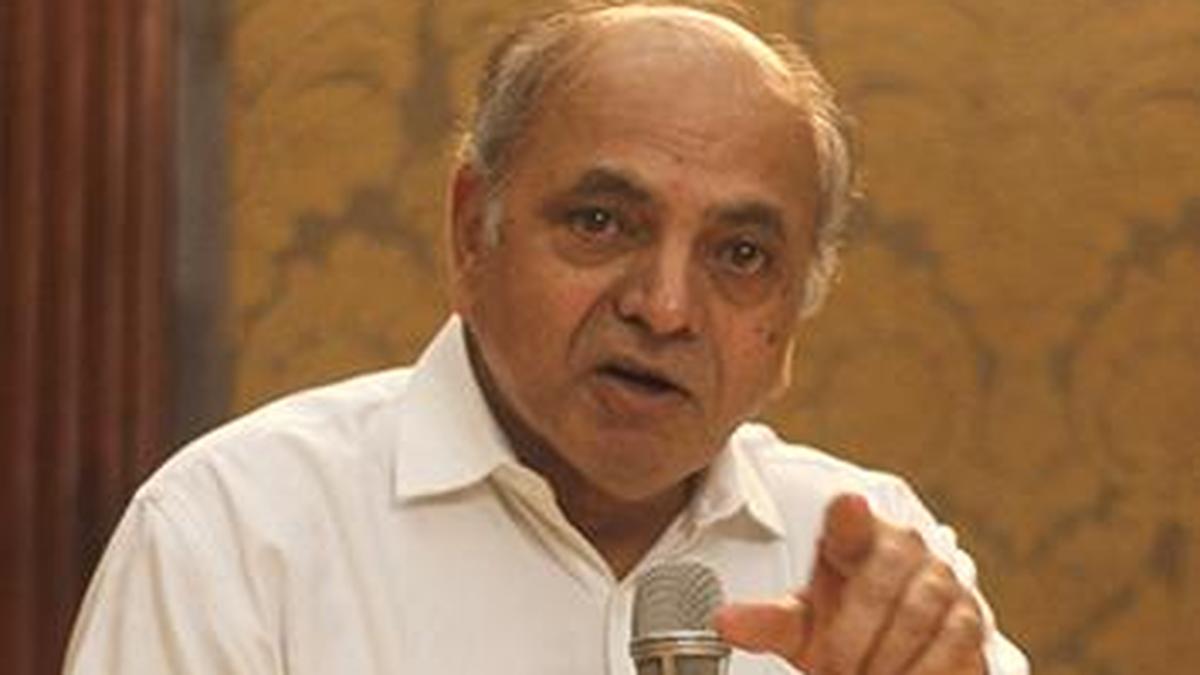
Linguistic, cultural markers could hold the key to caste enumeration method: Professor G.N. Devy
Professor G.N. Devy has proposed using linguistic and cultural markers for caste enumeration in the upcoming Census. This method is crucial for accurately identifying and enumerating Denotified Tribes (DNTs), formerly known as 'criminal' tribes. Failing to separately enumerate DNTs, who number over 10 crore people, could lead to their further alienation, making this a significant issue for social justice and policy formulation relevant for competitive exams.
Revision structure
Monthly events and exam calendar context
Static GK and one-liner notes
Quiz and mock-test revision path
Key points
Exam-ready takeaways
The proposal specifically advocates for the separate enumeration of Denotified Tribes (DNTs).
Denotified Tribes (DNTs) were historically classified as 'criminal' tribes.
Failure to enumerate DNTs separately could alienate more than 10 crore people.
The suggestion is made in the context of the upcoming national Census.
Detailed analysis
Full exam-oriented breakdown
The proposal by Professor G.N. Devy to utilize linguistic and cultural markers for caste enumeration in the upcoming Indian Census, particularly focusing on Denotified Tribes (DNTs), introduces a critical discussion point for India's social justice framework and statistical practices. This suggestion comes at a time when the demand for a comprehensive caste census is gaining traction, promising to provide much-needed data for targeted welfare policies. To understand the gravity of Devy's proposal, one must delve into the historical context of the Denotified Tribes. These communities were once branded as 'criminal' under the draconian Criminal Tribes Act of 1871, enacted by the British colonial administration. This Act, a dark stain on India's history, arbitrarily criminalized entire communities based on their birth, subjecting them to surveillance, forced resettlement, and systemic discrimination. After India gained independence, the Criminal Tribes Act was repealed in 1952, and these communities were 'denotified.' However, the social stigma and economic marginalization persisted, leaving millions in a precarious state. Many DNTs, along with Nomadic and Semi-Nomadic Tribes (NTs/SNTs), remain among the most vulnerable and underserved sections of Indian society, often falling outside the purview of existing Scheduled Castes (SC), Scheduled Tribes (ST), or Other Backward Classes (OBC) categories, or struggling to prove their identity within them. Professor Devy's core argument is that DNTs, who number over 10 crore people, possess distinct linguistic and cultural identities that can serve as accurate markers for their enumeration. Unlike broader caste categories, which can be amorphous and subject to political manipulation, these markers are intrinsic to their community identity. A separate and accurate enumeration would provide a clear demographic picture, enabling the government to formulate specific policies and allocate resources effectively. The current lack of precise data for DNTs makes it challenging to assess their socio-economic status, educational attainment, and access to basic services, thereby hindering their inclusion in national development. Key stakeholders in this discussion include the Government of India, particularly the Ministry of Home Affairs (responsible for the Census) and the Ministry of Social Justice and Empowerment (responsible for DNT welfare). The DNT communities themselves are the primary beneficiaries, whose future hinges on such recognition. Academics and social scientists like Professor Devy play a crucial role in advocating for evidence-based policy and highlighting the needs of marginalized groups. Civil society organizations working for DNT rights are also vital stakeholders, pushing for their inclusion and empowerment. This issue holds immense significance for India. From a social justice perspective, it's an opportunity to rectify historical wrongs and ensure that a deeply marginalized population receives its due. Politically, a comprehensive enumeration of DNTs could reshape welfare policies, reservation strategies, and resource allocation. Economically, accurate data would allow for targeted interventions in education, health, and livelihood generation, potentially uplifting millions from poverty and exclusion. The failure to enumerate DNTs separately, as Devy warns, could lead to further alienation, exacerbating social tensions and undermining the inclusive development goals of the nation. Several constitutional provisions and legal frameworks are relevant here. The **Census Act, 1948**, provides the legal basis for conducting the decennial census. **Article 340** of the Constitution empowers the President to appoint a commission to investigate the conditions of socially and educationally backward classes and make recommendations. This article was the basis for the Kalelkar Commission and the Mandal Commission. While DNTs are often categorized under OBCs, their unique historical context and extreme vulnerability warrant specific attention. **Articles 15(4), 15(5), and 16(4)** provide for special provisions and reservations for the advancement of backward classes, including SCs, STs, and OBCs. The recommendations of the **National Commission for Denotified, Nomadic, and Semi-Nomadic Tribes (NCDNT)**, particularly the **Renke Commission (2008)**, have consistently highlighted the need for separate identification and enumeration of DNTs and recommended a permanent commission for their welfare. The Renke Commission also pointed out that many DNTs are not included in SC/ST/OBC lists or are misclassified, leading to denial of benefits. Looking ahead, the implementation of Devy's proposal would involve significant logistical and methodological challenges. Defining and standardizing linguistic and cultural markers across diverse DNT communities would require extensive ethnographic research and community consultation. However, if successful, it could pave the way for a more accurate and inclusive census, providing a robust dataset for evidence-based policymaking. It could also reignite the broader debate on a full-fledged caste census, a politically sensitive but demographically crucial exercise. Ultimately, a separate enumeration of DNTs could be a transformative step towards addressing their historical injustices, ensuring their constitutional rights, and integrating them fully into the national mainstream, fostering a more equitable and inclusive India.
How to study
Turn news into exam marks
Revise monthly events by exam family instead of reading random updates.
Pair one-liners with mock tests so mistakes become the next revision list.
Keep state job pages, calendar pages and GK packs connected in one path.