

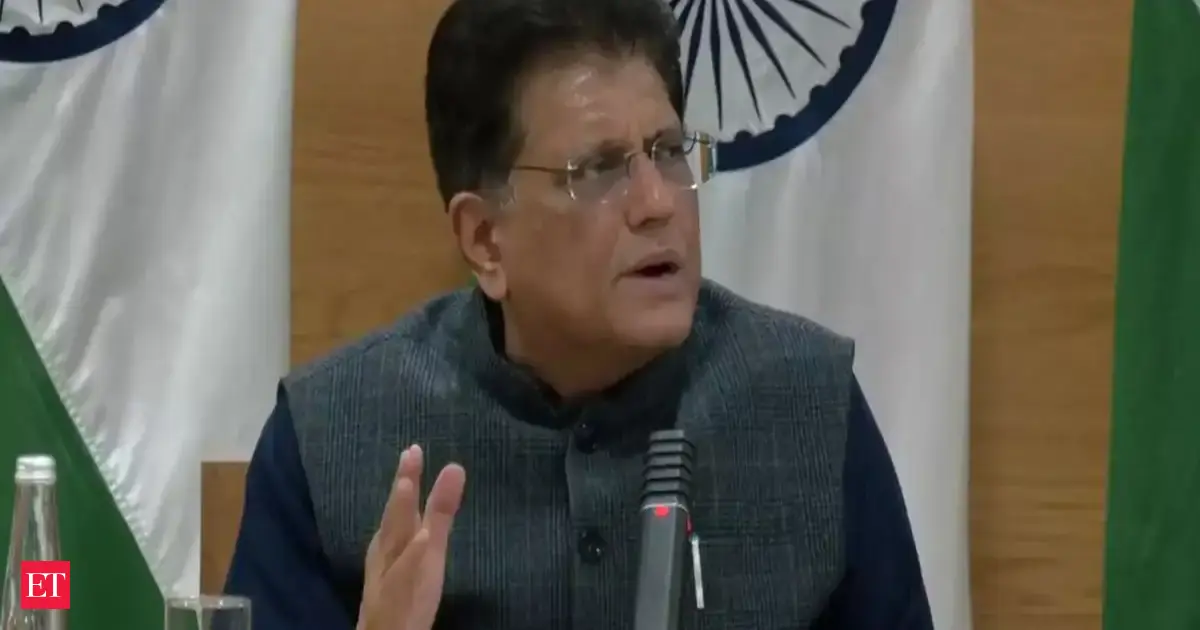
Union Minister Piyush Goyal stated that purchasing crude oil from the US is in India's own strategic interests.
GK and monthly revision
US India Trade Deal: 'Buying oil from the US is in India's own strategic interests', says Piyush Goyal
India is actively diversifying its energy sources by procuring crude oil, LNG, and LPG from the United States, a move Union Minister Piyush Goyal emphasized as being in India's strategic interests. This strategy aims to enhance India's energy security and provide preferential access in global markets, crucial for sustained economic growth. For competitive exams, this highlights India's energy policy, trade relations with the US, and economic diversification efforts.
Revision structure
Monthly events and exam calendar context
Static GK and one-liner notes
Quiz and mock-test revision path
Key points
Exam-ready takeaways
India is diversifying its energy sources by buying crude oil, Liquefied Natural Gas (LNG), and Liquefied Petroleum Gas (LPG) from the United States.
The purchasing decisions for these energy products are made by commercial buyers and companies in India.
Trade agreements between the US and India focus on ensuring smooth trade pathways and preferential access for Indian entities.
This diversification strategy is intended to provide India with an advantage over competitors in securing its energy requirements.
Detailed analysis
Full exam-oriented breakdown
India's strategic pivot towards the United States for its energy needs, specifically crude oil, Liquefied Natural Gas (LNG), and Liquefied Petroleum Gas (LPG), marks a significant evolution in its foreign policy and energy security strategy. Union Minister Piyush Goyal's assertion that buying oil from the US is in India's 'own strategic interests' underscores a calculated move to diversify energy sources, moving away from an over-reliance on traditional suppliers, primarily from the Middle East. **Background Context: India's Energy Imperative** For decades, India, a rapidly growing economy with the third-largest energy consumption globally, has been heavily dependent on oil imports to fuel its industrial growth and meet the demands of its vast population. Historically, over 80% of India's crude oil imports have originated from the Middle East, making it vulnerable to geopolitical instabilities and price volatilities in that region. Events like the Gulf Wars, the Strait of Hormuz tensions, and OPEC+ production decisions have repeatedly highlighted this vulnerability. As India aims to become a developed nation by 2047, its energy demand is projected to soar, necessitating a robust and diversified energy security framework. The US, following its 'shale revolution' in the early 21st century, transformed from a net energy importer to a significant exporter, particularly of crude oil and LNG. This shift created a new opportunity for energy-hungry nations like India. **What Happened: A Strategic Diversification** India began importing crude oil from the US in 2017, a landmark moment in bilateral energy ties. This move has since expanded to include LNG and LPG, solidifying the US as a crucial component of India's energy basket. The decision-making process for these purchases largely rests with commercial buyers and companies, including India's major Public Sector Undertakings (PSUs) like Indian Oil Corporation (IOC), Bharat Petroleum Corporation Limited (BPCL), Hindustan Petroleum Corporation Limited (HPCL), and GAIL India Limited. These entities engage in long-term contracts and spot purchases, guided by market dynamics and government policy. Trade agreements between the two nations facilitate smoother trade pathways and preferential access, ensuring that Indian buyers receive competitive terms and reliable supply, thereby gaining an advantage over competitors in the global market. **Key Stakeholders Involved** On the Indian side, the **Ministry of Petroleum and Natural Gas** and the **Ministry of Commerce and Industry** are pivotal in formulating policies and facilitating trade. **Indian PSUs** are the primary commercial buyers and importers. The **Reserve Bank of India (RBI)** plays a role in managing foreign exchange reserves and facilitating international transactions. In the US, the **Department of Energy** and the **Office of the United States Trade Representative (USTR)** guide energy export policies and trade negotiations. **US energy companies**, such as ExxonMobil, Chevron, and leading LNG exporters like Cheniere Energy, are the commercial suppliers. Global bodies like **OPEC+** (Organization of the Petroleum Exporting Countries and its allies) remain indirect stakeholders, as their production decisions influence global oil prices and thus India's purchasing strategy. **Why This Matters for India** This energy partnership holds multifaceted significance for India: 1. **Enhanced Energy Security:** It reduces India's over-reliance on a single geographic region, mitigating risks associated with supply disruptions and geopolitical events in the Middle East. This diversification ensures a more stable and resilient energy supply. 2. **Geopolitical Leverage:** Strengthening energy ties with the US deepens the overall strategic partnership between the two democracies. It provides India with greater geopolitical maneuvering room and reduces potential external pressures related to energy supply. 3. **Economic Benefits:** Access to a new, large, and stable supplier can lead to more competitive pricing and better contractual terms, potentially reducing India's import bill and managing its current account deficit. The availability of LNG also supports India's push for cleaner energy as a bridging fuel. 4. **Strategic Autonomy:** A diversified energy portfolio enhances India's ability to pursue an independent foreign policy, free from the constraints of energy dependency. **Historical Context and Constitutional Framework** India's energy policy has evolved significantly since independence. Initially focused on domestic exploration and self-reliance, the oil shocks of the 1970s underscored the need for international sourcing. The 'Look West' policy traditionally prioritized ties with West Asian nations for energy. The current 'Act East' and broader global engagement strategies reflect a more diversified approach. While the Indian Constitution does not directly address 'oil imports,' the subject falls under the **Union List (Seventh Schedule, Article 246)**, specifically entries related to 'Foreign Affairs' (Entry 10), 'Entering into treaties and agreements with foreign countries' (Entry 14), and 'Trade and commerce with foreign countries' (Entry 41). Policies like the **Hydrocarbon Exploration and Licensing Policy (HELP)** and the **Strategic Petroleum Reserves Program** are crucial national initiatives complementing this diversification strategy. **Future Implications** The burgeoning energy trade is likely to further solidify the India-US strategic partnership, extending beyond traditional areas like defence and technology. This could lead to increased collaboration in renewable energy, energy efficiency, and technology transfer. However, challenges such as logistics, shipping costs, and fluctuating global energy prices will remain. India's long-term goal of transitioning to cleaner energy sources and achieving Net Zero emissions by 2070 means that while fossil fuel imports will continue to be crucial for the foreseeable future, there will be a gradual shift towards renewables and green hydrogen. The US, with its technological prowess, could also become a key partner in this energy transition. This strategic energy relationship is a cornerstone of India's vision for a secure, prosperous, and globally influential future.
How to study
Turn news into exam marks
Revise monthly events by exam family instead of reading random updates.
Pair one-liners with mock tests so mistakes become the next revision list.
Keep state job pages, calendar pages and GK packs connected in one path.