

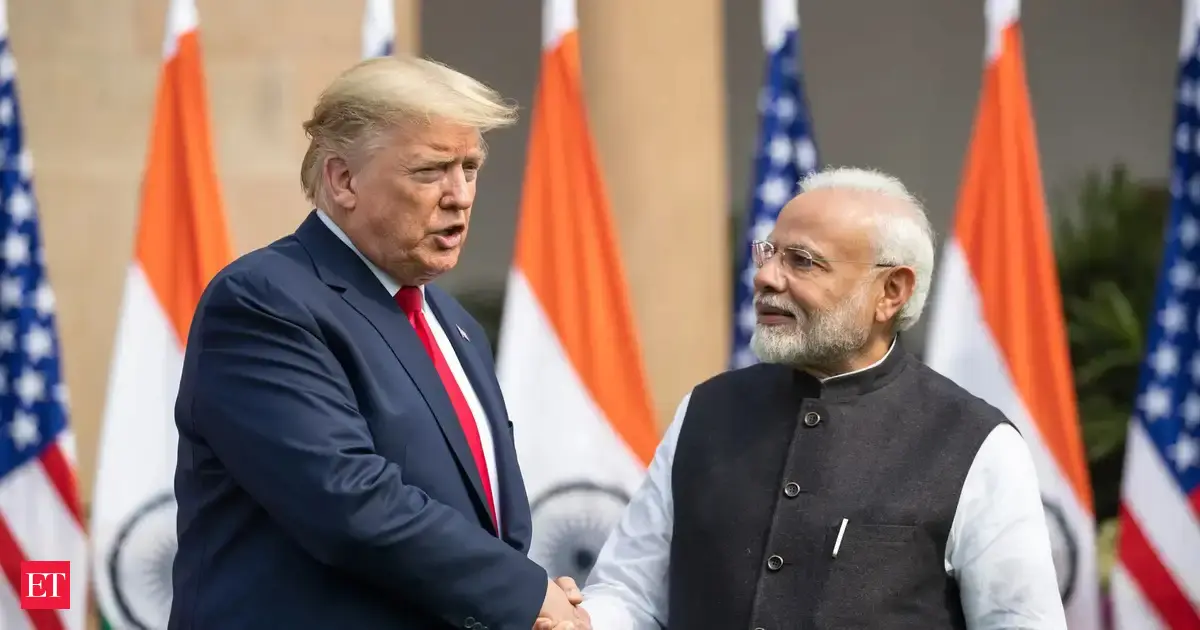
India and the US have successfully finalized a new bilateral trade agreement.
GK and monthly revision
India offers quota-based auto duty cuts, tariff reduction on alcohol under US trade pact
India and the US have finalized a significant trade agreement, where India will offer duty concessions on automobiles (quota-based) and alcoholic beverages. Concurrently, the US will reduce tariffs on a substantial portion of Indian exports, including textiles, gems, jewellery, and agricultural products. This pact is crucial for boosting bilateral trade and economic ties between the two nations, making it highly relevant for competitive exams focusing on international trade and economic policy.
Revision structure
Monthly events and exam calendar context
Static GK and one-liner notes
Quiz and mock-test revision path
Key points
Exam-ready takeaways
India will offer specific duty concessions on automobiles, implemented through a quota-based system.
Tariffs on alcoholic beverages imported into India will also see reductions under the new pact.
The United States will reduce import duties on a significant portion of Indian exports.
Key Indian export sectors benefiting from reduced US tariffs include textiles, gems and jewellery, and agricultural products.
Detailed analysis
Full exam-oriented breakdown
The recent finalization of a trade agreement between India and the United States marks a significant development in bilateral economic relations, signaling a pragmatic approach to addressing long-standing trade irritants and fostering deeper economic engagement. This agreement, though not a comprehensive Free Trade Agreement (FTA), establishes crucial duty concessions from India on automobiles (quota-based) and alcoholic beverages, while the US reciprocates by reducing tariffs on key Indian exports such such as textiles, gems and jewellery, and agricultural products. **Background Context:** For years, trade relations between India and the US have been characterized by immense potential alongside persistent friction. The US has often criticized India's high tariffs, particularly on agricultural products, Harley-Davidson motorcycles, and medical devices, labeling India a 'high-tariff country'. India, on its part, has voiced concerns over market access for its services and manufacturing sectors and the withdrawal of its Generalized System of Preferences (GSP) benefits by the US in June 2019, which affected approximately $5.6 billion worth of Indian exports. Attempts to finalize a comprehensive trade package or a mini-deal have been ongoing for several years, with various rounds of negotiations often stalling over specific sectorial demands. This agreement comes at a time when global supply chains are being re-evaluated, and countries are seeking to diversify trade partners, making the India-US strategic partnership even more critical. **What Happened:** Under the newly finalized pact, India has agreed to offer duty concessions on certain automobiles, implemented through a quota-based system. This carefully managed approach aims to balance the interests of domestic auto manufacturers with the demand for premium foreign vehicles. Simultaneously, tariffs on alcoholic beverages imported into India, a long-standing demand from American distillers, will also see reductions. In return, the United States has committed to reducing import duties on a substantial portion of Indian exports. This includes critical sectors for India's economy such as textiles, which are a major employment generator; gems and jewellery, where India holds significant global market share; and various agricultural products, which will benefit Indian farmers and exporters. While the exact percentage of tariff reductions and specific product lists are yet to be fully disclosed, the broad strokes indicate a mutually beneficial arrangement. **Key Stakeholders Involved:** On the Indian side, the **Ministry of Commerce and Industry** has been the primary negotiator, representing the interests of various domestic industries. **Indian exporters** in textiles, gems and jewellery, and agriculture stand to gain significantly from enhanced market access in the US. **Domestic automobile manufacturers** and the **alcoholic beverage industry** in India are also key stakeholders, as they will face increased competition but also potentially gain from reciprocal access or improved supply chains. For the US, the **Office of the United States Trade Representative (USTR)** led the negotiations, advocating for American industries, including its auto manufacturers and alcohol producers. **American consumers** will also benefit from potentially lower prices and greater product variety. Geopolitically, the governments of both nations are stakeholders, using trade as a tool to strengthen their strategic partnership. **Why This Matters for India:** This agreement holds immense significance for India. Economically, it provides a much-needed boost to India's export sector, especially at a time of global economic slowdown. Increased exports in textiles, gems and jewellery, and agriculture will contribute to economic growth, job creation, and foreign exchange earnings. It helps diversify India's export markets, reducing reliance on traditional partners and enhancing resilience against global trade shocks. Politically, it strengthens India's strategic partnership with the US, a crucial ally in a complex geopolitical landscape, especially in the Indo-Pacific region. It also signals India's commitment to engaging in pragmatic trade liberalization, balancing its 'Atmanirbhar Bharat' (self-reliant India) policy with the need for global integration. For consumers in India, the reduction in auto and alcohol duties could mean access to a wider range of products at potentially lower prices. **Historical Context:** The journey towards a robust India-US trade relationship has seen several phases. Post-liberalization in the 1990s, trade grew steadily, but significant trade deficits for the US and market access issues for both sides remained. The US has consistently pushed for greater openness in India's economy. The GSP withdrawal in 2019 by the Trump administration was a low point, impacting bilateral trade sentiment. However, both nations have recognized the strategic imperative of strengthening ties, leading to persistent efforts to resolve trade disputes. This agreement can be seen as a culmination of these efforts, building on the foundation of the Strategic Trade Authorization-1 (STA-1) status granted to India in 2018, which eased high-tech trade. **Future Implications:** This agreement could serve as a crucial stepping stone towards a more comprehensive Free Trade Agreement (FTA) between India and the US, a goal that has been discussed for decades. While this pact is focused on specific tariff reductions, its success could build trust and momentum for tackling more complex issues like intellectual property rights, digital trade, and investment. It could also encourage other countries to engage in similar bilateral agreements with India, further integrating India into global supply chains. However, domestic industries in India, particularly in the auto and alcohol sectors, will need to adapt to increased competition. The government will need to carefully monitor the impact of these concessions to ensure they benefit the broader economy without unduly harming specific sectors. Moreover, it reinforces India's position as a significant player in international trade negotiations, capable of balancing its national interests with global economic realities. **Related Constitutional Articles, Acts, or Policies:** 1. **Article 253 of the Indian Constitution:** This article empowers Parliament to make any law for implementing any treaty, agreement, or convention with any other country or any decision made at any international conference, association, or other body. This provides the constitutional basis for India to enact legislation or executive orders necessary to implement its commitments under this trade agreement. 2. **Seventh Schedule (Union List):** Entry 41 pertains to 'Trade and commerce with foreign countries; import and export across customs frontiers; customs frontiers.' Entry 83 deals with 'Duties of customs including export duties.' These entries clearly place foreign trade and customs duties under the legislative competence of the Union Government. 3. **Foreign Trade (Development and Regulation) Act, 1992:** This Act provides the legal framework for the development and regulation of foreign trade in India and empowers the Central Government to formulate and implement India's Foreign Trade Policy (FTP). 4. **Customs Act, 1962:** This Act provides for the levy and collection of duties of customs, control of imports and exports, and other related matters. Any changes in tariffs as per the agreement would be implemented through amendments or notifications under this Act. 5. **India's Foreign Trade Policy (FTP):** The FTP, revised periodically (e.g., FTP 2023), outlines the government's strategy for promoting exports and regulating imports. This agreement aligns with the broader objectives of the FTP to boost exports and integrate India into the global economy.
How to study
Turn news into exam marks
Revise monthly events by exam family instead of reading random updates.
Pair one-liners with mock tests so mistakes become the next revision list.
Keep state job pages, calendar pages and GK packs connected in one path.