

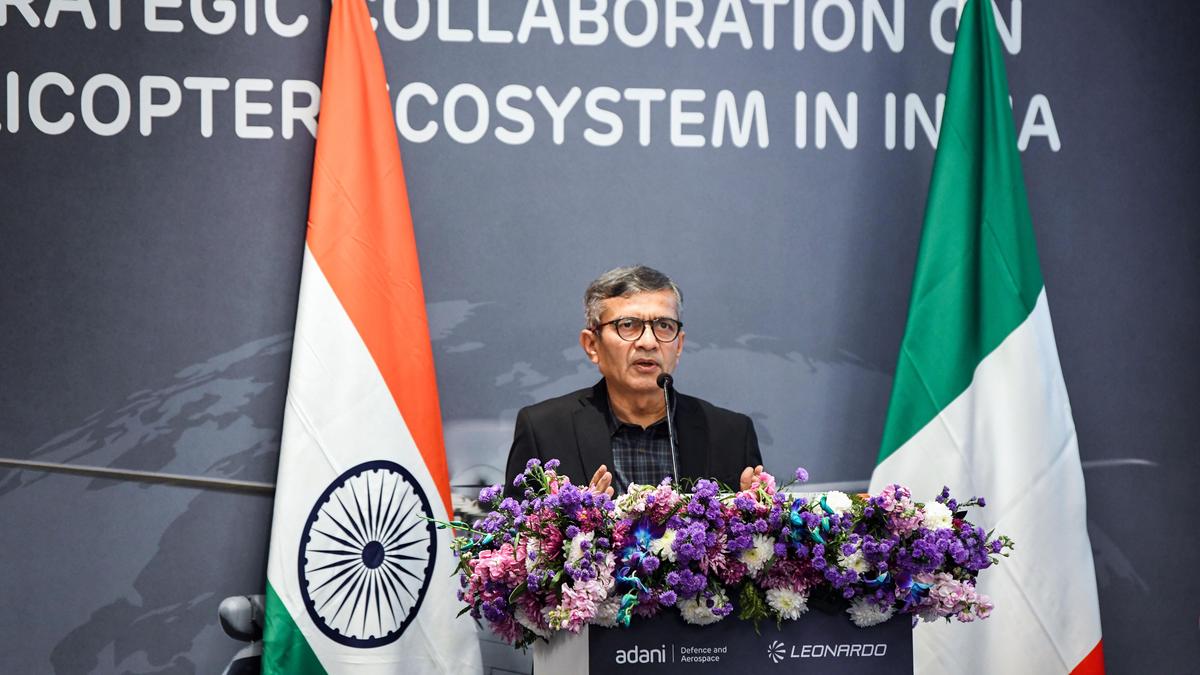
Defence Secretary Rajesh Kumar Singh stated that while India aims to reduce import dependence through the
GK and monthly revision
‘Imports Can Never Be Fully Eliminated’: Defence Secretary on Make in India
The article discusses the Defence Secretary
Revision structure
Monthly events and exam calendar context
Static GK and one-liner notes
Quiz and mock-test revision path
Key points
Exam-ready takeaways
The Defence Secretary acknowledged that complete elimination of defence imports is not feasible in the foreseeable future
The focus remains on progressively expanding the scope of
This initiative aims to boost domestic manufacturing capabilities and reduce reliance on foreign suppliers.
The statement highlights a pragmatic approach to achieving self-reliance in defence production.
Detailed analysis
Full exam-oriented breakdown
The statement by Defence Secretary Rajesh Kumar Singh, asserting that while India aims to progressively expand 'Make in India' to minimize import dependence in defence, it can never be entirely eliminated, offers a pragmatic outlook on India's ambitious self-reliance journey. This perspective is crucial for understanding the complexities and practicalities of achieving 'Atmanirbhar Bharat' (self-reliant India) in a strategically vital sector. **Background Context and Historical Journey:** India has historically been one of the world's largest importers of defence equipment. Post-independence, the nation initially relied heavily on imports, primarily from the Soviet Union during the Cold War era, and later diversified sources. This dependence was driven by a nascent domestic industrial base, the urgent need to equip a large standing army, and the rapid pace of technological advancements globally. Events like the 1962 Sino-Indian War and the Kargil War (1999) highlighted critical gaps in defence preparedness and the vulnerabilities associated with foreign dependence, especially concerning spare parts, maintenance, and technology transfer. These experiences underscored the imperative for greater indigenous capabilities. The 'Make in India' initiative, launched in 2014, sought to transform India into a global manufacturing hub, with defence identified as a core sector for this transformation. The subsequent 'Atmanirbhar Bharat Abhiyan', announced in 2020, further intensified this focus on self-reliance across various sectors, including defence. **What Happened and Its Nuance:** Defence Secretary Singh's statement directly addresses the practical limitations of complete indigenisation. While the government's push through policies like the Defence Acquisition Procedure (DAP) 2020, which prioritizes 'Buy Indian' and 'Make' categories, and the issuance of Positive Indigenisation Lists (PILs) for various weapon systems and platforms, aims to drastically reduce imports, the reality is that certain high-end technologies, niche components, or critical raw materials might still require sourcing from abroad. This is not a sign of policy failure but a recognition of globalized supply chains, the sheer cost of developing every single component indigenously, and the rapid obsolescence of technology. **Key Stakeholders Involved:** Several key stakeholders are driving and are affected by this policy. The **Ministry of Defence (MoD)**, through its various departments, formulates and implements policies like DAP 2020 and oversees defence procurement. The **Defence Research and Development Organisation (DRDO)** is pivotal in developing indigenous technologies and prototypes. **Defence Public Sector Undertakings (DPSUs)** and **Ordnance Factories (OFs)** form the traditional backbone of India's defence manufacturing. Increasingly, the **Indian Private Sector Defence Manufacturers** are emerging as crucial players, bringing innovation, efficiency, and investment. The **Indian Armed Forces** are the end-users, providing critical requirements and feedback. Finally, **Foreign Original Equipment Manufacturers (OEMs)** remain important for technology transfer, joint ventures, and supplying components that India cannot yet produce. The statement signifies a nuanced approach, acknowledging that collaboration with foreign partners, while reducing overall dependence, will still be a part of the ecosystem. **Why This Matters for India:** This policy holds immense significance for India. **Strategically and for National Security**, reducing import dependence enhances strategic autonomy, making India less vulnerable to geopolitical pressures, sanctions, or supply chain disruptions during conflicts. It ensures critical supplies and upgrades are available when needed. **Economically**, it fosters a robust domestic defence industrial base, creating jobs, attracting investment, and boosting R&D. It also reduces foreign exchange outflow, strengthening the Indian rupee. Over time, it could transform India from a net importer to a significant exporter of defence equipment, contributing to its global economic standing. **Technologically**, it drives innovation and skill development within the country, pushing India towards advanced manufacturing capabilities. Furthermore, it strengthens the 'Make in India' brand globally. **Related Constitutional Articles, Acts, and Policies:** While there isn't a direct constitutional article dictating defence indigenisation, the policy aligns with the broader objectives of the **Directive Principles of State Policy (DPSP)**, particularly Article 38 (promoting the welfare of the people) and Article 39 (directing policy towards securing economic justice, ensuring that the operation of the economic system does not result in the concentration of wealth and means of production to the common detriment). A strong indigenous defence sector contributes to national security, a prerequisite for overall welfare and economic stability. Specific policy instruments include the **Defence Acquisition Procedure (DAP) 2020**, which categorizes procurement into 'Buy (Indian - IDDM)', 'Buy (Indian)', 'Make I', 'Make II', 'Make III', and 'Strategic Partnership Model', all prioritizing domestic sourcing. The **Positive Indigenisation Lists (PILs)**, issued periodically, specify items that can no longer be imported and must be procured from domestic sources. The **Defence Industrial Corridors** (Uttar Pradesh and Tamil Nadu) are designed to aggregate defence manufacturing units. Furthermore, the **Foreign Direct Investment (FDI) policy in defence** has been progressively liberalized, with automatic approval for up to 74% and government approval for 100% in certain cases, to attract global players to manufacture in India. **Future Implications:** The Defence Secretary's statement sets a realistic tone for the future. India will continue its aggressive push for indigenisation, focusing on technologies where it can achieve self-reliance. This includes substantial investment in DRDO, encouraging private sector participation, and promoting start-ups in defence technology. The future will likely see continued efforts to bridge critical technology gaps through strategic partnerships, technology transfers, and co-development projects rather than outright purchases. India's goal is to move up the value chain from merely manufacturing to designing and developing advanced systems. This pragmatic approach ensures national security is not compromised by an unrealistic pursuit of 100% indigenisation, while simultaneously fostering a robust domestic defence ecosystem capable of meeting most of the nation's strategic needs and potentially becoming a global defence exporter.
How to study
Turn news into exam marks
Revise monthly events by exam family instead of reading random updates.
Pair one-liners with mock tests so mistakes become the next revision list.
Keep state job pages, calendar pages and GK packs connected in one path.